Ariana is well-known amongst the Iranian community in Japan for her openness and vocality in the need to bring Shah Reza Pahlavi back to Iran and overthrow the current Islamic Republic’s corrupt leaders, who are violating the human rights of its people. However, this fame should not be associated with a positive image but rather be understood as symbolic of the lack of support she receives from the Iranian community in Japan. Nevertheless, the use of social media has allowed her to not only better conduct activism as she can reach and inform more people but has also allowed her to create a digital community where she has been able to connect with people who support her and her activities, giving her more power to keep fighting for a better future for the next generation.
“I write every day for freedom and peace, and having love for the next generation.”
1. Back in Iran: Origin of Ariana’s Activism
1.1. Against the Corruption
“Many many guards were around the university, like a prison. Whenever I wanted to go inside the University, it was like a prison, not a university.”
In the summer of 1999, Ariana witnessed the beating and shooting of students by the guards inside Tehran University. This was merely one out of the many protests that took place at the university throughout the years, but for Ariana, this being the first protest she was involved in and seeing the atrocities that took place, it was the day she became politically active and started to strongly believe the government had to change. Two years before that, on May 23, 1997, reformist candidate Mohammad Khatami was elected as president. Despite having sold himself as an advocate for the “dialogue among civilizations,” which entailed giving up the will-to-power and instead appealing to will-to-empathy and compassion, and wanting to open more publications, he was unable to go forth with many of his reformist ideas.
The dialogue among civilizations essentially preached compassion and understanding of people who are from differing historical, emotional, and religious identities. This flexibility is seen as essential, especially when it comes to religious beliefs that are strictly instilled within societies, to create space for open conversations that infringe upon the sacredness and absoluteness of religion. Put shortly, Khatami promised to “expand relations with the world” by reestablishing relations with countries in the Persian Gulf and getting more involved with international organizations, creating a more democratic system, and increasing opportunities for freedom of speech especially through media. However, the eventual shutting down of Salam, a significant reformist content streaming newspaper, became the last straw to the cumulative anger against the empty promises and led to the 1999 first peaceful and then violent protests at Tehran University.

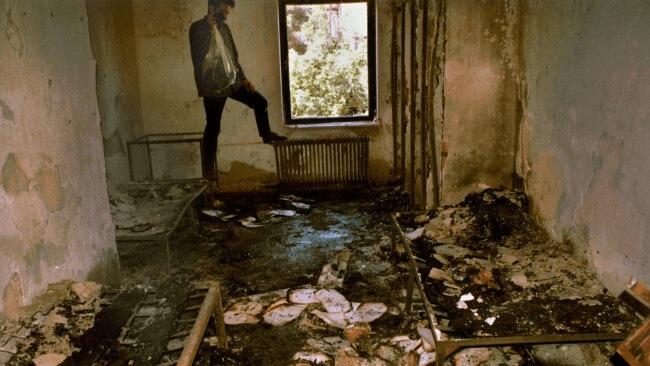
Right: University dorm room after the attack by security forces (Radio Free Europe/Radio Library)
“I thought that the left government, left parties, could be helpful for freedom and human rights and women rights in Iran. But I was wrong.”
As Khatami’s Islamic Iran Participation Front was banned, Ariana soon realized that even the left party was not actually capable of fighting for a better future and that they were essentially the same as the ruling right party. In fact, she actually considered them worse, as they were “fooling people” because they would say “We love you, we want to make you happy” but people were still unable to dress as they wanted or voice controversial opinions that were against the supreme leader, the extremity of Sharia law, and corruption within the government. Students were still being killed during protests.
After all, no matter who was elected as president, the supreme leader Ali-Khamenei always had the final say. In essence, this meant that no matter how reformist the president was and how much support they garnered from the public, so long as there was a supreme leader who was against any of those ideas, the change would not occur within the country. This made Ariana realize that they needed a drastic change within their government.
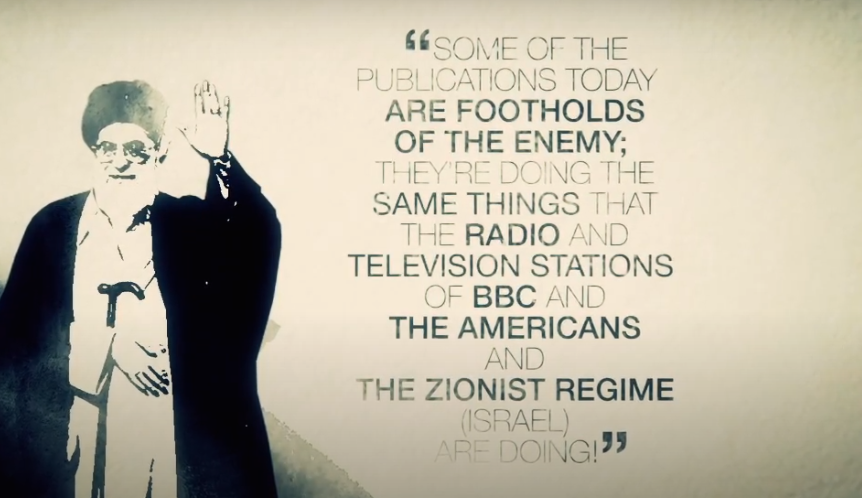
“There was a slogan that people said that means ‘The left parties, the right parties, it’s over. Everything is finished with you.’”
She felt both “pity” and “free” when she realized what was going on with the politics in the Islamic Republic, its corruption, and how impossible it was to create substantial change with the current Supreme Leader. She felt pity that she had spent so much of her time supporting the left party when it was impossible for any of their reformist ideas to actually be conducted but free that she finally knew and understood the situation, which “felt really good” for her.
Ariana’s experience with activism goes beyond that of the demonstrations she participated in while still living under the Islamic Republic. Today, from thousands of miles away, she still fights against the corrupt clerical government of the Islamic Republic and brings back the exiled crowned prince, Reza Pahlavi, to lead Iran and introduce secular democracy. “The most important things. This thing that we have as an Iranian, as a woman, and as a person who wants to be active in patriotism for having peace, for having justice, for having freedom, is King Reza Pahlavi,” she says with passion.
1.2. Reza Pahlavi for the Return of Democracy
“Reza Pahlavi is a symbol of the country and a symbol of human rights and women’s rights for Iranian people. He is a symbol of love: loving the country and loving human beings.”
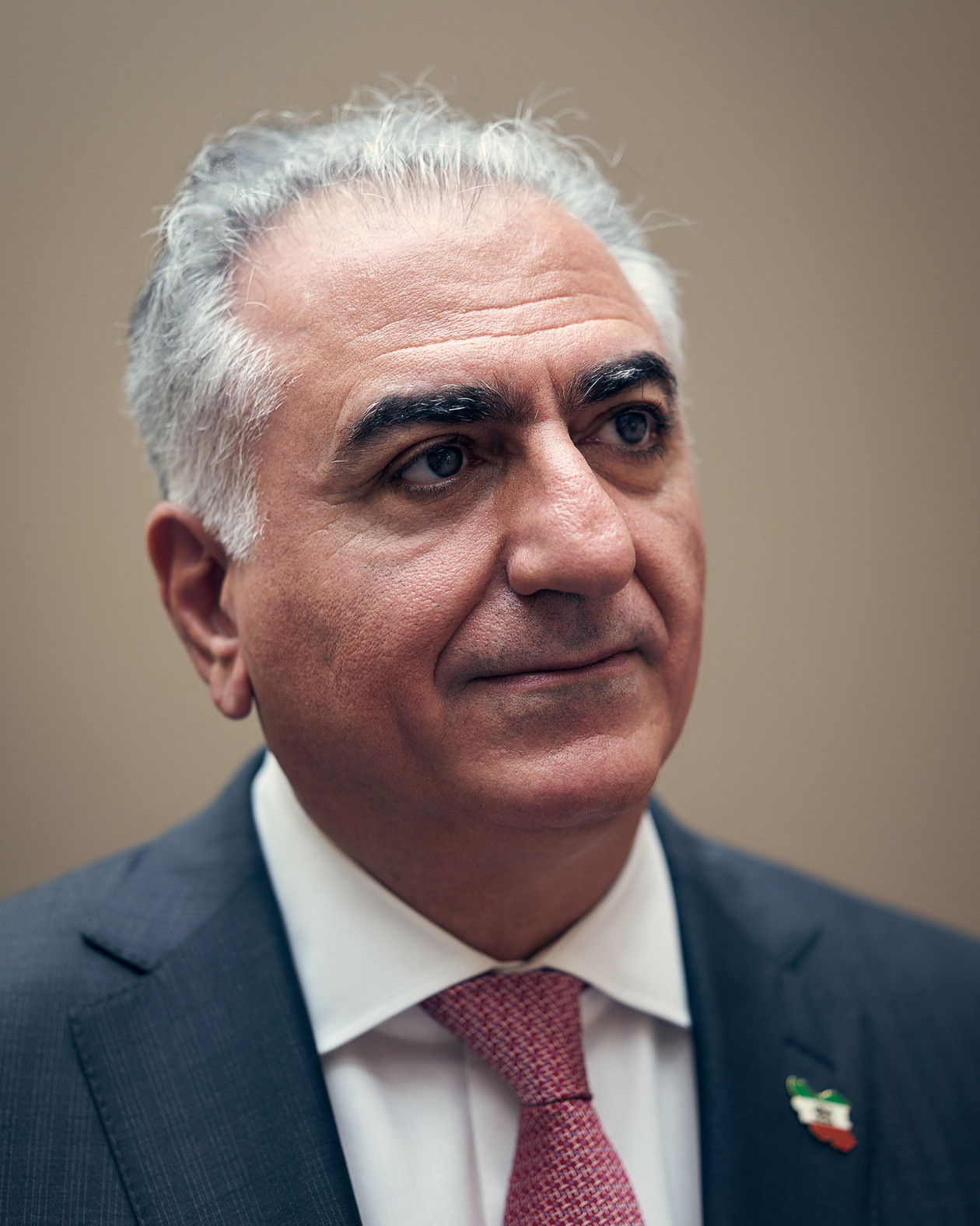
For Ariana, the few years she recalls of her childhood when Reza Pahlavi still led Iran were her “paradise” years. The combination of these memories with learning about Iranian history and how much the monarchy had done for women’s rights before the current regime, has given her a strong belief that what has to be done to change the situation in the Islamic Republic, is to bring Reza Pahlavi back. Now, the exiled prince utilizes social media to raise awareness of and condemn the Islamic Republic for its corruption, violence, and violation of human rights. He expresses that the current regime is also a security risk for other countries, saying “Everything is tied to this regime: whether it’s the nuclear threat, terrorism, Iranian-made drones attacking Ukraine or more and more refugees coming to an already saturated Europe.”
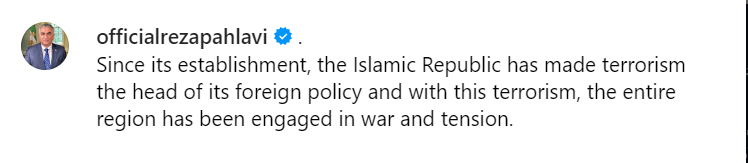
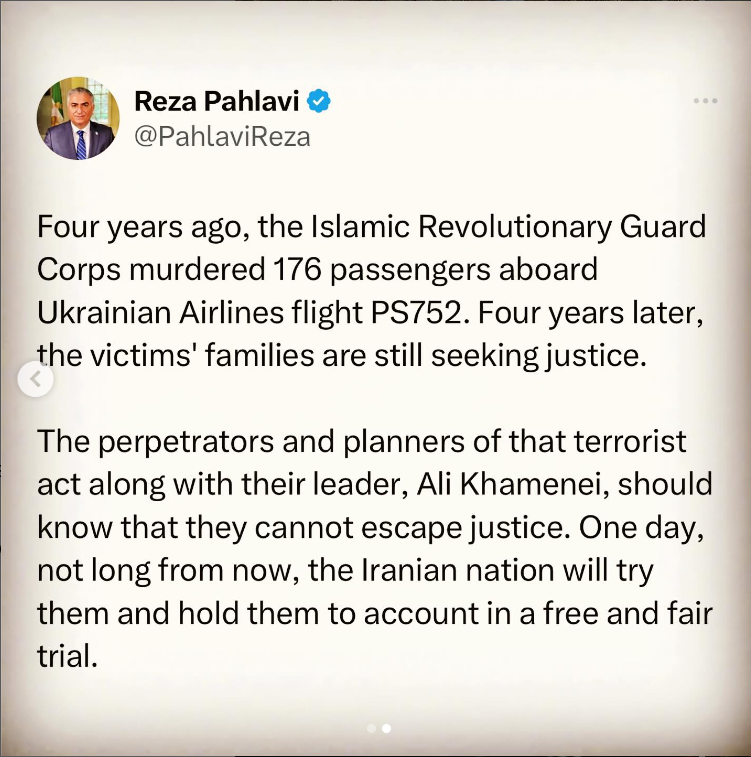
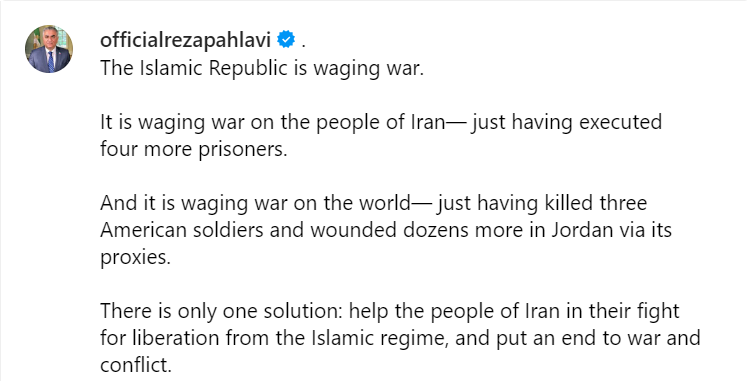
To Ariana, he is a peaceful and diplomatic person who is always trying to reach peace for Iran and the world. That is exactly why she supports him who has a “trustable idea” and so tirelessly carries on with her activism here in Japan. She truly believes in him and the change he can bring to her beloved country. “So it’s correct that maybe we could not win the bad power in Iran for now, but because of the sacrifice of lives of good people, the country has a chance for the future,” she describes her hope for the future of Iran.
“We need to protest, we need to make a huge revolution, we need to unite against this and we cannot be silent anymore.”
2. Reignited Determination for Change
Ariana was forced to leave her home to seek safety. She recalls how she thought she would never want to come back first: “Before that, I thought, ‘If I can go out of this country, I will go forever.’” However, she found herself yearning for her home once she left. “From the first second I was in the airplane, I felt I missed the country,” she describes. That is how she rediscovered her identity as a patriot and the determination to raise a voice of resistance and fight for her country, even from outside.
Note: This narrator’s face is blurred at their request for privacy.
“Human rights is a regular life.”
Her redeemed determination for change was reinforced when she started living in Japan. Experiencing the strict legal system and harsh process to receive refugee status and the discrimination she experienced for simply being Iranian, she describes how she realized the importance and necessity of a “regular life” in her home country. What each of us considers a “regular life” differs. For Ariana, it means having basic human rights, safety, and a government that preserves once-thriving nature. In today’s Iran, where the voices of “the environment is human rights” and “human rights is a regular life” are being trampled over under the Islamic Republic, such a “regular life” is deprived.
“If we human beings can love our countries, then we can try to make our countries safe and beautiful.”
Nevertheless, Ariana passionately speaks of the importance of loving one’s country for the nation to flourish in peace and achieve the “regular life” that secures a stable future for the next generation. “If we want to have justice and fair life in the world, we need to love our motherlands first,” she explains. This love is what fuels her activism, raising her voice to advocate for a peaceful Iran and broader global improvements. Away from the Islamic Republic where she was silenced in the fear of violent retaliation from the government, Ariana now has the freedom to speak out and share her love of her country.
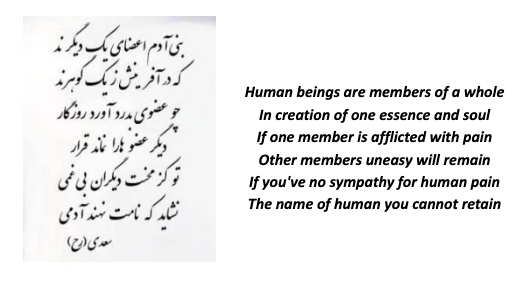
Soft-spoken and soft-hearted Ariana holds dearly to one poem called “Human Beings are Members of a Whole, In Creation of One Essence and Soul” written by a Persian poet, Saadi Shirazi (1210–1291 or 1292). She feels that this poem conveys Ariana’s outlook on her activism: the importance of people being empathetic towards others and working together to bring peace when it is being disturbed.
“Actually, I cannot stay silent. Because I think it’s my duty to try, even though I don’t know if it works or not. ”
Despite uncertainties with activism such as the possibility of deportation or not knowing whether her activism creates any concrete change, Ariana remains determined to fight with everything she has in order to fulfill her duty to the next generation. This strong sense of duty to the next generation and determination to change the reality in the Islamic Republic stems from her desire to create a good future for her family. She also shares her focus on the process rather than the result. “The results are out of my control, but my activities are under my control,” she describes.
Her desires go beyond borders as she also strives to create a better world for all the next generations and be involved with solving as many of the issues the future generation will face. She wishes to be active in human rights, nature, and environment, and everything important that the next generation will need for their future that has been getting “weak step by step.” However, as a patriotic Iranian, her first step to accomplishing this bigger goal is to “save Iran.” This means being patriotic and vocal about her love for her country to the international community, namely her international friends and connections made through social media and demonstrations in Japan, and her Iranian comrades, both outside and inside Iran. Being vocal about her love for Iran and hope for the future through the songs she sings, poems she recites, and stories she shares both online and with people she meets, is the best way to unite people to keep fighting.
3. A Voice Raised in Protests
3.1. Taking Actions for Change
Her first experience of both joining and conducting a demonstration in Japan was after activist and pro-wrestler Navid Afkari’s execution in September 2020. Seeing that the United Nations strives for “peace, dignity, and equality on a healthy planet” and reading about their involvement in a large number of human rights violations worldwide, it is only natural for many of us to think of the UN as having the power to make significant changes. Ariana thought the same; she printed out a picture of Naveed Afkari with some writing in English on the situation in the Islamic Republic and went to the UN University building, where about half of the UN branches in Tokyo have their offices, to express her anger, disappointment, and sadness at the situation and demand intervention in a regime that is violating its people’s basic human rights.

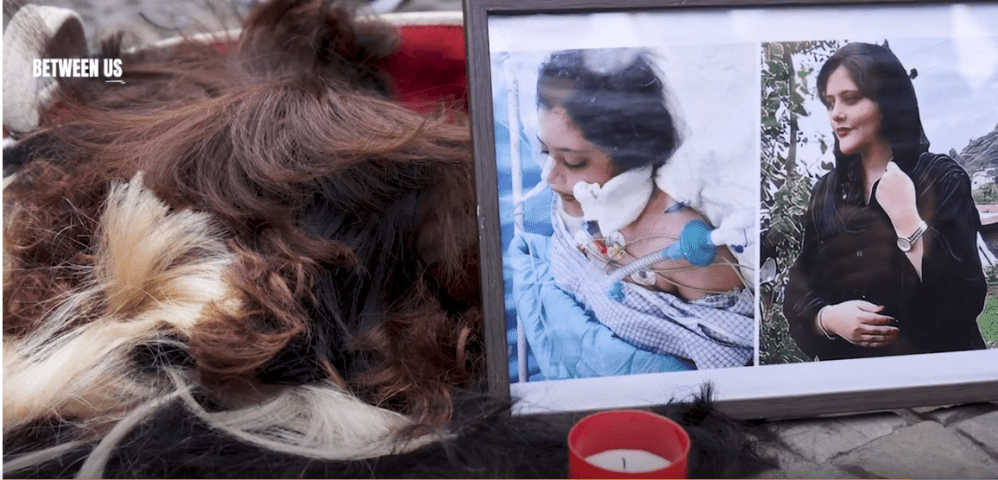
Another prominent example of Ariana’s activism is her actions for the “Woman, Life, Freedom” movement. On September 16, 2022, Mahsa Amini, a 22-year-old Kurdish-Iranian girl was killed by the morality police during her visit to Tehran with her family. She was detained for having a bit of her hair visible from under her headscarf and was escorted to the “re-education center,” where she collapsed and was taken to the hospital, ultimately dying under police custody. This tragedy led to the “Woman, Life, Freedom” movement in Iran and beyond.
Women during the protests after her death would often be seen cutting their hair together as defiance and retaliation to the extreme morality laws, a depiction of solidarity of women with Mahsa and anger towards the ongoing injustice in the Islamic Republic. A year after the death of Mahsa Amini, 500 people were killed throughout the year while protesting, of whom 70 were minors. The young victims of heinous violations of their human rights during protests are not only women. In fact, many men have also been abused, tortured, and murdered while retaliating against Khamenei’s regime, and the current interpretation of the Sharia law.
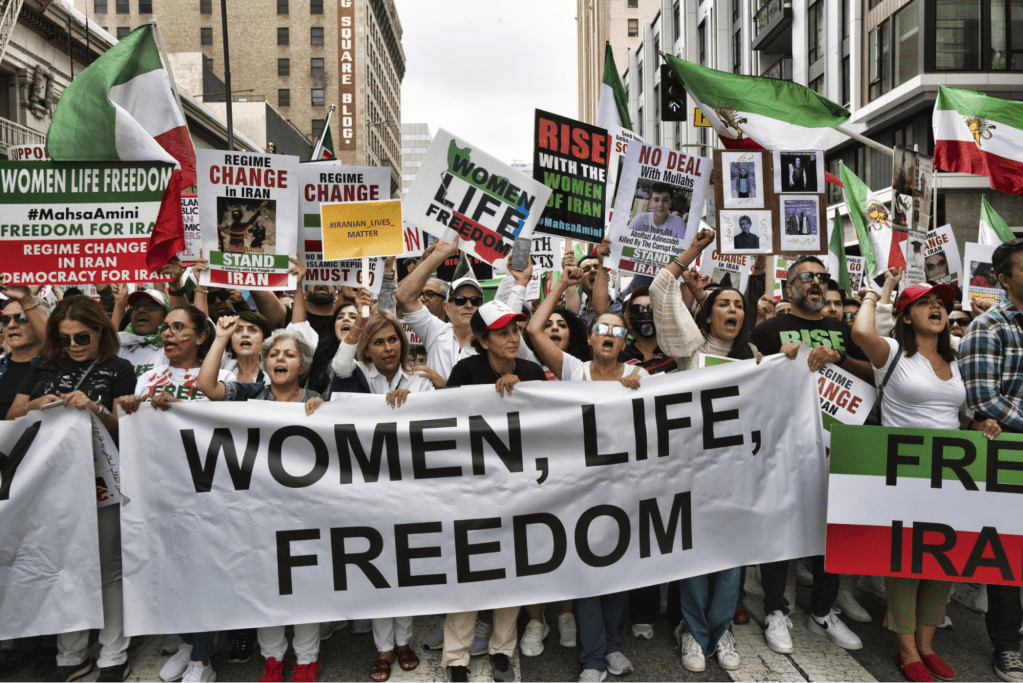
Right: “Women, Life, Freedom” protest held in Colorado, US (CPR News)
Witnessing these unlawful deaths at the hands of the ruling government, Ariana always talks about how this revolution is not only by or for women but includes the young men fighting alongside their mothers, sisters, friends, and significant others. They fight not only in anger to the oppression experienced by women but also to that experienced by men. Ariana feels that men are brainwashed into thinking that they need to oppress women and suppress their emotions.
“The government tried to brainwash families to try to give them this comment that men and women are against each other.”
To Ariana, it is not just about women’s rights, but rather human rights. The violation of basic human rights to dress how they want, voice their opinions without fear, have equal access to education, live in a stable home without fears of illegitimate eviction, walk on the streets without being harassed, or in the worst of cases, murdered by the police for not dressing the “right way” or standing up for someone who is being harassed by the morality police.
These fights involve everyone, and Ariana wants Japanese people to know about how people are being oppressed and killed and what can be done about it so that they too will talk to their leaders and demand they help do something about the situation in Iran. In one of the demonstrations that took place in Shibuya, Ariana wanted to “introduce Iran’s alternative instead of the current dictator regime” to the Japanese people.
During the demonstrations, she often live streams herself taking part in the activism to the world. While she does not have anybody else from the Iranian community with strong ties to the Islamic Republic joining her, she goes there to fight for what she believes in, the way she believes will have the most effect.
“My whole life I have tried to not follow because I feel that there are enough followers in the world and I don’t need to be a follower. I need to be my life hero. So, my role model is my life and my experiences”
3.2. Difficulty of Securing Support
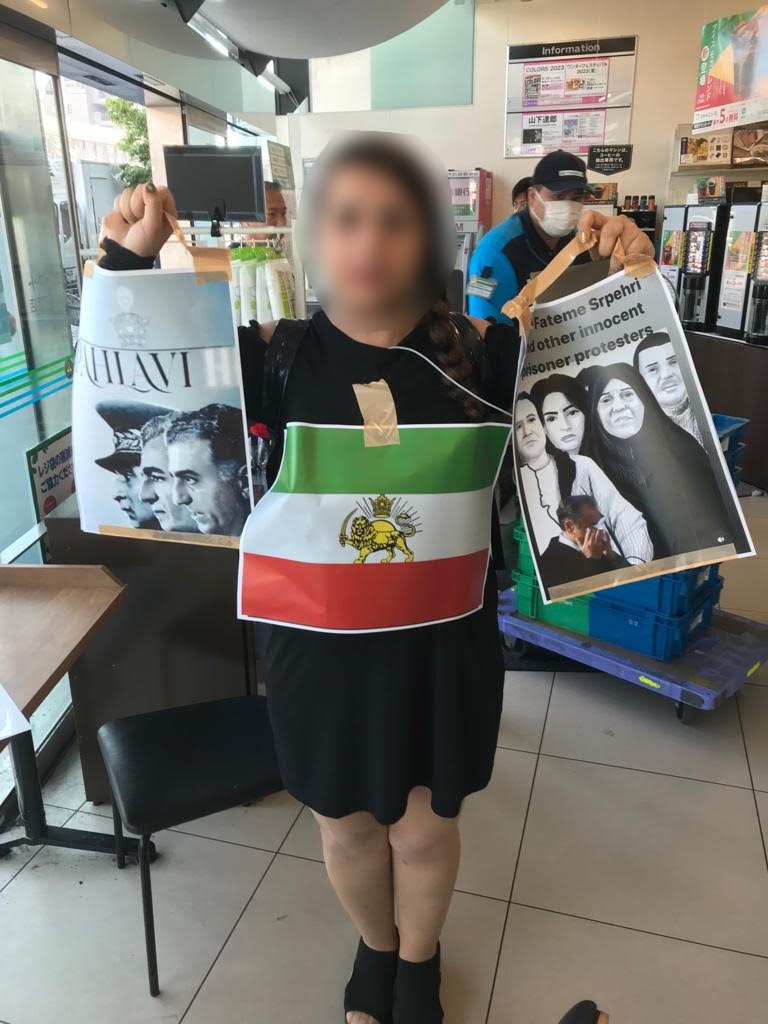
Her fight for change has at times been lonesome due to the difficulty of getting support from fellow Iranians in Japan, who are often tied to the Islamic Republic. She is often seen alone with her “Javid Shah” (long live the king) posters or pictures of the most recent victims of the Islamic Republic regime, protesting the violation of human rights her people are facing and the desire of many Iranians to bring Reza Pahlavi back to lead Iran.
Ariana believes the association of the Islamic Republic extends to organizations as well. When she spoke to participants of demonstrations led by these organizations, they would oftentimes tell her that they too wanted to support the king but they could not really do much about it, afraid to lose their jobs, which many find via their own ethnic networks, or be targetted by the Islamic Republic agents in Japan. Ariana believes this is why she has faced challenges in getting support for her vocality in advocating for bringing Reza Pahlavi back to Iran. Her isolation from her own community due to their fear of being associated with her has affected her personal life and career opportunities.
The Japanese writer Ariana is referring to in the clip is Hitoshi Igarashi, a 44-year-old Japanese translator who was murdered on July 11, 1991, at Tsukuba University after translating a book named “The Satanic Verses” written by Salman Rushdie. The author had gone into hiding in 1989 after being condemned to death by former Supreme Leader Ayatollah Khomeini for writing an anti-Islamic book. Unfortunately, the murder itself has not been solved by the police. This shows just how much power the Islamic Republic government has even outside of their borders, and is also a way to instill fear in people. It sends a message that no place is truly safe if you are too loud and become a target of the regime.
Nevertheless, Ariana believes that these Iranian organizations in Japan have started to do better recently, little by little. She remains dedicated to her belief in bringing peace and democracy back to Iran with the return of Reza Pahlavi, inspired by her duty to protect the basic human rights of the “future generation.” She will keep on fighting to fulfill this duty not only as a patriot who loves her country but also, as a mother whose family remains in Iran.
4. A Digital Voice for Change
4.1. Digital Activism and Identity
Most of us take for granted being part of some kind of community, whether that is through our work, education, religion, or other social groups. Our identities are comprised of the connections we make through these communities, and these identities as well as a sense of belonging are essential for us as social beings. However, many asylum seekers lose their identity through fleeing their home country and leaving their families, jobs, and larger communities, and find their sense of belonging diminished in a state of limbo during the refugee application process.
Activism is a way for asylum seekers in such states to “negotiate” to be a part of a community, find a sense of belonging, and reclaim the voices that had been long silenced. The important venue for that is social media and other digital platforms where they can access, spread, and share information instantly. Being a part of digital activism also contributes to the development of a diasporic identity, which is a crucial aspect in regaining their sense of belonging.
Ariana has also found a sense of belonging to the community fighting for the same cause through her digital activism, which had lacked before in the Iranian community in Japan. It also became a platform for her to stay in touch with Iranian groups and activists in Iran and abroad. She says she often talks with her fellow Iranians living in the US, the UK, Germany, and many other places through Facebook and Instagram.
Raising a voice online also helped her recognize her identity as an activist. Growing up apolitical, she did not think of her actions like declaring herself as non-Muslim or taking off her hijab as activism even when she knew that she “couldn’t stay silent.” However, seeing that other people who did the same as her, posting information and advocating for freedom on social media, identified themselves as “human rights activist” or “freedom activist” on their profiles, she started to understand that she too was an activist.
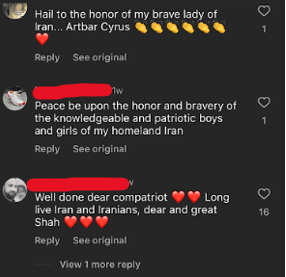
Ariana has faced loneliness in carrying out in-person activism in Japan, but she does not feel alone in this fight with her digital activism. Her almost 10,000 followers on Instagram consist of friends and strangers alike, from whom she receives many comments encouraging and supporting her views and activities on bringing Reza Pahlavi back to Iran. She receives a lot of love on her social media platform, providing her the support she does not receive from Iranian people in Japan.

4.2. Censorship and Threats
However, regardless of where they are, activists including Ariana face censorship from the Islamic Republic government. Authoritarian countries like the Islamic Republic are known to censor media such as TV, social media, and newspapers as a way to control opposition within the country and spread tailored information that targets the West, particularly the US. It also restricts mobilization amongst Iranian diasporas and possible interference from foreign countries. This restriction was so harsh that some activists fled the Islamic Republic in order to pursue activism, especially when tensions rose within the country and oppression of their freedom of speech increased, such as after the rigged 2009 elections and the Green Movement. Despite this, activists are still tirelessly targeted by the Islamic Republic and harassed online. This applies to Ariana as well.
Although digital censorship on sensitive topics is not uncommon, it is particularly an issue with companies like Meta, owning Instagram, whose policy allows control over which posts circulate more and which are shadowbanned, including political topics. The issue has affected a wide array of content creators, including black creators, and has recently caught more attention for the worldwide censorship by Meta of pro-Palestinian posts. Ariana’s account has also been censored numerous times; she has been prevented to comment or engage in conversations and even deleted from the platform.
Censorship is not the only challenge that digital activists face. Even in Japan, known to be one of the safest countries in the world, Ariana is still in danger. Posting about the violation of human rights in the Islamic Republic, advocating for the return of Reza Pahlavi, and openly defying the rules on wearing a hijab and non-revealing clothes, she shares that she has received several angry comments. Some are just internet trolls leaving negative comments, but others are the Islamic Republic agents in Japan. One comment she received online that highlights this danger read, “Soon in the future this woman will be arrested and executed, and then the people of Iran will call her a martyr mythical young woman.”
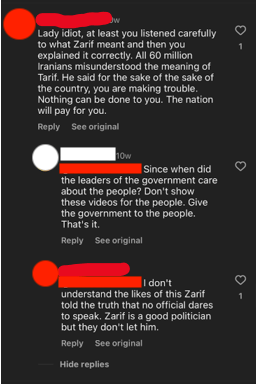

Nevertheless, Ariana does not give in. Despite the threats she received, she says she “just want to do my duties as a nice and kind human” even if she does not benefit from the activism herself. Like other activists who have left the Islamic Republic, Ariana feels that she also feels the duty to play the role of a “bridge figure” who shares information about the situation in Iran and creates a relationship between home and host country in her fight for human rights for people back in Iran.
“I always try to be the bridge, a part of the bridge.”
5. Strength to Carry On
Ariana believed that once she left, she would never look back and return to Iran. However, as she looked out of her little airplane window and saw her country getting bigger and bigger the further away she got from Iran, she started to realize that, despite everything, she still loved and was going to miss her country. Overwhelmed with emotions, Ariana started to sing. The song she sang in the airplane as she left the Islamic Republic, was also the first song she recorded and posted on her Instagram account. It was essentially her first form of online activism and meant she was finally safe to publicly voice her anger, disappointment, sadness, and hopes for her homeland, Iran.
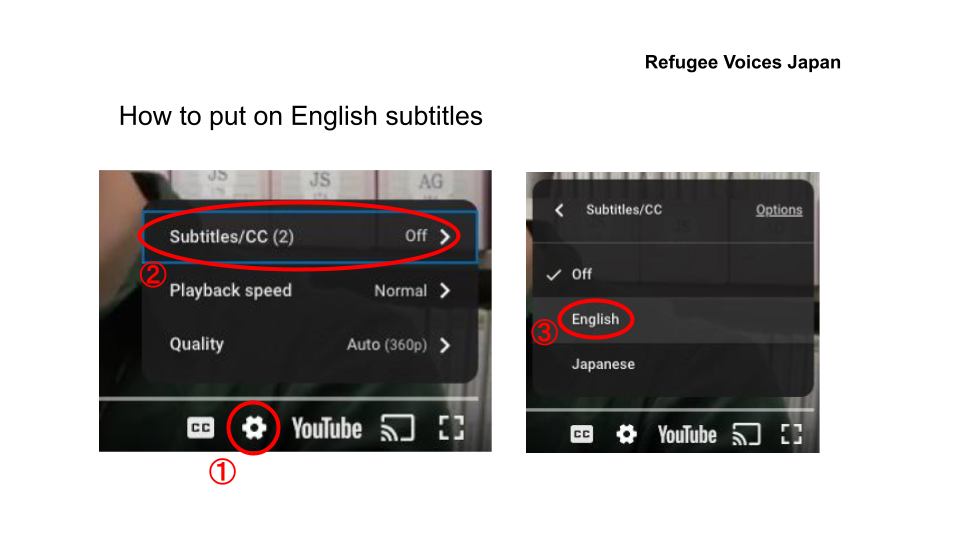
Note: English subtitles are available for the following videos. Click here to see how to put on subtitles.
Singing is a passion of Ariana’s how she finds the strength to carry on, through channeling her emotions and hopes that can reach across borders. Music is often referred to as a universal language, something that transgresses borders. It is capable of bringing people together regardless of their nationality, gender, or socio-economic status by creating a sense of social bonding. She knows that even if you cannot understand her words, you will sense her love for her country and desire to change it for the better.
She regularly sings at Refugee Cafes and has also sung at a high school introduced by a non-profit support organization to better express her emotions and connect with the students after talking about the current situation in Iran. In the clip, Ariana is heard singing “Montazerat Boodam,” translating to “I will be waiting for you,” to the attendees of Refugee Cafe held monthly by Sophia Refugee Support Group (SRSG). In this place for the refugee community in Tokyo, she announces the upcoming protest and invites anyone to join her in her fight for freeing Iran through singing.
“Even as a cell, I have my duties. And I cannot, not try to do that.”
“Because I suffered a lot, and I know what suffering is,” Ariana says as she explains why she so earnestly takes on the duty to fight for human rights for future generations. She compares herself to a cell in our body; while the contribution of one cell is not much, each cell fulfilling its duty is crucial for the body to function healthily. Although her efforts alone may not be enough to make big changes, she believes she is playing a vital role in the unison of all the people fighting against the Islamic Republic regime.
Every day, Ariana writes multiple times a day on social media, sharing the dangers faced by the Iranian people and the country that was once so beautiful. Quoting what her friend has in her online profile, she says “When I write, you know I’m alive.” She has been tirelessly fighting and will keep fighting until the day Iran is free.