“I didn’t like politics before. Before I knew that it’s very necessary for our lives, especially for girls and women.”
1. Ariana and Politics: A Late Awakening
As a young woman, Ariana did not like politics. She was more interested in the natural sciences. The intricacies of political processes seemed distant and unimportant in her daily life. However, as Ariana navigated through the various stages of her life, her perspective on politics changed. It was not a sudden revelation, but rather a gradual realization that politics plays a crucial role in shaping one’s society.
The turning point for Ariana was a growing recognition of the disparities and challenges particularly faced by women in Iran. As she consciously started learning more about politics, she began to realize how the changes in political leadership in Iran had a direct impact on her life, especially her freedom and safety.
Note: This narrator’s face is blurred at their request for privacy.
Politics is present in every aspect of Ariana’s story starting from her escape from the Islamic Republic, to the most recent political activism she is conducting from Japan. As she understood the importance of being politically aware, she aimed to learn more about Iranian politics and its connection to the change in the quality of her life.
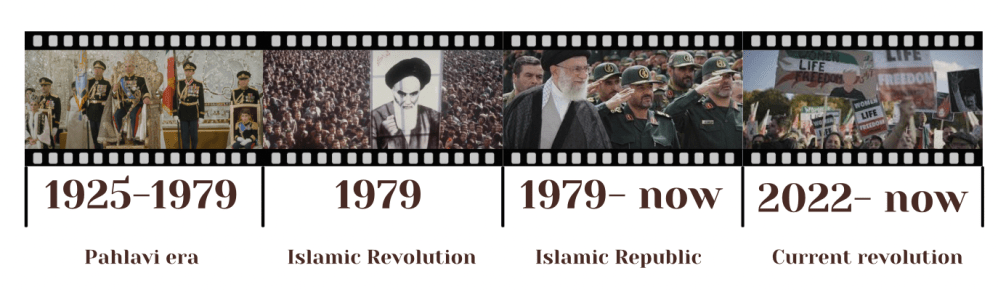
2. Life During the Pahlavi Era: Ariana’s Heaven
“Happiness was a freedom for me when I was a child.”
Ariana remembers her first five years as a period of prosperity and happiness. As a small girl, everything seemed pleasant and trustworthy around her. Her parents were gentle with her creating a home full of love and good memories. She remembers having a spacious house, a beautiful garden, a dog, and an overall feeling of safety and freedom resulting in a “luxurious” life as she describes it. She could freely dress in beautiful dresses, and play around her neighborhood with her brothers without having to fear violence.
During the first five years of Ariana’s life, Shah Mohammad Reza Pahlavi was in power in Iran. He implemented a lot of reforms both economically and regarding women’s rights aimed at modernizing Iranian society and providing more safety and freedom, particularly for women. The general notion of safety and freedom was felt by Ariana in her early childhood years.
| Area of reform | Details of Reforms |
|---|---|
| Political Participation and Representation | ・In 1963, women gained the right to vote, marking a crucial step towards gender equality. ・Women were allowed to participate in public office, with female representatives in the parliament and some women serving as ministers. ・The establishment of the Women’s Organization of Iran in 1966 showcased a more integrated organizational structure for the representation of women. |
| Education | ・In 1944, mandatory education was introduced, providing girls with more access to education. |
| Freedom of Choices | ・Women had more freedom regarding clothing and they were allowed to take their hijab off. ・Women were allowed to engage in sports and participate in beauty pageants. ・Women were free to move around as they wanted, they did not need to ask for permission from their dad or husband. |
| Family Rights | ・The Family Protection Law of 1975 granted women important family rights, including the right to divorce and custody over children. ・Abortion was made legal granting the right for women to have more authority over their bodies. |
| Reform of Labor Participation | ・In 1963, urban upper and middle-class women entered the labor force. ・The participation rate increased from the 1950s to the 1970s, but the new occupations were mainly for upper-class women. |

3. Life During the Islamic Republic: Stolen Heaven
“After five years old, my heaven got stolen by the new government.”
As Ariana turned 5 years old, the political leadership of The Shah, Mohammad Reza Pahlavi, was taken over by the religious government of the Islamic Republic. Her life changed profoundly as she experienced numerous constraints and limitations on her daily activities in comparison to her first five years. Her peaceful and happy childhood “heaven” was stolen, as women in general, including Ariana, “couldn’t continue their favorite things that they wanted, about sport, about dance, about singing, about art, about sometimes education.” She further explains the event as follows:
Ariana: “The Islamic Revolution started with crimes against humanity in Iran. With lies, theft, and the exile of the best men and women of Iran, such as the burning of the Rex Cinema in Abadan City in the heart of Iran and closing the doors of the cinema, which resulted in the death of 400 innocent people. They were burned in the fire and attributing this crime to the Shah, theft from the National Museum of Iran and looting of national property, and the execution of the Iranian people such as pilot Nader Johanbani and Minister Farrokhroo Parsa and many similar cases. However, due to brainwashing under the pretext of religion and with lots of propaganda and news censorship, it took a long time for people to become aware. After Internet social networks became aware, although the regime in Iran controlled Internet information, it could not prevent many people from becoming aware through Internet communication, especially since many Iranian people escaped Iran and lived in advanced countries after the 1979 Revolution. Competent government officials were killed or executed and their properties were confiscated; instead, inefficient and poorly educated or religiously illiterate people were appointed. The inquisition and the fear of arrest and execution or losing their jobs forced people to be hypocritical and make a scene, and people who adhered to honesty were removed from the scene one by one, like Amir-Abbas Hoveyda. They also confiscated my father’s house and property; as a result, our economic situation suddenly became difficult.”
3.1. Theocracy, Sharia Law, and the Islamic Republic of Iran
Theocracy is a system of government where religious leaders or institutions hold both political and religious authority. In a theocracy, the state’s legal and political systems are directly influenced or controlled by religious doctrines. In the case of the Islamic Republic, the political system is rooted in Shia Islam, with the Supreme Leader, who is a senior cleric, holding significant power alongside elected officials. The legal system is influenced by Islamic law – or Sharia – and institutions such as the Guardian Council ensure adherence to Islamic principles in legislation. According to some scholars, the presence of Islamic Law instead of civil law, mixed with religious elements in leadership, has led to a decrease in the quality of women’s rights and gender equality in Iran. Ariana directly experienced how the intersection of religion and politics led to a decrease in her rights. As the Islamic Republic took over the leadership in Iran, her freedom and choice rights were limited.
3.2. Women’s Rights
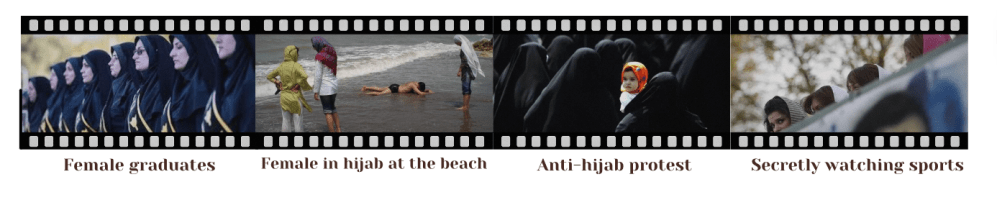
Being a little girl in Iran during the start of the Islamic Republic was rough for Ariana. As a child, she did not understand why she was suddenly prohibited from engaging in singing and dancing, as well as why she was forced to wear a hijab. However, these changes occurred due to the Islamic Republic’s more strict legislation on women’s rights. There were several changes regarding women’s rights, compared to that of the Pahlavi era.
One of the shifts was the abolition of the 1975 Family Law which fully granted the rights to divorce and custody over children. Moreover, the use of hijab became mandatory regardless of the woman’s nationality and religious beliefs, and non-compliance with this dress code makes them susceptible to harassment by officers. The segregation of women also became a reality, meaning that women have to pray separately, are prohibited from mixing openly with unmarried or non-related men in public spaces, and mixed-gender parties are not allowed. On top of this, temporary marriages were legalized, making it possible for men to exploit women for a short period. In addition, all women, no matter the age, must have the permission of their father or a living male relative to marry. There are also some unwritten laws that restrict women’s participation in various areas of their private lives such as them being prohibited from engaging in sports and arts, as well as attending male sporting events.
3.3. Manipulation
Ariana witnessed how the government of the Islamic Republic changed the opinions of regular citizens – including her mother and father – about the idea of freedom and good political leadership; she explains that they were “brainwashed” into believing that the leadership of the regime is better than the previous era.
Primarily, the government organizes different religious events to boost sympathy and popularity among the citizens of Iran. These events are “Arbaeen,” “Safar” and “Muharram” which are often celebrated with various rituals including pilgrims and big social gatherings with a lot of food and drinks. Specifically, these mourning carnivals are usually surrounded by street rallies with free catering and gifts in public spaces.

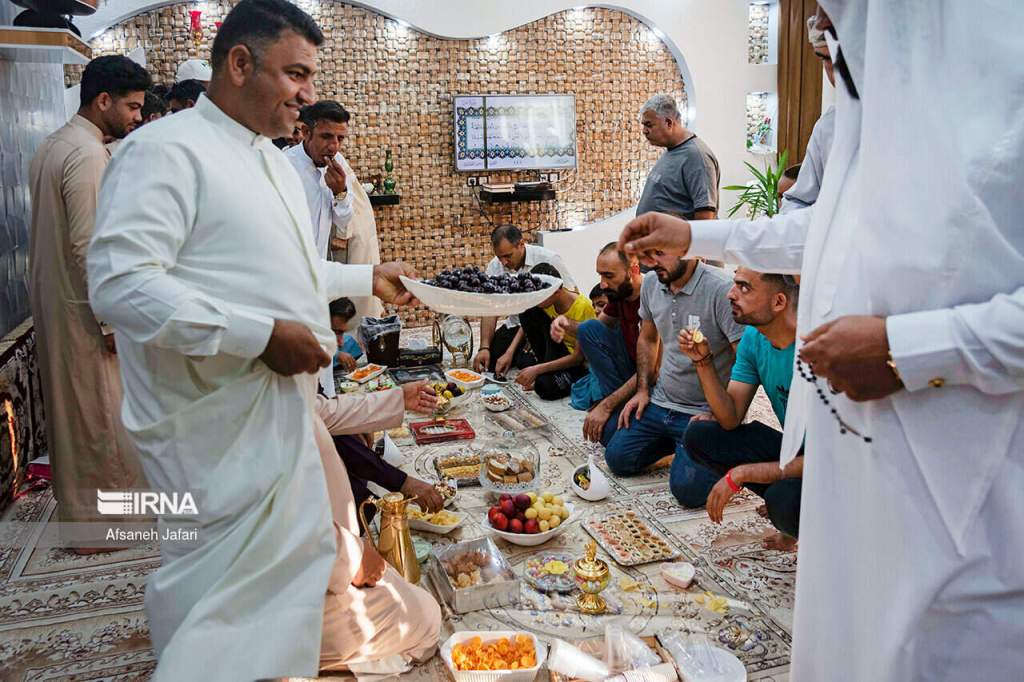
As many Iranian citizens live in hard economic conditions, they participate in these events for the sake of receiving food for free. This was the case for Ariana who also participated in the delicacies offered, even though she was not in favor of the activity of the Islamic Republic. These events are part of the Islamic Republic government’s propaganda to show the public and crowd the wealth and well-being of all the citizens. Due to its propagandistic nature, there is a huge budget allocated to financing the catering and gifts widely available for the citizens of Iran. Overall, the events are used to show the Iranian citizens the wealth the system has for them and to present to the international community that the Iranian society believes in the ideology of the Islamic Republic.
Moreover, the Islamic Republic uses more drastic and direct methods to manipulate and control public opinion. Most importantly, the Iranian authorities have implemented aggressive tactics to restrict access to information. The Islamic Republic often imposes internet blackouts to cut off information from external sources, making the citizens rely on data and statements provided by the government. Ariana also experienced difficulties accessing external information on the internet, and yet she continued to strive for other ways to educate herself about politics and women’s rights, as well as to connect with others opposing the regime of the Islamic Republic.
3.4. Constant Protests and Violence
As Ariana was growing up, she experienced multiple protests in her home city Tehran. Even though she was not actively participating in the protests at the time, she had friends and acquaintances who were engaged in demonstrating against the political leadership of the Islamic Republic. People around Ariana fought against the government and faced violent shutdowns of protest with executions and killings by the morality police. Notably, there have been six major protests (which Ariana lived through) that were shut down with violence since the 1979 Islamic Revolution, and the takeover by the Islamic Republic:
- 1999 Student Protests: Students at Tehran University protested the closure of the reformist newspaper Salaam, turning peaceful demonstrations violent when security forces attacked a dormitory, leading to casualties and over 1,500 detentions. The government’s ruthless response showcased its readiness to use violence to silence dissent.
- Green Movement Protest of 2009: Sparked by the contested 2009 presidential election, the movement demanded democratic rights and an end to corruption, facing a violent crackdown resulting in over 100 deaths and 4,000 detentions by riot police and paramilitary forces.
- Economic Protest of 2017/2018: Economic grievances fueled protests in Mashhad, spreading to 140 cities and involving 42,000 participants. The leaderless protests, marked by slogans like “Reza Shah, Bless Your Soul,” resulted in the government’s harsh crackdown, with at least 22 deaths and 3,700 detentions.
- 2019 Price Hike Protest: Triggered by a 300 percent gas price hike, protests in 100 cities, including Mashhad, led to a violent government crackdown with tear gas, water cannons, and live ammunition. Internet shutdown followed, with conflicting figures on at least 208 deaths and 4,000 arrests.
- January 2020 Protest: Anti-government demonstrations erupted after the Revolutionary Guards admitted to shooting down Flight 752. Security forces used tear gas and live ammunition, resulting in clashes during protests in Tehran and 18 university campuses. The government claimed 30 arrests for “illegal” demonstrations, restricting journalist coverage.
- Mahsa Amini Protest 2022: Details will follow in the next section.
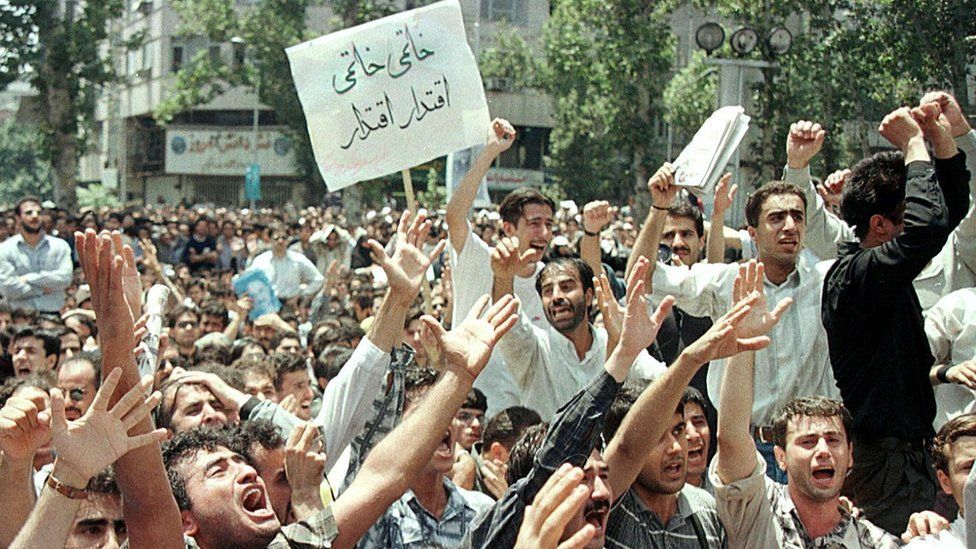
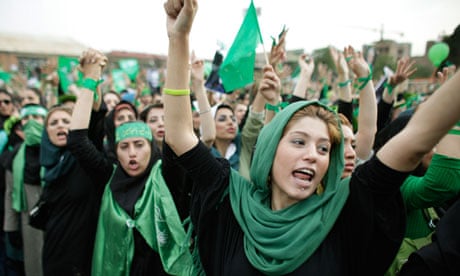
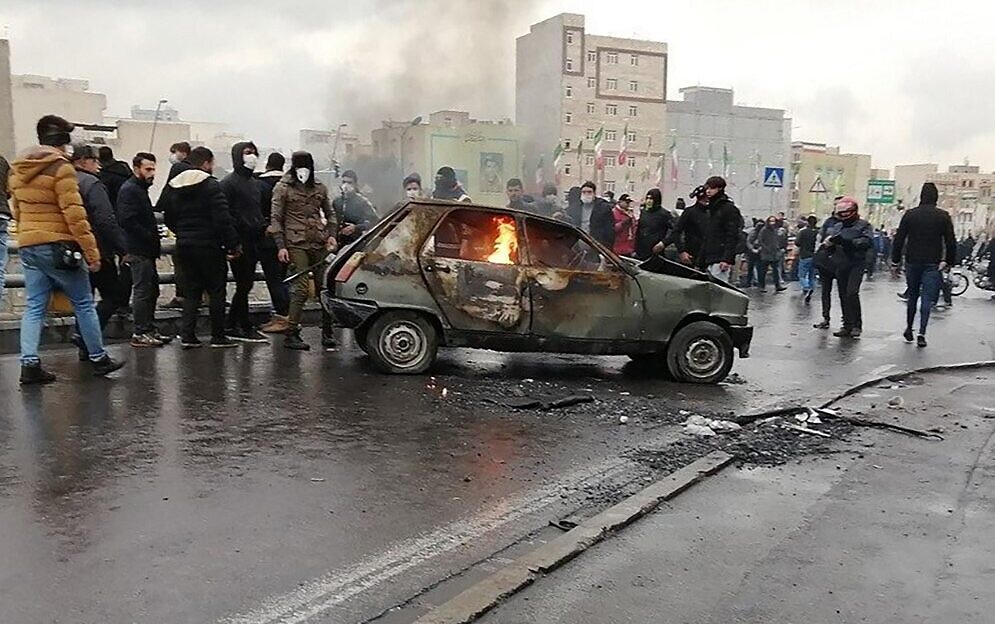
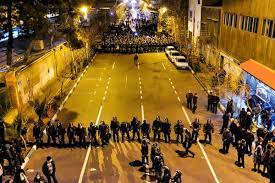
Ariana says the death toll in all these protests was much higher than the published statistics; she witnessed it closely. This violence and oppression are also used to silence the citizens of Iran and create a fearful environment. The crackdown on the protests is usually carried out by the morality police, which Ariana describes: “They, the police forces are very cruel. Very cruel, you cannot imagine. Because they kill young people.”
4. The Current Revolution: Hope for the Future Generation
“They fight bravely with empty hands against bullets, against the war bullets.”
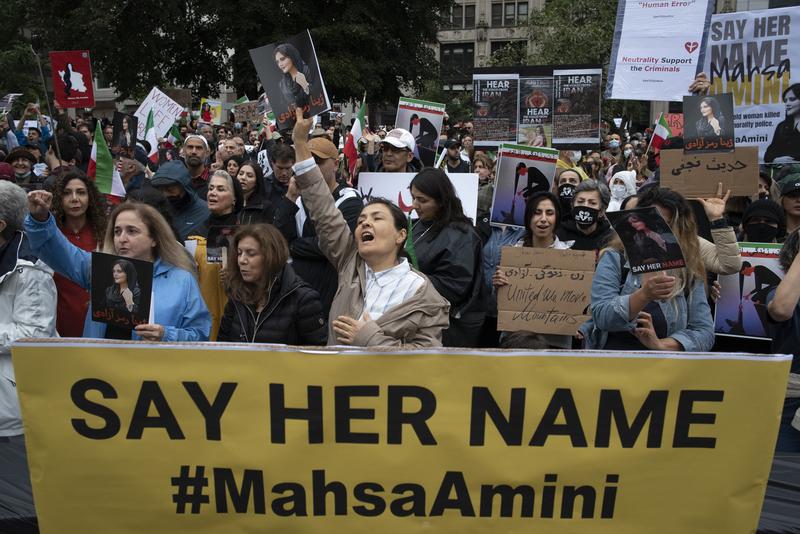
Ariana, as a mother and patriot, feels the duty to support the “future generation.” She tries to raise awareness and fight for better political leadership and more freedom for the “future generation” through her social media activism. This is particularly important in the context of the current revolution, which she associates with the “generations waking up and standing up for their rights.” The current revolution, also known as the Mahsa Amini Protest, started in defense of the freedom of women to choose whether or not to wear the hijab and continues to save all Iranians through the change of the regime that violates human rights. Mahsa Amini, a prominent figure in the protest, emphasizes that the revolution is not exclusive to women but is a joint effort involving both genders to protect women’s rights. Ariana also points us to the story of the parents of Kian Pirflek, a ten-year-old boy who was killed by a bullet fired at their car by the repressive forces. At his funeral, his mother shouted: “We are a great nation, we will take back Iran.” His father was also seriously injured in this shooting and suffered a spinal cord injury, resulting in him losing the ability to walk. The revolution has truly been for all people of Iran, and many have voiced their solidarity with the movement across the world. In a peaceful rally held in Los Angeles, thousands of people gathered and the City Council President expressed their support by saying “Los Angeles stands with you in your fight for democracy and respect and dignity and human rights.”
Even from being in Japan, Ariana has seen significant changes in Iranian society over the past five years, noting a shift in people’s opinions, even within her family. Many Iranian women no longer wear the hijab, even in places like Tehran, where it was once considered impossible due to the danger imposed by the government. However, the Islamic Republic responds to this change with oppressive measures, including torture and killings, directed at those who choose not to wear the hijab.
The issue itself extends beyond the hijab itself; it is about standing against a government that aims to seize the rights of its own people. Ariana emphasizes the absurdity of authorities arresting and even killing men for allowing women in their lives to make choices about their clothing, illustrating the extreme measures taken to suppress individual freedoms in the Islamic Republic. While in the face of the international community, the protests revolving around Mahsa Amini may be viewed as purely a feminist revolution that protects women’s rights, it is a collective effort by the youthful men and women of Iran against the Islamic Republic’s governance.
Ariana further explains that the current protests are mostly fueled by the youth of Iran, the fearless new generation. However, the previous generations are also starting to see behind the manipulation and the violence of the Islamic Republic. Ariana explains that even her parents are now critical of the Islamic Republic and leaning towards supporting the king.
While Ariana and her father had a complicated relationship when she was growing up and living in Iran, her relationship changed upon her escape from the suppressive society. While calling to catch up with her father, he suddenly publicly screams “Javid Shah (Long Live the King)” out of the window and to the pedestrians on the street. Ariana’s dad previously supported the Islamic Republic, but with him now supporting the king, Ariana hopes that the time for political change, brought to the fore not only by the youth but also the older generation, in Iran is near.
5. Future: A Secular Democracy and Pahlavi Dynasty
When Ariana is asked about the future, she is hopeful for a better political system and the end of the Islamic Republic. Ariana imagines a constitutional monarchy with the return of the Pahlavi dynasty, leading to a secular democracy that does not limit human as well as women’s rights. Ariana dreams of a system where her women and human rights are protected and where she can re-experience the safety and freedom she felt in her childhood. She does not only dream about these scenarios but is actively contributing to shaping the future of Iran by raising awareness through social media activism and protesting about the current system.
