
My Unbreakable Hope:
30 Years and Counting of Waiting
Gabriel
My Story in Japan
Gabriel arrived in Japan on March 3rd, 1991 looking forward to seeking for new opportunities and experiences in this advanced society, Japan. However, while his first start in Japan was filled with hopes and dreams, his 30 years journey was not an easy survival where he was faced with minimal support and information and was detained in this mysterious facility, the detention center. Gabriel’s journey not only inspires people but also informs a hidden social issue in Japan, the life of the refugees that we will never learn in our textbooks.
Table of Contents
- Life Before Japan
- After Coming to Japan
- From Detention to Release
- Survival After the Detention
- Present (2020)
Audio version available below
1. Life Before Japan
1.1. The Child with Hope and Openness
Everyone was his friend. As one of the youngest children among 8 siblings in the family, Gabriel was loved by his family, neighbors and everyone around him, all attracted by his bright smile and pure curiosity in others. His biggest inspiration during his childhood was his mother who was open to new ideas and talented in many different fields. Starting from cooking and sewing, she was also a skilled gardener and a craftswoman who would amaze her children with wonder and excitement. She would also take Gabriel and his siblings to church every Sunday and on special church festivals. Gabriel saw her as “a very loving parent and human being who did her best to practice the Catholic Christian ideals.” Looking up to his mother, Gabriel followed her mother’s religious practices as he shared:
” Love is not just a mighty teaching, but it is also Life, and everything associated with Life. “
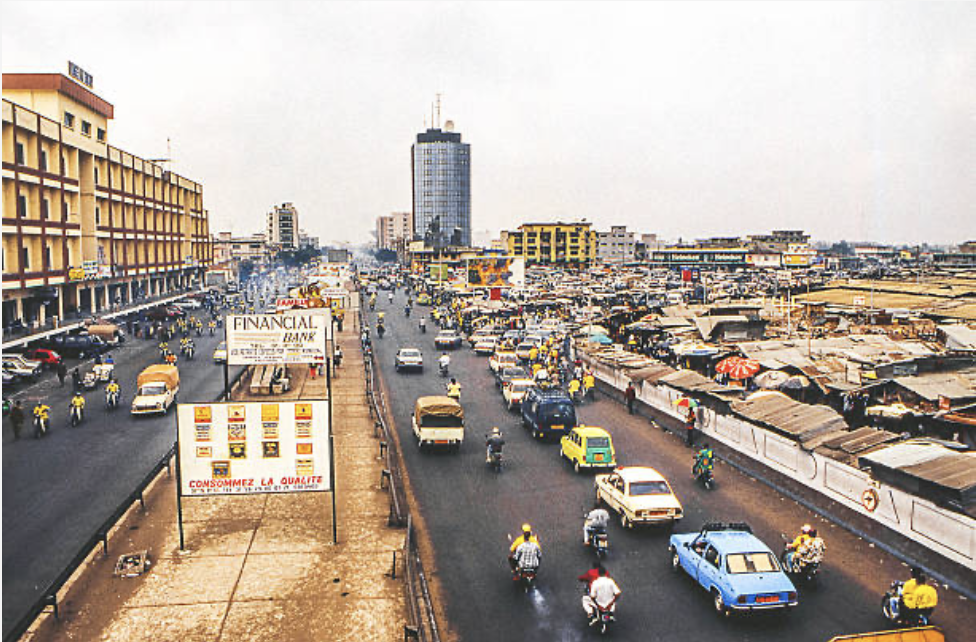
Growing up in Benin City (A historically and culturally rich city in Edo state, Nigeria), he was exposed to different cultures and opportunities in his childhood. The biggest influence he had was his education. As one of the upper-middle-class families in Nigeria, the little boy was given opportunities to pursue his curiosity and interest in studying.

His early years of studies were in Gabriel’s words, “very impressive.” During his education in his younger years, he has always led the class in school and had several opportunities to get double promotions, which is to skip a grade and enter a high level of education. His constant eagerness to consume knowledge and new information led him to win the state scholarship from his entrance exam in high school.
After graduating from high school, he flew to Germany at the age of 14 to explore his faith on a deeper level, which is to study naturopathic medicine. It enlightened Gabriel with the use of natural methods to cure diseases and provide a healthy lifestyle, in other words, introducing self-healing and non-chemical methods to improve one’s health. This knowledge gave him an answer to how he could share his belief in helping others. This eventually led to his dream, to open a naturopathic clinic and help those in need through self-healing.

Even though the accomplishments in his academic studies are remarkable, Gabriel humbly describes that it was all a gift from the love and support he received from his parents and teachers:
” When parents fill their kids with love, they bring out all the genius in them. “
After coming back to Nigeria after graduation, he took his mother’s words, “Go around the world and make yourself familiar with oriental culture, especially towards eastern cultures,” he decided to travel. As his mother had an interest in Europe, he started with countries such as France, and Italy, then eventually to Asia, the Philippines, Laos, South Korea, China, Taiwan, Thailand, and many others. Being exposed to different cultures increased his interest in others and their lives. After visiting one country to another, traveling became one of his favorite things and a necessary event to have in his life. A way he could find joy in exploring the unknown places he had never entered before.
Once he reached Japan in March 1991, he was amazed by the development of the nation, as he expressed:
” When I first arrived in Japan, I was very surprised. All the technology and development. It was amazing. I really thought I wanted to be great here. “
He decided to stay and seek what could be expected of him as he imagined himself earning money for his dream to open a naturopathic clinic and give financial support to his family. Living and working in Japan was the big step he could take to achieve his dream.

2. After Coming to Japan
2.1. A Trip to Uncertain Beginnings
Gabriel arrived with enormous faith, believing that he will be able to find a good job in Japan. Because of how well his travels had been going, Gabriel came to the country with confidence. He had already researched about traveling and staying in Japan beforehand during his stay in Hong Kong, so he was convinced that Japan was the place where he could earn a living and save money.
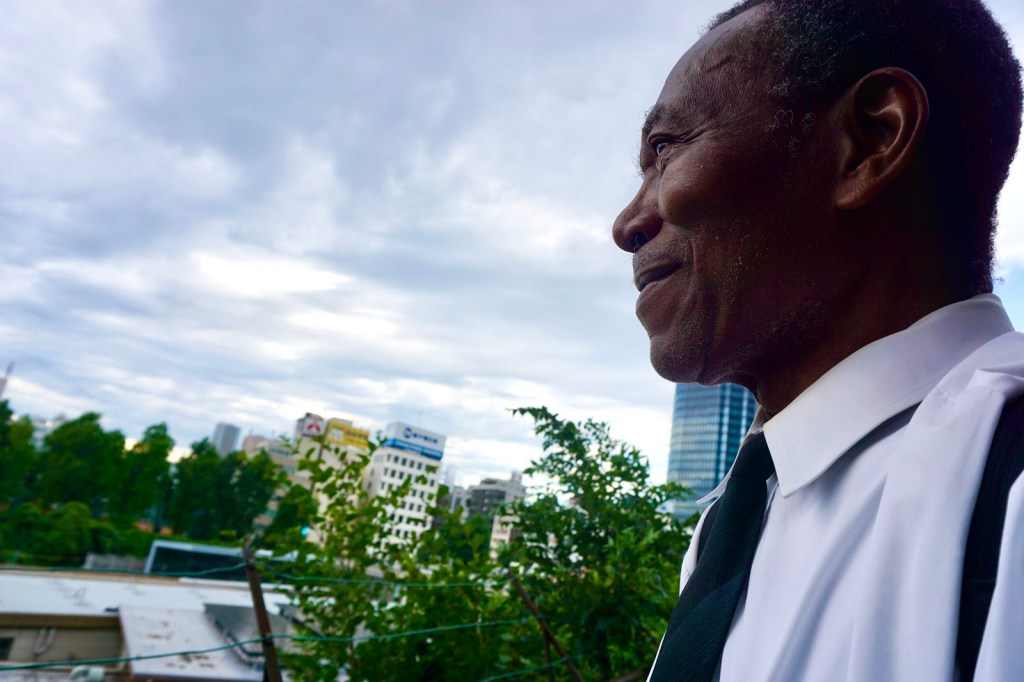
However, upon entering Japan, Gabriel discovered, as a foreigner, a harsher reality than he had expected. He began to run low on his money during his first few months in Japan. Having little money at the time, Gabriel knew that he would have to make money in order to survive. Luckily, Gabriel was able to successfully move into a gaijin house in Hibarigaoka, Tokyo. A Nigerian man whom he met there introduced Gabriel to an English teaching part-time job, where he was able to financially support himself. Gabriel was able to pay 6 months of rent in the apartment that he was living in. Gabriel described this moment:
“I just hung on. I was lucky enough to have a job teaching English.”
Gabriel was awakened to how toilsome it truly is to work and survive as a foreigner in Japan. He wondered about how he would ever be able to save money and keep living in a strange, foreign, and completely different country, where he only meant to make a brief stay in.
2.2. The Curse Darkens: Global Economic Recession
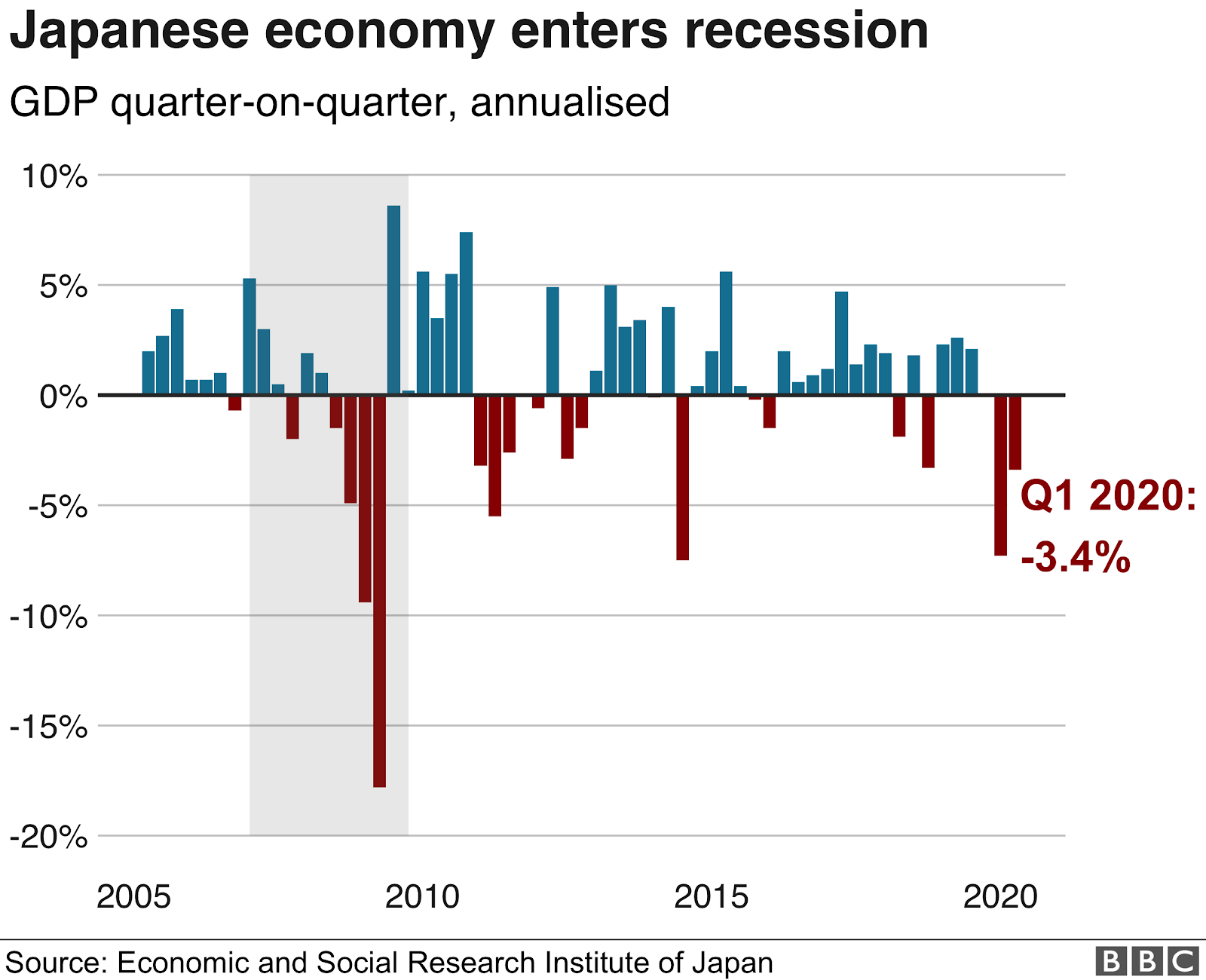
A few months stretched into several years. Gabriel was working 2 to 3 English and German teaching part-time jobs at a time, and yet was barely keeping up in making payments to his apartment rent. Gabriel mentioned what this hardship was like for him by saying that he wasn’t able to save any money and that this vicious cycle and struggle continued for him as he tried to make a living in Japan. Additionally, he said that “this curse,” meaning his bare survival in Japan, would get stricter and stricter for him. It was in the year 2007 that the curse had become a lot harsher for Gabriel. The global economic recession hit worldwide and as a result, organizations, including Gabriel’s school, had shut down. Some of the students whom he taught private lessons to went off to study and work abroad, and as a result, Gabriel was struggling to financially keep up yet was no longer able to pay his rent.

His landlord was kind enough to let him stay, but things went even worse where for two winters, Gabriel could not pay his electricity bill, which meant he was cut off from gas, and eventually even water was cut off for him. Gabriel was running out of choices of what to do and how to live in an apartment where most of all basic human needs were cut off. Not being able to cook at that time, Gabriel anxiously thought and pondered what he could do. He soon discovered that the bento boxes become half-priced at late night in the local supermarket. So, he was able to survive by waiting until late at night in order to buy these discounted bento boxes, which sustained him despite the terrible situation he was in.
Being a naturopathic expert and cherishing health more than anything, Gabriel was still very keen and aware of keeping up with his health throughout the hardships he faced and the lack of supplies he had, so he didn’t have any serious illnesses despite being cut off from basic necessities. Gabriel felt like his faith was wisping away… He was going to church (see section Christian connections – How Gabriel continues to be sustained, physically and spiritually for more information about the church) but stopped going because of his grim situation. As he recalls this time, Gabriel says:
” I stopped going to church regularly because of the series of disappointments and difficulties in my life. The disappointments and difficulties were that despite my family background as being in the upper middle class and my academic and professional promise, I couldn’t get a full time well-paying job. “
Gabriel was tempted to stop believing that he could do better because nothing seemed to be getting better. He didn’t know how much more he could take of this and wondered if he could keep holding fast to the strong faith he once had.
What started out as a simple trip to make money and go back home, was now ending up being a 17-year-long stay for Gabriel. To keep his hopes up about the crucial situation he was in and maintain the strong faith he has in Jesus, Gabriel began writing his book about being healthy, about love, and about his faith, from 2002 during the terrible situation he was in.
2.3. The Help I Can Give Others
As Gabriel started to write his book, he struggled to find a publisher due to his complex situation and the lack of financial investment he was making at the time. Once Gabriel managed to collect a certain amount of money in a couple of years, he finally found a publisher in 2008. That is when the book Perpetually Healthy, Good-looking & Rich by Dr. Gabriel Osaheni Aghedo was finally published to share with readers a new view towards health and a way to tackle societal negative influences people unconsciously perceive. The book served as a place where all of Gabriel’s knowledge on health, the human mind, and faith have come together to make a change to society.

Gabriel’s book aims to tackle the issue of age discrimination and the mental limitation that society and individuals put on their own potential and abilities. As he argued:
” Society puts limits on what people can do depending on their age. This also leads us to think that we are not good enough or can’t do these things. But that is not true. “
He further stated that “these problems are also reasons for depression and deterioration of the body and mind.” One example he gave is the negative cycle of depression, self-denial, and other mental struggles that people encounter after retirement. This is a statistical phenomenon where there is an increasing death and suicide rate of elders, due to depression and lack of self-worth from the societal disconnection they encounter. Gabriel attempts to challenge these mental limitations and cycles that also in the end give a negative outcome towards the body. Having this book as a milestone, he hopes to make a change through his ultimate dream as a business mogul.
In his book, he explains “The diagnosed disease is only less than 10% visible part of an iceberg. That means, there are more issues and illnesses we haven’t figured out yet.” Therefore, Gabriel aims to provide a naturopathic way of tackling these problems, which serves as a method of self-healing, thinking positively, and having a mindset that leads the physical body to a healthier state.
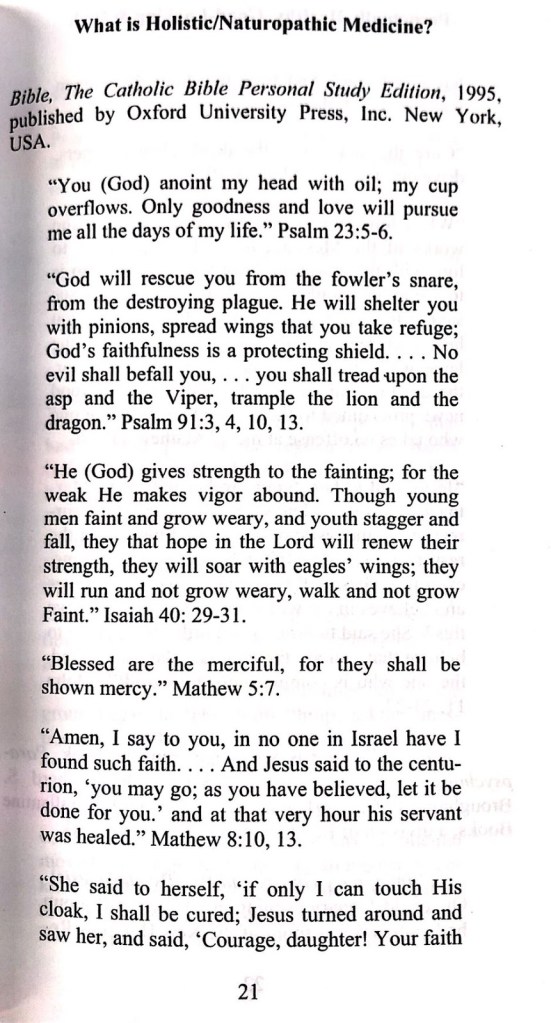
While providing detailed examples of how one could improve their lifestyle, Gabriel also includes multiple Christian verses from the bible. Some passages include the following:
” She said to herself, ‘if only I can touch His cloak, I shall be cured; Jesus turned around and saw her, and said, ‘Courage, daughter! Your faith has saved you.’ And from that hour, the woman was cured. “
Matthew 9:21-22.
These passages Gabriel decided to put in his book are what he focuses on when he reads the bible as well. As Gabriel emphasized, “These values and efforts are the key aspects that humans need to consider in order to live a long and healthy lifestyle, both physically and mentally. It’s the power of believing and the potential that each of us possesses inside us.” A way on how Christianity could give a positive outcome to our health and mind. This philosophy from his faith has also been applied to his life values, as he never failed to neglect his faith or mental state while living in Japan. He shared that:
” It is important to think positively, be happy, and keep our hopes up. Then, the physical body would also answer to that mindset. “
He wanted to send his book back home and maintain strong connections with his people and his family back in Nigeria by asking his sister to distribute the book to her neighbors. However, when sending the final published book in 2008, Gabriel didn’t realize the terrors that would be unleashed on him and his family. The book caught the attention of the terrorist group Boko Haram. Enraged with his decision, Boko Haram threatened Gabriel that they will without a doubt take his life if he ever steps foot in Nigeria again.
2.4. The Dark Truth
Boko Haram is an extreme religious group that emerged in Nigeria in the early 2000s. It originated in the northern part of Nigeria. Their mission is to make all Nigerians follow their religion, and in Gabriel’s words, “Islamize Nigeria. Through their attacks, they have burned churches, raped women, and done all sorts of atrocities. They are hardened criminals, not afraid of even dying because they believe that for their religion Islam, it’s the act of Jihad.” (*most Muslims relate to the idea of Jihad in a rather peaceful manner far from those violent acts by extremists.)

Regardless of where Boko Haram is, there is no difference in the violence they choose to conduct even in a foreign country which as Gabriel described:
” If Boko Haram had the financial power to come or send someone to Japan, they would try to send someone to kill me, instead of threatening my family back in Nigeria. “
In reality, these Boko Haram attacks have been seen beyond Nigeria but also in Cameroon, Chad, and other surrounding countries in Africa. As Gabriel expressed, it is a matter of their financial issues preventing the attacks to expand beyond Africa. Once Boko Haram found out how Gabriel’s book was based on his belief in Christianity, and having no indication from the Quran (the holy book for Muslims / believers of Islam), they announced his fatwa (a formal ruling or interpretation on an aspect of Islamic law) making it impossible for Gabriel to return to his home country, Nigeria. As Gabriel shared, “If I were to go back to Nigeria, I will be a dead person.”
The fight between Christianity and Boko Haram in Africa has been a long-lasting struggle, where many soldiers are being injured, and in worse cases killed due to these violent attacks. Recently, Boko Haram has started to use sophisticated methods in carrying out its atrocities. Even though Boko Haram originated from northern Nigeria, they come all the way to the southern part where Gabriel used to live and attack the grains and crops of the farmers. This makes it hard for the farmers to sell those crops, which also results in the farmers not being able to buy their own food or necessary needs. In the worst cases, Boko Haram would kill the farmers and rape their wives. As Gabriel describes:
” Because Boko Haram sees southern Nigerians as Christians, they do not care about their lives. So there is always someone attacked or killed everyday. They’ll do anything to make Nigeria into an Islamic country. “
These situations also led to an increase in refugees. UNHCR (United Nations High Commissioner for Refugees) statistics have currently reported 244,000 refugees and 2 million who were internally displaced in Nigeria. This number increases to over 550,000 combining those displaced in Chad, Nigeria, and Cameroon.
2.5. The Book That Changed Everything
Because of his encounter with Boko Haram, Gabriel became an asylum seeker in the year 2008. Hearing the news and the threat from Boko Haram was not an easy feeling for Gabriel to go through with. Not only would he never be able to go back to his home country, but he now also faced new challenges concerning the protection of his family.
Upon finding the book, Boko Haram began to go to his family’s household and harass his family members. The family was threatened to be killed if they don’t tell Boko Haram where Gabriel is, and were severely attacked by Boko Haram members.
” I was very anxious when I heard the news from my fellow Nigerians and my sisters. I was not only anxious about myself, but I was also worried about my sisters who were still in Nigeria. It was highly possible for them to become the victims of Boko Haram. I am here in Japan physically safe from the violent attacks, but my sisters are still in Nigeria. I am very worried about them. So I pray everyday to God for their safety and well-being. “
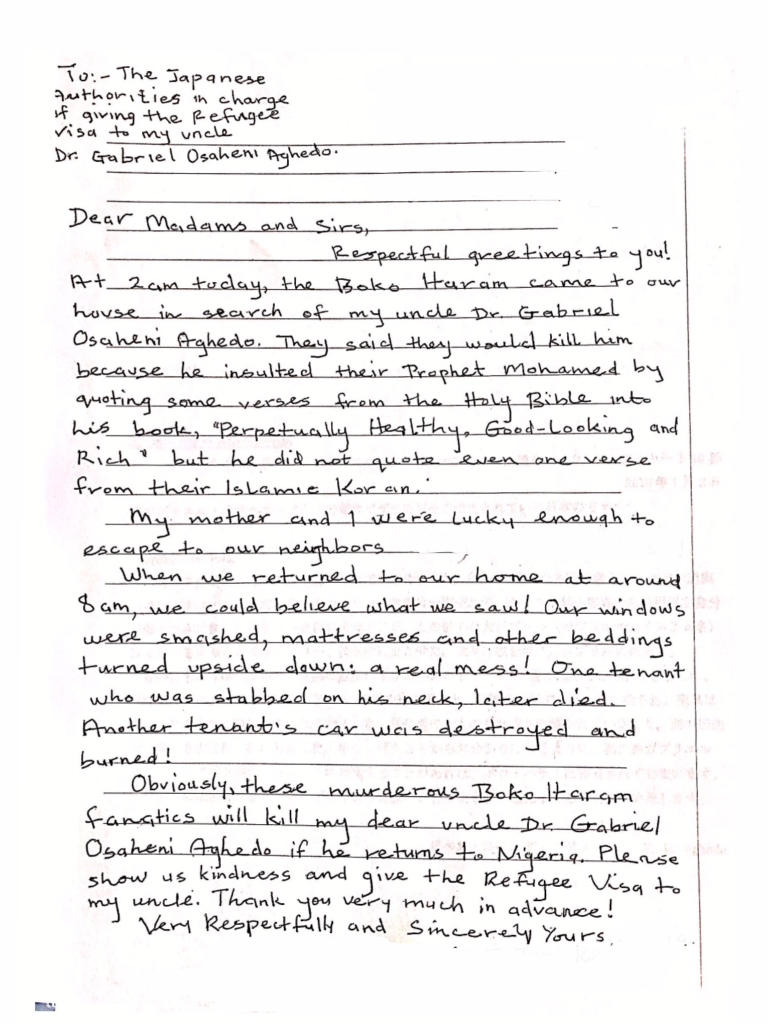
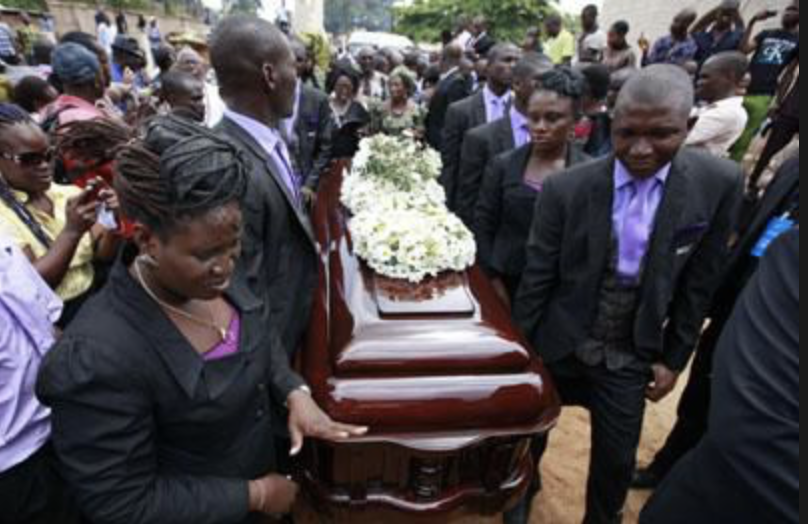
Even though his location living in Japan made him safe from the attacks, he continued to pray for his sisters’ lives and safety and hopes to go back to Nigeria one day to meet his family and friends if these attacks were to cease.
After a few years, he was informed that his sister passed away in 2013. His sister died due to sickness caused by the harassment and threats she and her family received from Boko Haram. Gabriel’s family members continued to be harassed through the years, where his other sister and niece were attacked and fisted by Boko Haram. They barely managed to survive, though the rest of the members in the home they were living in were killed. Gabriel feels petrified and despaired to know that he not only will be eternally disabled to be reunited with his family members but that his family is also now heavily endangered and may not ever be able to know peace again. His book had turned into one of his worst nightmares as it was the trigger for him to become a refugee.
2.6. The Worst Day Ever
After 4 years had passed since his book was published, Gabriel was gradually becoming even more poor and hungry without a job. He thought that he could perhaps make a profit off the book, but nothing ever came out of the book that he wrote except the heavy persecution that has been brought on his life and family. His sisters whom he cherishes so much are being killed or close to being killed… Gabriel mentioned that his family continues to be in hiding to this day, as they never know when they may be attacked by Boko Haram again. Knowing that his family members are constantly in danger and are passing away one by one, Gabriel was constantly driven to indescribable anxiety and despair. Just when things couldn’t get even more dreadful for Gabriel, his landlord asked him to leave his apartment on February 17, 2012, and he was evicted from his apartment. After he packed his bags and he was walking alongside the road towards the bus station, Gabriel wondered about how his new life as a homeless man would be.
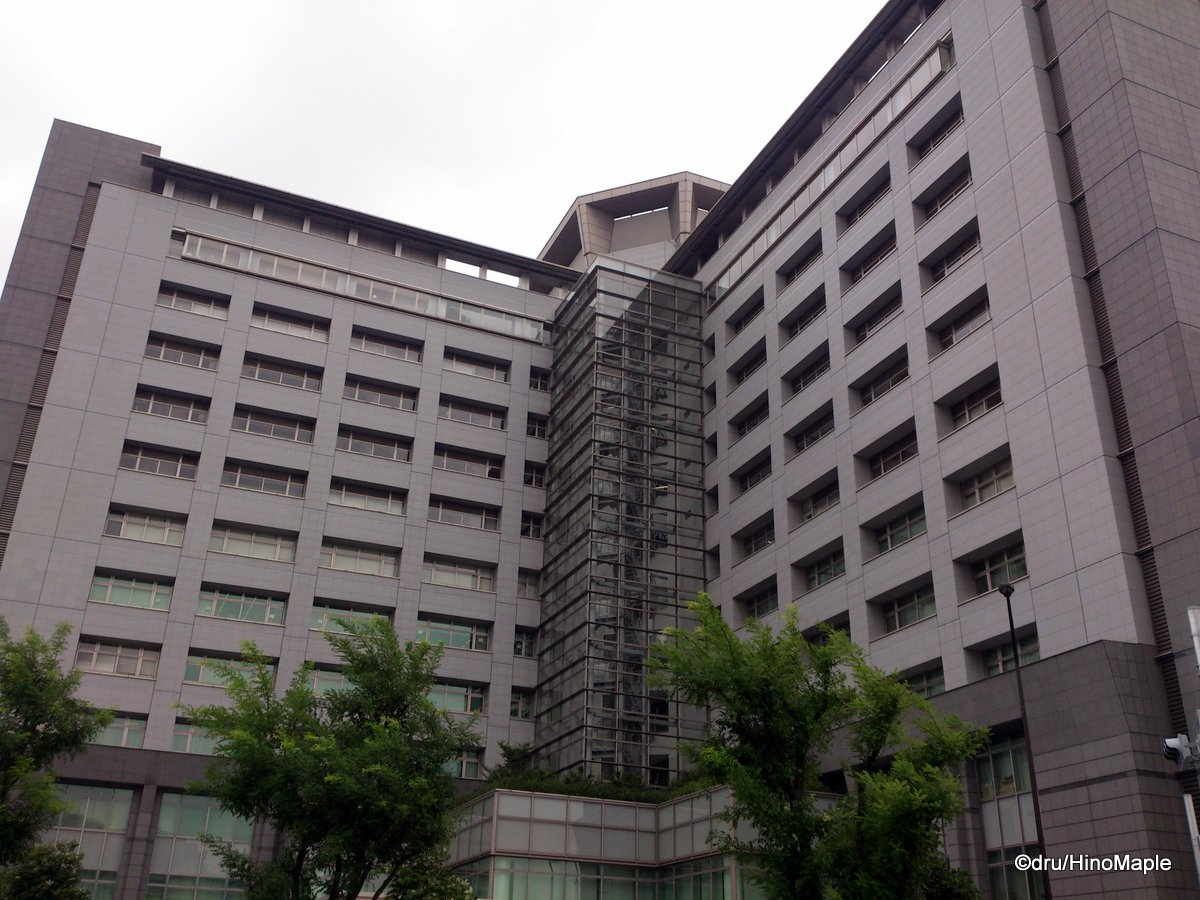
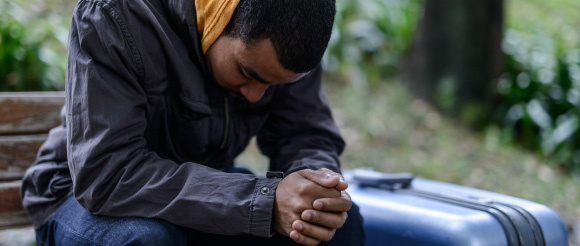
Just at that moment as Gabriel was walking, he was approached by the police. After asking a few questions, the police found out about Gabriel’s situation at the time and pulled him in for further questioning at a nearby station. Shortly afterward, Gabriel was sent to the immigration center in Shinagawa. Gabriel stated that this was the most difficult and depressing time for him. He even mentioned that “It was the worst, worst day ever” and that it was all very “humiliating” for him. That day was when Gabriel was not only pushed out of the place he once lived in but also the day in which all his identity and dignity were stripped bare as he was sent to the immigration center. All he could do that day was pray to God about his dire and immensely afflicting situation…
2.7. Detained and Hopeless
Upon arriving in Shinagawa, Tokyo, Gabriel was asked by the immigration center if he could just go back to his home country. Now that his life is being constantly threatened by Boko Haram, Gabriel simply told them that the only choice he has is to stay in Japan. Gabriel described what this was like in the following statement:
” I finally told the immigration at Shinagawa, ‘I won’t return to Nigeria.’ They asked me why, then I told them, ‘I can’t return to Nigeria because of Boko Haram. They have already pronounced fatwa, meaning they will kill me if I return…’ To which the immigration asked me, ‘In that case, why didn’t you apply for refugee status all this time?’ So I told them, ‘I was scared… I didn’t apply because I didn’t have any visa. I was scared that if I came to the immigration office, you would lock me up.’. “
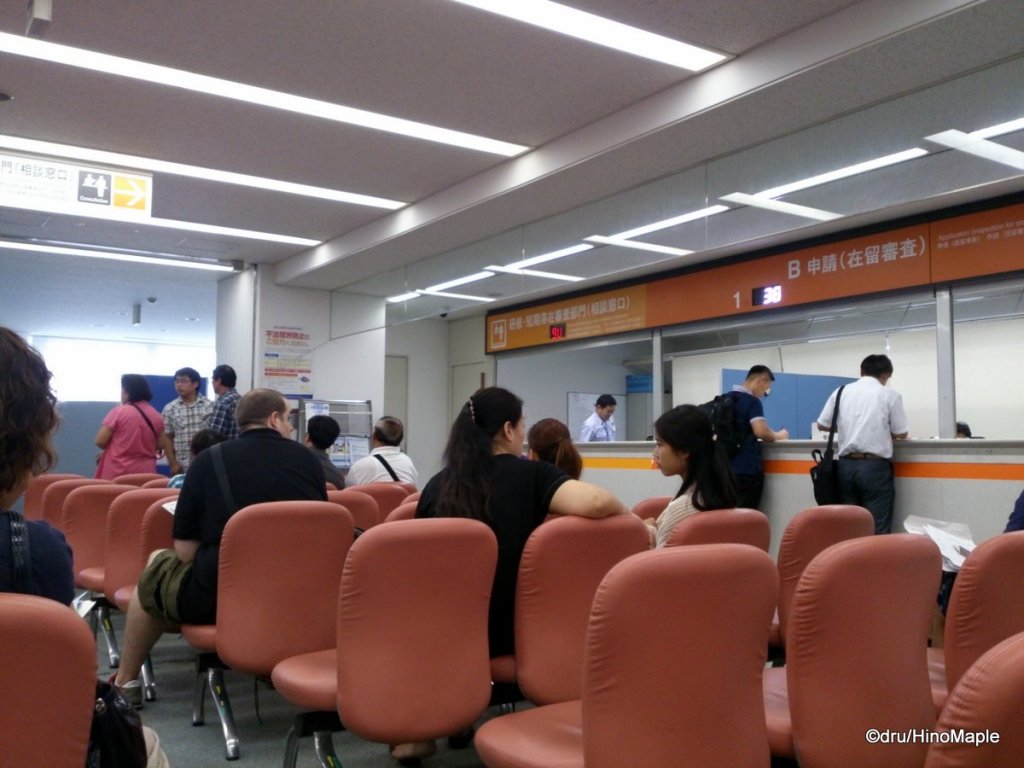
Gabriel knew that he had to apply for refugee status because he is now being persecuted by Boko Haram, but was also scared to do so because he was without a visa. This reflects the broken state and harsh reality many other refugees have to go through. While they need to apply for refugee status, they know that if they do so without a visa, then they would be locked up in the detention center, as Gabriel said.
Sure enough, with this answer, Gabriel was immediately detained at the mystifying, hidden, and very unknown detention center that is in the same building as the immigration center, without being informed of how long he will be detained. Gabriel was led up to a room in a building that was inhabited by many other foreign strangers from other countries… (figure 16) Entering a room that made him feel as if he was being shut in like a prisoner (while coming in with absolutely no money in his pockets), Gabriel was perplexed and kept pondering on the question of whether or not he could maintain his faith and survival in a concealed place like this; a place where he could be in long-term detention as he never ending waits for a release. He had no idea how he could ever get out, nor knew if he could make any friends.
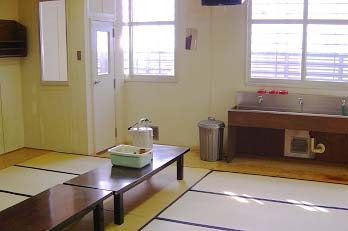
Could he even maintain a connection with people whom he knew so little of on the outside life of the detention center in Japan? Would he even be permanently cut off from communication with his family back in Nigeria? Questions like these were floating through Gabriel’s anxious mind as he stared into the room that would now become his ‘home.’ All Gabriel could do is to pray that the situation will change and that he will be provided with money, food, and basic hygiene, even when being in a completely foreign place with little to no supplies. By this point, there was no way in which Gabriel could tell how long he would be inside this tiny room in the detention center…
3. From Detention to Release
3.1. The Detention Center: The Beginning of the Never-Ending Wait
What pops up in your mind when you hear the word “detention”? The general definition is probably keeping someone in custody for a crime they are suspected to have been involved in or committed. They may be imprisoned or released, depending on how innocent they are, but detention centers do not function the same as the word “detention” suggests especially the ones in Japan. Like any other detention center in the world, those in Japan detain illegal immigrants, foreign criminals, and refugees. However, detention centers in Japan are known to have a bad reputation, especially in handling refugees. Once a refugee is found to have no proper visa, they are put into detention centers for a detention period that is neither announced nor decided. As if it is not bad enough, they are deprived of basic human rights, and their freedom is completely stripped from them.
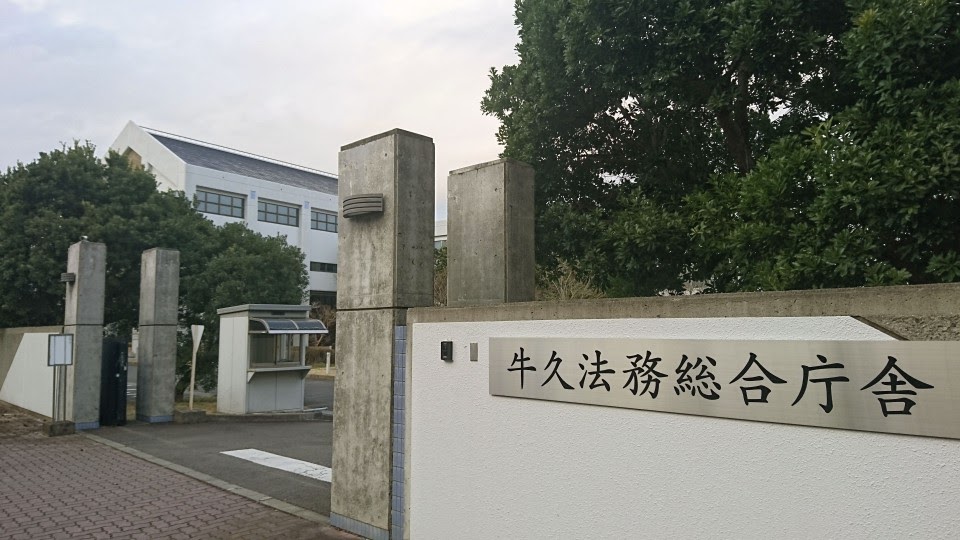
Detention centers in Japan are operated by the Immigration Bureau, which is part of the Ministry of Justice. There are 16 detention houses and three long-term immigration detention centers in Japan. In 2018, there were 1246 foreign detainees in Japan and 46% of them were having a hard time applying for refugee status. Among the current refugee applicants is Gabriel, who had been put into two detention centers since 2012, namely the Tokyo Immigration Bureau Detention House and Higashi-Nihon Immigration Center. Gabriel calls them the Shinagawa Detention Center and Ibaraki Detention Center as they are located in these two regions. Gabriel shared his life as a detained refugee, revealing that those depressing moments and experiences at the detention centers permanently dominate his memory.

Gabriel first talked about the restrictive nature of different facilities at the detention centers. The center is divided into several wards, but detainees are prohibited to interact with those from different wards. When Gabriel was in the Shinagawa Detention Center, he was put into a room that was shared as well as packed with four other detainees. The room contained a shower room, but the laundry was done in a shared space in the ward. Daily necessities, such as detergent and toiletries were not provided at the center, which was especially difficult for refugees like Gabriel because they came to the detention center empty-handed. Although money is a luxury for detainees, they have to use it in order to buy daily necessities from the convenience store located within the building, which they are required to ask officers to do for them. Sometimes, detainees also resort to buying food from the convenience store because the food provided in the center is either not enough or not made for those with a different cultural background. It is also because the repetitive menu in their daily poor-quality meals forces them to resort to buying food from the convenience store.
Gabriel also explained about the expensive telephone prepaid cards. There are telephone booths for contacting people outside the center, whether it be family or friends or refugee support groups. Detainees need to buy two prepaid cards which cost 5200 yen together. Not every detainee is a criminal nor are they prisoners. However, why is a detention center very similar to a prison? Why aren’t detainees provided with the most basic daily necessities? Why do they have to use their own money to buy food? Why are telephone prepaid cards expensive? Most important of all, why do refugees like Gabriel who came into the detention center empty-handed have to go through all of this?

Next, Gabriel kept on sharing what a day in his life at the detention center was like and how the freedom of detainees could be limited in certain ways. Gabriel’s day in the detention center started with a little exercise in his room at 7:00 AM when officers would walk around to wake people. Between 7:00 AM and 7:30 AM, Gabriel would eat inside his small room with his roommates since there is no communal dining hall. After breakfast, the kitchen and cleaning staff would come by to collect the used plastic cutleries and plates. According to Gabriel, from time to time, some detainees committed suicide using objects from the kitchen and that is why only plastic cutleries and plates are used to serve meals. At 9:00 AM, officers would conduct a roll call to make sure that everyone was in his room, and that no one had harmed themselves or committed suicide. After the roll call, detainees were given free time and were allowed to leave their rooms. Some detainees would go to the exercise hall, either to exercise or socialize with other detainees, while others would spend their time on personal matters, such as doing their laundry, meeting visitors, and calling family and friends using the telephone booth. As for Gabriel, he would usually socialize with other detainees because this was the only time he was free to move around and exchange refugee information, and how to apply for refugee status.
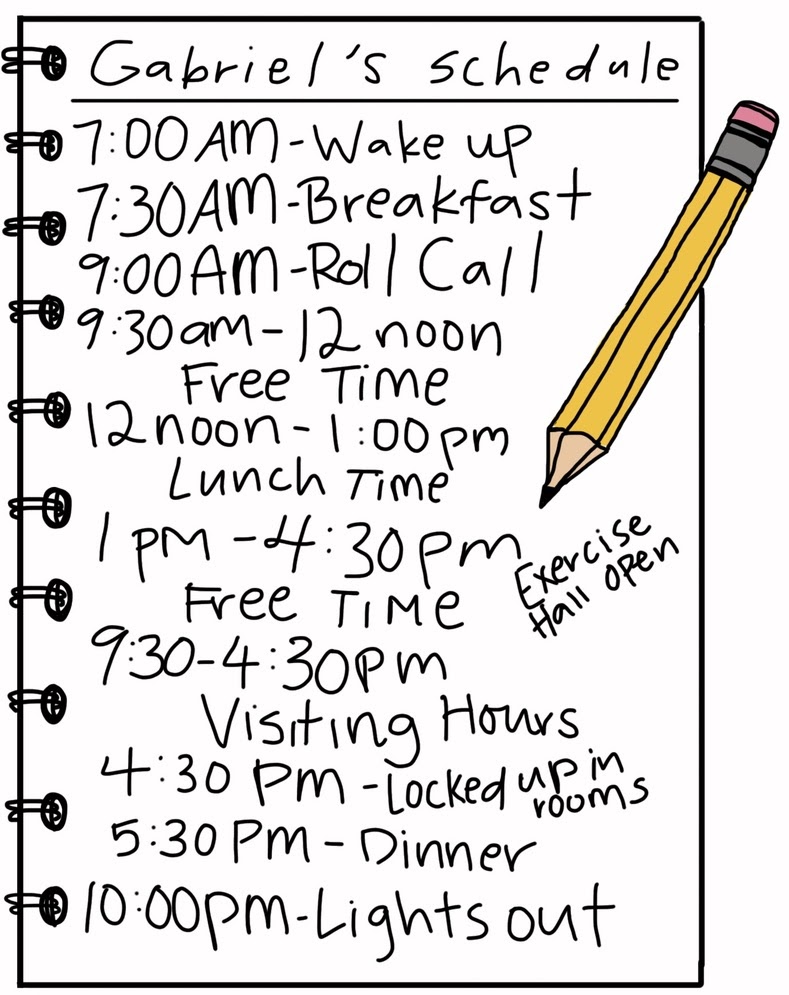
Then, from 12:00 PM to 1:00 PM, all the detainees were locked back in their rooms and they stayed there for lunch. From 1:00 PM until 4:30 PM, free time was given again. Gabriel would usually stay in his room, where he would read the Bible or other inspirational books and pray to keep himself positive and believe in achieving his imminent freedom. Then at 4:30 PM, Gabriel and his roommates were locked back into their rooms respectively and dinner was served at 5:30 PM. After that, Gabriel would spend most of his time reading books while others watched TV in his room. Gabriel said that his roommates would always argue about what channels to watch on TV. But he is the kind of person who would do anything to stay out of arguments, so he just read books. At 10:00 PM, lights were out and officers started to patrol for suicide precautions. However, usually, many detainees did not go to sleep straight away while Gabriel would stay up late or read books. The routine neverendingly repeated day after day, month after month only to have Gabriel devoured in whole by the restricted life within the detention center.
3.2. Detention and Depression: Difficult People Under the Same Roof
For Gabriel and every other detainee, the detention center is notoriously an unpleasant place to be. Gabriel called those days and months he spent at the detention center “the most horrible time of his life in Japan”. It began on the day he was sent to the Shinagawa Detention Center. He was locked up there for seven months and then transferred to the Ibaraki Detention Center only to be further locked up for another year and a month.

Regarding his first impression of the detention center, he added:
” My first impression was that I don’t really see any hope in living here. I just resigned myself to whatever will happen. Let what comes come. Let whatever happens happen. “
Having no knowledge of what lies ahead in the imminent future and bearing the burden of financial difficulty, he was eventually overwhelmed with depression.
In his room at the detention center, he was given a cramped space to share with three other roommates. For Gabriel, people in the center shared more or less similar faith with him. Many of them were foreigners who, according to Gabriel, “left for their home countries to seek greener pastures.” No one, including him, would have expected to end up being trapped in a detention center. Nevertheless, regarding everyone else as an equal, Gabriel always tried to be friendly to others and to stay out of trouble. Still, he was confronted with difficult people from time to time. Once, there were two roommates who constantly offended Gabriel, showed no respect for him, and violated his privacy. They would use plenty of the shared space when they prayed for their religion but asked him to turn off the lights when he read the bible. Gabriel spent plenty of his time reading the bible because he needed it in order to stay positive and have hopes for his future. Telling him to turn off the lights when he was reading the bible was as bad as telling him to quit hoping. After all, Gabriel admitted, “My strong faith kept me alive,” and that very faith came from what he reads. He knew that he had to fight back, so he called for the officers’ attention to try to reach a compromise.
As a result, he was allowed to have his lights on when he was reading. It did not take long before his lights were all turned off again and he had to stop reading, the very thing that was his favorite pastime. This happened because one of the roommates, despite being a newcomer, behaved as if he was superior to Gabriel and enjoyed telling him what to do. Gabriel wanted no more trouble and so he eventually surrendered although he was stressed. In Gabriel’s words, these people are simply “disagreeable, disrespectful, and rude.” Those who pick fights or cause trouble are often sent to special wards, but Gabriel’s roommates were neither too aggressive nor troublesome to be sent away. So, he ended up being trapped with the people he did not get along with 24/7. Gabriel is a good-natured person who likes befriending people, but Gabriel was challenged and tested as he encountered and had to live with these very difficult people. For Gabriel, to see them every day in such a confined space is to suppress his feelings as well as challenge his mental well-being every day. All he wanted was privacy and freedom, but all he was getting was stress, confinement, no privacy, and trouble.
3.3. Detention or Imprisonment?
” Hunger strikes are a serious problem in the detention center. Some detainees go on hunger strikes and refuse to eat. Actually, when I was there, some of the detainees decided to go on a hunger strike to protest against the idea of being detained and not being given a visa. They wanted to be released. They wanted all detainees to be released. Some wanted unconditional amnesty, so they decided to go on strike. “
Hunger strikes commonly happen in the detention center because some detainees believe that they deserve better treatment. However, the hunger strike in Gabriel’s words is, “senseless or Iminai (equivalent meaning of senseless in Japanese) and not going to achieve anything.”
Gabriel stated that the motives behind hunger strikes came from “the detainees who think they have to lead other detainees.” He respects their choice, decisions, and attitude toward freedom, but he never joined them because he did not like to be dominated by those who led the strikes. Gabriel added his belief that following someone blindly can result in negative consequences and that “animals jumping off the cliff into the sea only to face death.” In addition, Gabriel shared another reason why he opposed hunger strikes, which is that he did not want to risk his own health or waste the food and the precious time of kitchen helpers who prepared the food. Gabriel’s attitude towards hunger strikes in the center is a reflection of his peace-loving, independent, and sympathetic character.
Gabriel shared another dark truth about the detention center, which is the poor medical care system. Gabriel stated that he has always been a healthy person and so he has little to worry about suffering from a severe illness in his life. As he explained:
” Having faith in God and practicing one’s religion, are life-saving tactics at the detention center. “

During his life outside the detention center, Gabriel never had health insurance, but he did comment once that it was “risky and unfair” that refugees like him are not allowed to have health insurance.

Inside the center, he remained healthy all time, but once when one of his fellow detainees informed the officers that he was feeling unwell, he was just given painkillers. Japan Association for Refugees has reported similar cases, claiming that the detention center lacks the most basic care for detainees because no matter what the symptom is, only painkillers are given. In addition, the center lacks in supporting those with chronic diseases such as diabetes. As a result of the poor system, a Cameroonian detainee who had diabetes died tragically struggling on the floor in his room in 2014 (Figure 25). According to Gabriel, medical issues are handled with “ignorance” by guards who often conclude too quickly about a detainee’s sickness by simply saying that it is not urgent or that it can wait. Even if it is urgent, there is an unnecessarily long process of application to see a doctor, which takes 2 to 5 days. During his stay at the Shinagawa Detention Center, Gabriel learned that a detainee died from illness.
” When the detainees wanted to see a doctor, there was no immediate response. They were told to wait a little longer. It was unfair and unfortunate to see this. They should get prompt medical attention. “
When Gabriel explained this, he was pointing out the importance of proper medical attention that detainees deserve. As a doctor, Gabriel not only knows how to keep himself healthy his entire life but also has a good understanding of how much medical attention a patient needs. He cannot help but feel sympathy for those who go through physical suffering triggered by the poor healthcare system in the center.
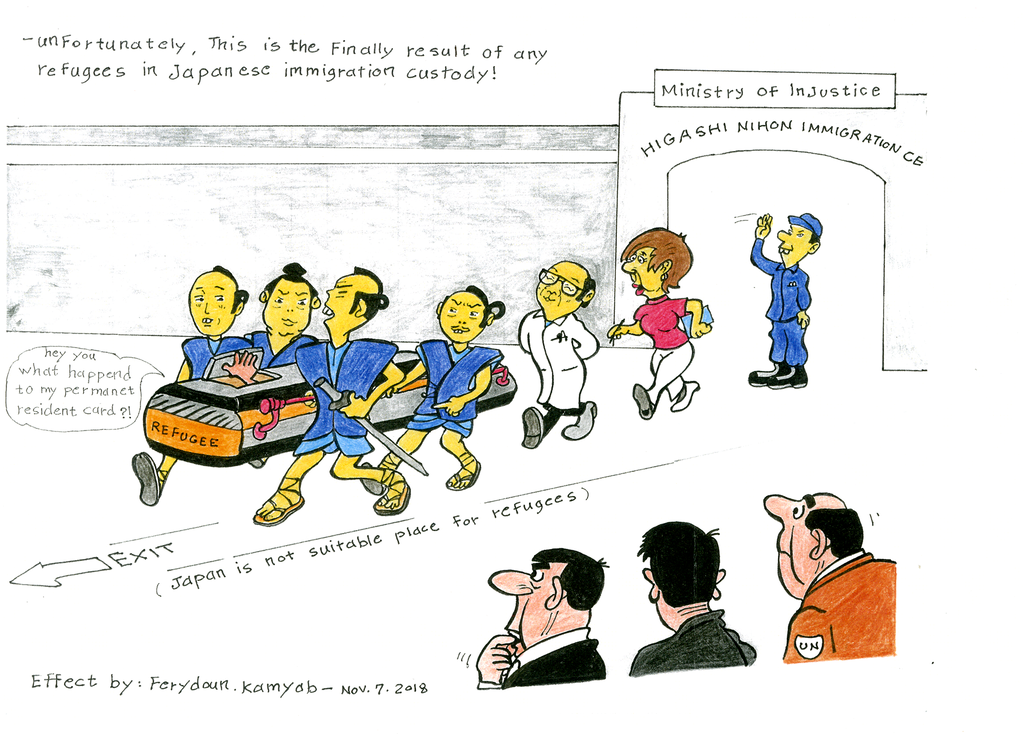
Lastly, another dark truth about the detention center to be revealed is suicide incidents. From time to time, news media reports suicide cases in notorious Japanese detention centers. It definitely sounds a lot more shocking to hear more cases of suicide incidents that are not reported in the news. Gabriel revealed that when he was inside the center, he heard about a Filipino man who committed suicide. In addition, during the time Gabriel was released from detention, he heard that an Indian man and a Nigerian man committed suicide. The deaths of detainees are no longer rare, given the fact that the death toll in Japan’s immigration system has hit 14 between 2005 and 2015, with most of them confirmed as suicides. Gabriel critiqued the current system by saying that it forced the detainees to suffer from “extreme depression”. He admitted that he empathized with those who committed suicide and understood that the temptation to commit suicide was strong. Gabriel expressed:
” Whatever makes them to commit suicide are the things to be blamed. I feel like I have no right to judge, blame, or scold them. “

At this point, it is not hard to question the detention center as to whether it is prison-like or not. Based on both his first-hand and second-hand experiences, Gabriel is not hesitant about calling the detention center a “prison”. Not knowing when the detention period ends, refugees in the detention center will just do anything but sit and wait; the same applies to Gabriel. At this point in his life, his ultimate goal was to get himself freed from detention. Nonetheless, who knows more challenges were yet to come?
” Life in the detention center is psychologically and emotionally torturing because one is deprived of freedom and opportunity to live his/her life. Even though I am out now, it’s like I am still in prison because I am without a visa. I want to be able to live my life and travel out again. “
3.4. A Hopeful Future, yet a Long Journey Ahead
Gabriel had to constantly worry about his future while in the detention center. Initially, it was full of uncertainty, and yet all he could hope for was to be released and to try and get a refugee visa in the name of freedom. Still, where should he start, given the fact that he was trapped in a prison-like place? Just like many other refugees, when Gabriel was first taken to the detention center, he was perplexed, fearful, and worried. What’s worse is that as a new detainee, he knew nothing about the system and procedures regarding refugee application. After all, the detention center did not provide him with refugee information, and officers who work there did not give him the information voluntarily unless he asked them. Even so, Gabriel, fortunately, was able to find out that his connections with fellow detainees and volunteer groups were one way to gain the information. Based on the information he had collected, Gabriel made his first move toward what he thought was freedom. Of course, it is a refugee’s ideal future to live a free life in Japan with a proper visa. Yet no one, not even Gabriel himself, knew what would cost him to get such freedom.
3.5. Journey Towards the Big Moment
” I almost lost hope to live but my strong faith kept me alive. I believed that I would be able to leave the center. When I was released, it was like a miracle. “
Gabriel talked about how his faith in religion had given him hope for the future while in the center. As a devout Catholic, Gabriel spent plenty of his time reading the bible and his faith in religion itself has always been a huge source of moral support for him. During the detention period, he said he got a lot of strength and hope from daily intense prayers, bible reading, and encouraging his fellow detainees about the need to persistently believe that they will be released and eventually be given visas to live in Japan. Gabriel strived to maintain a positive mindset, be kind to people, and help them. When others were on hunger strike, he stayed out of it, feeling grateful for those who cooked for him. When newcomers arrived at the center, he shared refugee information with them just like his friends did with him before.
Naturally and unsurprisingly, because of his good-natured personality, Gabriel often received plenty of support and help in return. His friendship with fellow detainees has always been an extremely important part of his life. Initially, he had absolutely no idea of what to do in the detention center. But he was fortunate enough to have met kind detainees who generously shared information on refugees with him. He aimed to apply for refugee status, but knowing that it could take forever to receive approval, he decided to set his ultimate goal in the detention center as receiving karihomen.
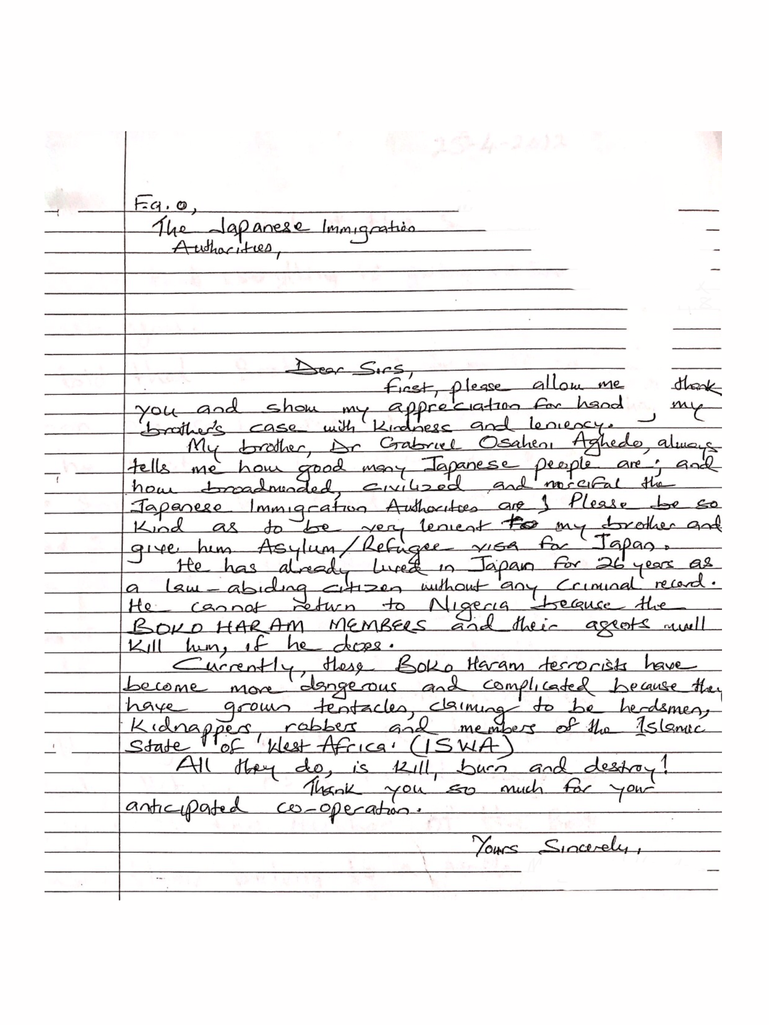
In the letter, Gabriel’ sister pleaded Japan’s immigration to give Gabriel refugee status, explaining that there is no way for him to return to Nigeria.
Karihomen is “a system of provisional release which provides you relief from detention but with several restrictions on your freedom.” Potentially, the special permission can free Gabriel from detention. However, there are a few restrictions. First, Gabriel must go to the Immigration Bureau to renew his karihomen every two months. Second, he must not go out of the prefecture he lives in without permission. Little did Gabriel expect that he had three other requirements to meet: to find a place to stay upon release, to have a guarantor, and to pay for a guarantee deposit of up to 300,000 yen by himself. None of these requirements was an easy task to complete, and Gabriel said it was a “long struggle”.
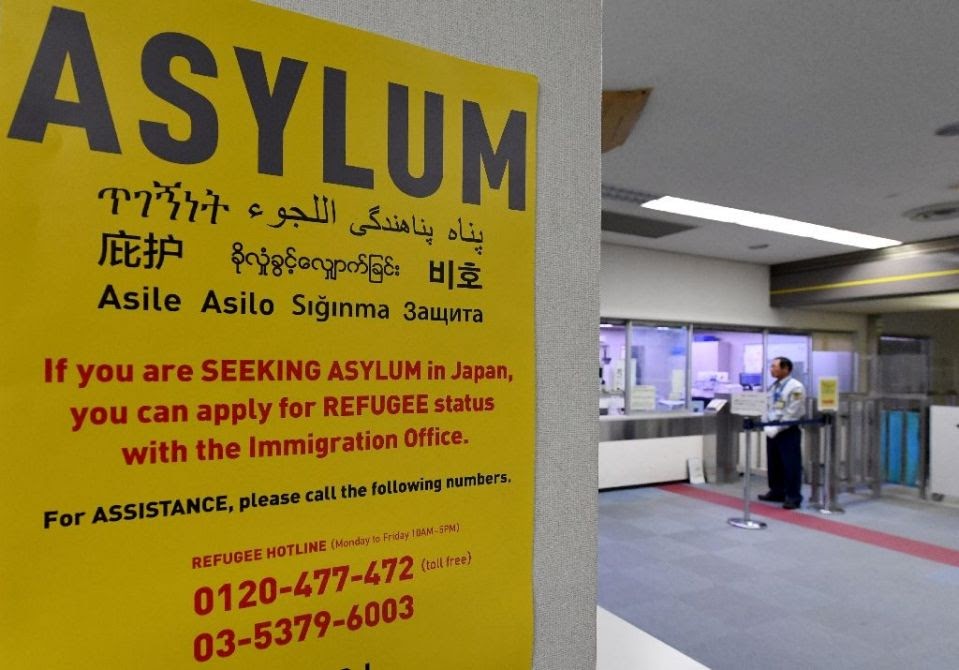
Yet Gabriel was lucky to be surrounded by nice, generous, and supportive friends in the detention center. According to him, when he was at a loss during his first karihomen application, one of his fellow detainees helped him contact a volunteer group to have a guarantor who found him a place to stay. Needless to say, money troubles are the biggest burden on anyone who applies for karihomen. Then again, Gabriel was helped by his close fellow detainees who made small but collective contributions so that he could pay for his karihomen fee. The struggle was long enough for him. A year and eight months felt like a never-ending wait for Gabriel. He finally got what he calls “a big miracle” of his life.
However, it is just a slight second that this seemed like a miracle. He realized that the struggle had not yet ended, and more difficulties outside the detention center were still yet to come. These thoughts he had could never be erased from his memory. Gabriel sighed in disbelief:
” It was very hard to survive outside the detention center as well. In the detention center, you don’t have freedom nor privacy but you have a roof, food, and a place to take a bath. When you’re out of the detention center, you have your freedom and privacy, but it is hard to sustain your living or even to find a place to stay. You are very lost even if you get out. “
Despite being on karihomen, he was given little support to survive. He was confronted with complex feelings about the different treatments of the immigration system on official refugees and those who are on karihomen still applying for refugee status. His karihomen might not guarantee him the most promising future, but it was then his ultimate plan and first move toward receiving refugee status. As he fought on to achieve that, what kind of survival story would he take us through? What kind of miracles awaits him?
4. Survival after the Detention
4.1. Finding a Place to Stay
Gabriel was finally released from the detention center in September 2013, with his new karihomen. This was the moment in which he was finally waiting, and the fact that he is now a free man, with permission to live in Japan, made Gabriel feel less like a prisoner. Because he is on karihomen and is unable to work in Japan, he needs all the support he can get in order to survive.

A generous volunteer, whom Gabriel was introduced to by a fellow detainee, had visited the detention center often while Gabriel was there and had offered him to stay at the volunteer’s home until Gabriel could get somewhat financially stable again. So Gabriel left the detention center with the volunteer and stayed with that volunteer. However, at the end of 6 weeks, the volunteer was unable to accommodate Gabriel any longer, which resulted in Gabriel becoming homeless for a month and a half. Lost and now knowing what to do, Gabriel decided to go to the Japan Association for Refugees (JAR) every day during the period in which he was homeless to see if they could help him. As a result, Gabriel was able to stay 3 weeks in an apartment given by JAR for free. After the 3 weeks, however, Gabriel was again without a place to stay. In January 2014, JAR introduced Gabriel to real estate agents, where he only had to pay a month’s worth of rent. Gabriel was finally able to move into an apartment that month and continues to live there to this day.
4.2. Christian Connections: How Gabriel Continues to be Sustained, Both Physically and Spiritually
Despite all of the hardships that Gabriel had gone through, Gabriel continues to thrive and survive where he is at. Gabriel had begun helping the homeless as a volunteer with the Ignatius church since before he entered the detention center. Every Monday morning, they would cook curry rice for the homeless. Gabriel was also able to eat the curry with the other volunteers. Along with this, it was because Gabriel was in the curry group that had gotten him to be supported by this one Christian lady in the first place while he was in the detention center. One day, he was suggested by a friend to have his article as a refugee written and get it published. Gabriel went back to that moment and talked about this in the following:
” So, that story, I gave it to the head of the curry rice… then he took it to a magazine… and my article appeared in that magazine. “
About a year after his story was published, one day he got a call from a Christian lady who saw his article and wanted to make an offer in order to help him out by giving him monthly financial support. At first, she asked him, “How much are you looking at? How much financial help do you really need now?” Gabriel was too shocked to believe it and too humble to give an instant answer because he did not want the lady to think of him as a greedy person. Before he could answer, the lady asked for his bank account and told him, “I’m going to be paying, giving you about 30,000 yen every month for at least one year.” He thought the support would eventually end in a year as promised by the lady. However, little did he know that the support would be extended beyond his expectation.

Gabriel described this lady to be “God-sent.” In other words, he believes that the lady was sent by God to help him in need at that exact moment when he needed it. To explain a bit further, up until now, the only help and support he ever received from volunteers (even at the detention center) was supplies (like food, and clothing), but never did he receive anything like this. She became someone important and vital for Gabriel’s survival and sustainability. This Christian lady also reached out to him after reading his article… This also is rare, because not that many people would take action to help someone even if they know that person is in need. The woman who found Gabriel was moved to reach out to help because she emotionally related to where he was in life, had compassion on how distressed he was in his crippling situation, and wanted to support him because of his positive personality. She took action, and she got connected with and got to truly know a refugee who was in desperate need and on the verge of being impoverished for good. Gabriel had said that not many people would give him or other refugees money because of how precious money is. He thinks that more people should be encouraged to take action and financially help refugees who are in desperate need like this Christian lady had reached out like a bright, warm light in the darkness over to Gabriel.

Furthermore, if Gabriel had not joined the curry group before he had been detained at the detention center, he wouldn’t have been able to not only connect with others but also to have his story heard in an article, which eventually led to him being financially supported.
Additionally, Gabriel had taken part in the choir of the Ignatius church he goes to every Sunday. In these small connections with the volunteer group and the church, Gabriel somehow maintains to stay hopeful, sustained, and positive in where he is at. He is able to share his difficulties and voice his story with people in the church, be a part of a community and be needed, and receive spiritual encouragement in his faith. Because of this, Gabriel had been able to keep enduring because of the fellowship he has been having with the members of the church. Positivity is something so important to Gabriel because that is what helped him to go through the dire situations he was faced with. Also, the Christian lady who had supported Gabriel back when he was still in the detention center continued to give him substantial support even after he was released. While she could no longer support him as much as before, she continued to support him in some ways to see if he was still stable in his finances, until February 2020 (she supported him for three and a half years in total).
Today, Gabriel receives financial help from friends inside the church. This is the only reason why he is able to keep surviving, despite not being able to work while being on karihomen. Additionally, the only way in which Gabriel can survive and abide by the rules of his status in Japan is to be supported by guarantors and those whom he knows. While he is not greedy and does not wish for others to view him in that way, he can only keep having a living with this important support. Gabriel has and continues to face many challenges in surviving today, but he is still being supported through the connections that have been made in the church. Through this, Gabriel is able to keep up, both physically and spiritually, in living in Japan with hope.
4.3. What Has Sustained Gabriel for 30 Years and His Views on Survival
” My Lord Jesus Christ is my lawyer. “
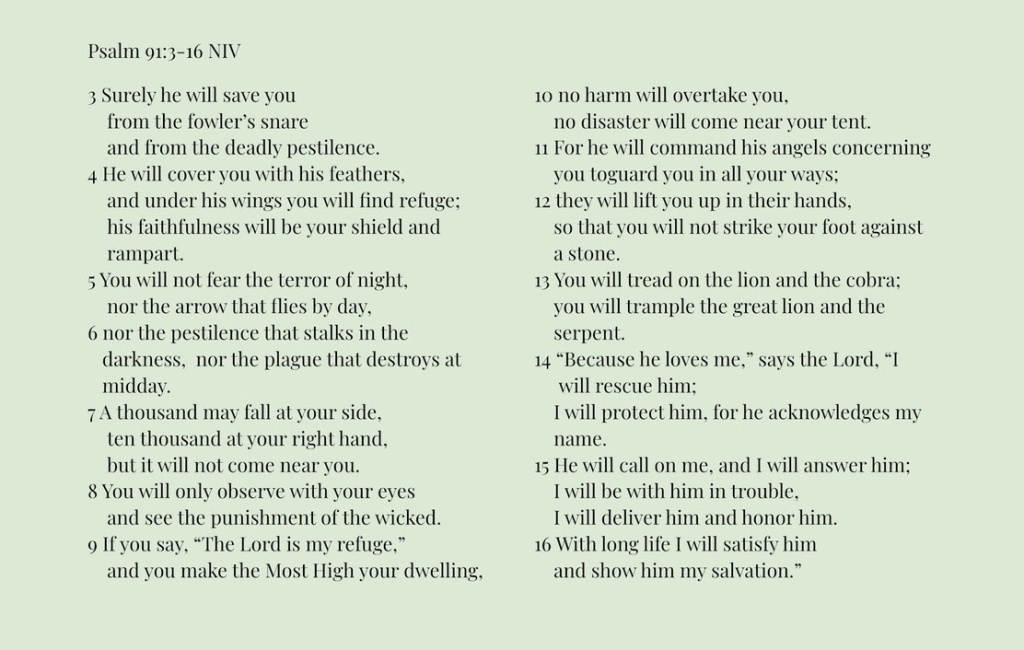
Gabriel states that he has prayed this prayer every day during his years in Japan, especially when he felt like he can no longer survive. He did this because he believes that when he prayed this psalm, he would somehow surely be protected from all diseases and harm. As he held onto this every day, this also gave him hope, continual perseverance, and faith to keep living life and to keep maintaining his health.

One of the things Gabriel said that has been most difficult for him residing in Japan is when he was trying to look for a financially stable full-time job (apart from his English-teaching part-time jobs) while he was waiting for his visa to be completely confirmed. Because of the hardships he had endured thus far, Gabriel now wants to help other people in Japan to find a job without difficulty… The reason that he now has this motivation is that he finds that “money is too precious” in Japan, and while volunteers had given him many supplies in the past, very few had provided him with money. Thus, he now wants to help others who struggle with money (like he did when he supported other detainees while he was still in the detention center) and become a business mogul.
Given the fact that he is a doctor who eventually wants to open a clinic and a strong Christian who wants to help everyone in need, he was able to strive to live in Japan without giving up. Gabriel had undergone some specific difficulties throughout the years he had been living in Japan. He not only was faced with the cold reality that he may not be able to ever have enough money to go back to Nigeria but he also was cut off from basic human necessities, was threatened to be killed by an atrociously monstrous terrorist group, had several of his dear family members harassed and murdered, was evicted to leave his apartment and had his dignity taken away when he never-ending-ly waited in the boundary restricted detention center just to be approved to live in Japan with permission from the government. All of these experiences had taught Gabriel some important lessons in the way that he wants to live the rest of his life.

This is the verse that Gabriel had described to be one of his favorite bible passages. He truly cherishes the strength that he can receive from Jesus despite the weary situations he finds himself in.
5. Present (2020)
5.1. Gabriel’s Views on Japan
Despite the expectations of many people, Gabriel views Japan as a unique country with its own immigration system and is grateful and fairly satisfied with the current situation. Looking back at Gabriel’s experience living in Japan, one might find it hard to understand why he could remain positive towards this. Gabriel explained that he doesn’t hold any grudges toward Japan’s refugee system or the Japanese people. He shared:
” First of all, I would have to commend the Japanese government, because compared to other advanced countries, the immigration system in Japan is the most humane. “
He stated this because the government doesn’t forcefully deport refugees and allows them to re-apply for refugee status once the previous application has been denied. Also, he mentioned that during the Corona pandemic, the immigration center has given the karihomen refugees an extension for their renewal period. Gabriel is thankful for this amount of sentiment as being one of the refugees. Despite the fact that the Japanese immigration system doesn’t accept many refugees, Gabriel shows an understanding of its complexity and the government’s need to be strict in accepting refugees. However, he also believes that it could be more lenient and open to change in the future. These thoughts come not only from his perspective of the system but also from his personal experiences with people he encountered throughout his 30-year-long stay in Japan. To overcome the endless difficulties during this period, he was able to find certain support that comes from the empathy and kindness of the Japanese.

Gabriel has experienced too many hardships, but he still wants to believe in the Japanese, who have shown him warmth and kindness. However, this does not mean that all his experiences in Japan had been pleasant. One example is “the worst day ever” described previously. His landlord, lawyer, and officer have all contributed to the beginning of his long-lasting and bitter journey to the detention center. Although the landlord and lawyer’s actions were understandable, Gabriel was saddened by how they responded to the situation. He wanted them to feel some empathy towards him, considering his life circumstances at the time. He believes that many Japanese people could be more caring and considerate. Gabriel trusts Japanese people because many of those whom he met did not discriminate against him even though they knew his status. The refugee supporters and people living around him were sincere to him. For instance, in order to survive in Japan as a refugee on karihomen, Gabriel needs money to pay for his living and transportation when renewing his karihomen status. However, because he is unable to work and earn money for his living, he needed financial support. The NGOs, church, and the Christian lady mentioned previously, are the ones who support him.
5.2. His Current Daily Life
By this point, many people may see Gabriel as a refugee who is enduring his own feelings and trying to act positive, but in truth, his positive and kind-hearted personality is what supports his daily life in Japan. Gabriel’s warm personality can be seen in his own charity that he is currently conducting to support fellow refugees in the detention center. From his experience in the detention center, Gabriel is well aware of the importance of money for refugees. As mentioned previously, refugees need money for various reasons in the detention center. By conducting charity, Gabriel wants to help the refugees financially. He also wants to visit the detention centers again in Shinagawa, Ibaraki, and Yokohama to give hope to detainees. One way for him to provide support is to give a small amount of money, around 1000~2000 yen. This will not only help the refugees’ lives inside the detention center but will also be able to assist them to start their lives after. Even though Gabriel is only giving the detainees limited support, it is not an easy task for him.

As a refugee on karihomen, Gabriel does not have a way to gain money constantly because he is living off of the donations of his own supporters. For Gabriel to donate this amount of money, it also means to share the money that is supporting his own living. He later hopes that:
” Once I get my visa, I want this charity to grow. Not just to support the detainees but also to support homeless people in Japan. “
In order to do this, Gabriel is currently looking for NGOs who are willing to support him financially.
In the midst of the situation of Corona in Japan, the lives of refugees are being heavily affected. Still, despite the serious situation of the Coronavirus, Gabriel has been as healthy and positive as ever. The difficulty in his living has been highly affected due to the current situation. The biggest trouble Gabriel experiences is renewing his karihomen. At first, he needed to renew his karihomen status when the virus infection rate started to increase rapidly throughout Japan. Gabriel was starting to get worried about this, because if he were to go to the detention center, he could get sick, and as a refugee limited with financial medical treatment, this was a big risk for him. However, he got a call a month before his renewal in April 2020, from the immigration center, saying that due to the unsafety of the coronavirus, they would postpone the renewal period of his karihomen. The immigration center sent Gabriel a letter saying that he could use a permit certificate. He was grateful for this solicitude because it was hard for him to move around under the circumstances of Coronavirus. If he is forced to renew his karihomen while the Coronavirus is spreading, it will not only risk his own health but also the health of the people around him. In a stressful situation like this, it is hard for refugees to live strongly, because they rely on many people’s support in order to live. If they are unable to meet with their supporters, they will be forced to live an impoverished life.

However, Gabriel was able to keep high hopes in this situation, thanks to the people who are reaching their hands out to him. Even though Japanese society is suffering because of the pandemic, there are several NGO groups that have been striving to support refugees. According to Gabriel, an association called RAIN (Refugee Association and Information Network) got hold of two organizations and supported refugees in Japan. The organizations are SMJ (Solidarity Network with Migrants Japan) and JCARM (Catholic Commission of Japan and Migrants, Refugees and People on the Move). RAIN asked these two organizations to support refugees financially with a one-time supply of 30,000 Yen, to refugee applicants because they were not qualified to receive the 100,000 yen given by the government. It made life easier for Gabriel and many other refugees during the Corona pandemic and he was extremely thankful for the support.
5.3. Future Plans
Instead of being overwhelmed by all the hardships, Gabriel decided to think positively about what he can do in Japan in the future as a refugee. He already has specific plans to achieve the goals that he wants to accomplish. His first objective is to obtain a proper visa and gain the right to live and work in Japan. Under his current circumstances as a refugee on karihomen, he does not have the right to work or to permanently stay in Japan. Despite these obstacles, Gabriel refuses to give up on his dream of opening a naturopathic clinic to cure diseases using his knowledge. He explained:
” In the bigger picture, I’m not going to limit myself to my naturopathic medical field. I want to become the richest business mogul in the world to solve the age discrimination problem in Japanese society. “
Gabriel’s objective is to support Japanese people, refugees in Japan, and people back in Nigeria, and ultimately glorify God. Gabriel’s belief in the power of “love” is reflected in his faith and friendly personality. He stated that as a Christian, one of his duties is to love other human beings the way Jesus Christ loved other people. Gabriel now wants to use his Christian faith, acquired naturopathic knowledge, and gained experiences to help others.
Gabriel wants to open a naturopathic clinic and become a great business mogul because he aims to help others. This has been a long-lasting wish since his childhood, which stems from the religious teachings practiced by his mother in the family. His devotion to helping others can be seen in his study of naturopathic medicine, his book, his charity group, and his relationships with refugee and detainee friends. The reason behind this comes from his passion to tackle age discrimination in society. Not only will he be able to overcome the stereotypical views of age that limit people’s potential, but he will also be able to hire those who were outcast by the economy. As he shared, “If there is a 200-year-old wanting to get a job, I’ll give it to him as long as he can walk.” He imagines his future to have many factories that help those in need and those victimized by age discrimination, as well as to unfailingly provide people with methods to achieve beyond the social limitations cast upon them.
Even though it might seem like a long journey ahead for his future plans to materialize, he believes that the key to success is to not give up. He explains:
” By having persistent and consistent hope, one day my dream will come true. “
His hope has been proved powerful in many aspects of his life in Japan such as waiting for karihomen, his wait for the refugee visa, the support he has given to others, and his determination to never give up.
5.4. Gabriel’s Future Wish and Message for Japan
While Gabriel appreciates the current immigration system in Japan, he hopes for it to be modified in the future, to bring a change to the refugees’ never-ending wait for a visa. In the current system, even though refugees are allowed to re-apply for refugee status, the acceptance rate remains extremely low. This makes many other refugees, including Gabriel, to be faced with challenges in their daily lives in Japan. While Gabriel understands that the government needs to be cautious in its acceptance, he also wants mercy toward refugees who are further troubled by the immigration system. Gabriel shares that many refugees have come to Japan in search of a brighter future, but due to the restrictions of its system, they have a hard time obtaining refugee status. These limitations could lead to some refugees being faced with a limbo of taking major risks to sustain their lives, or be faced with unfortunate and unexpected consequences they never imagined they could be faced with before. Gabriel believes that while being put into the detention center is an acceptable “punishment”, there should also be an end to it. So, he considers that refugees who have left their countries and are unable to return due to persecution should be allowed the opportunity to live a peaceful life.
This wish is especially strong for Gabriel because he has been living in Japan for 30 years, and now sees the country as a place he belongs to. He claims that even if Boko Haram stopped threatening him, he would rather stay in Japan and only “visit” Nigeria. In other words, Gabriel wishes to live in Japan for the rest of his life. If his wish came true, not only would he be able to have more opportunities for his future, but he would also be able to take a huge step toward his dream. These wishes may be accomplished, if the Japanese society/government hears out the thoughts, wishes, and voices of the refugees, and revises the immigration system.
As mentioned previously, the refugee situation in Japan is not widely known. Gabriel shares:
” I want more Japanese people to understand the current situation of refugees and to learn more about their circumstances. “
In order for Gabriel’s message and wish to be heard by the Japanese government, he thinks that it is necessary for many people to learn about how refugees are currently being treated, as well as to truly understand what needs to be changed. If the people are aware of the situation, not only could they be open to change in the system, but they could also provide the specific support that individual refugees need to survive. Moreover, Gabriel hopes that his story would lead to people appealing to the government that refugees should be treated better, and to individually take actions to make changes towards the situation. Hence, he wishes that this project and his story as a refugee will enlighten Japanese people and shed light on the refugee situation that tends to be neglected way too often.
Living in Japan as a refugee has never been easy for Gabriel. He has been on a long and persistent journey where he continues to experience many heartbreaking moments. During his harsh times, his positivity from his faith and his mindset to believe in a brighter future has kept him on his feet for 30 years. Gabriel’s story opens our blinded eyes to this issue of refugees and to the way Gabriel has particularly survived all those struggles during the recession and still continues to survive the strict regulations of the system and the vicious cycle of refugees in Japan. Moreover, it shows the power of a person’s mindset to seek for his dreams. It is Gabriel’s wish that his story will enlighten Japanese people about Japan’s refugee situation and change this never-ending wait.

