Throughout his life, Guillain has seen his country and the growing tensions it has amongst its neighbors and even its people. This section will talk about Guillain’s past activism work in the Democratic Republic of Congo (DRC) and the reasons why he had to flee Congo and go to Japan. He first explains the situation in Congo, where President Cabilla overstayed his mandate which went against the constitution, so many individuals were outraged and protested his presidency during that time. Guillain also explains Congo’s relationships with its neighboring countries and the sociopolitics of Congo. He tells about the work that was required to be done in his role of the opposition party, which includes setting up protests against the government and teaching young adults about the injustices in Congo and their rights as citizens of DRC. Along with these actions come risks that come with opposing the government, risks that ultimately are the reasons why he had to leave Congo.
1. Motions in the Movement
Growing up in the Democratic Republic of Congo, political and social conflicts are very familiar to Guillain. These conflicts have shaped the way of life in the Congo and its neighbors. The relationship between Congo and its neighboring countries is anything but simple. Tensions between the Tutsi, Hutu, and Bantu had created great civil unrest that promoted a great rift amongst the people of Congo and parts of Africa. The divisions between these groups are based more on social class than ethnicity. In the pre-colonial era when they were ruled as a kingdom, a large share of the ruling class was Tutsi, while most Hutu were in the lower class. Bantu himself, Guillain lived through the division between these groups, raising tension due to several factors including the institutionalization of a Tutsi-dominated political system as a tool for colonial rule, and the discrimination against the Hutu people.
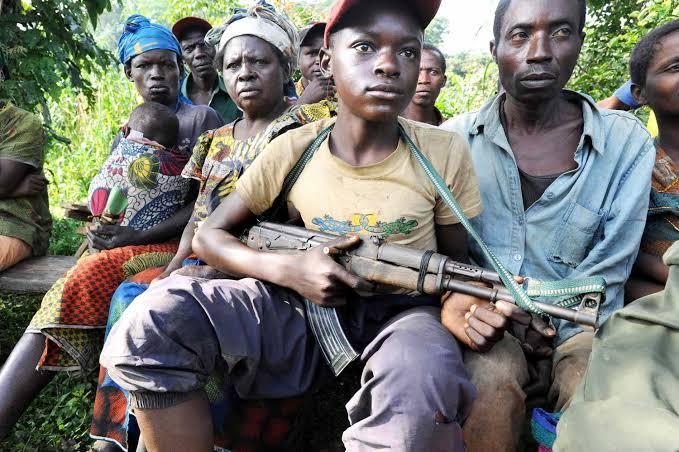
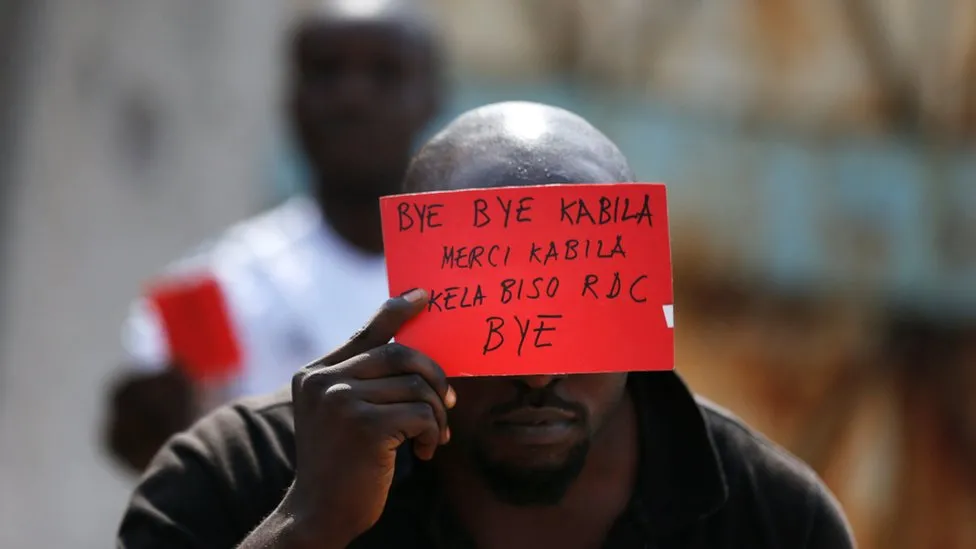
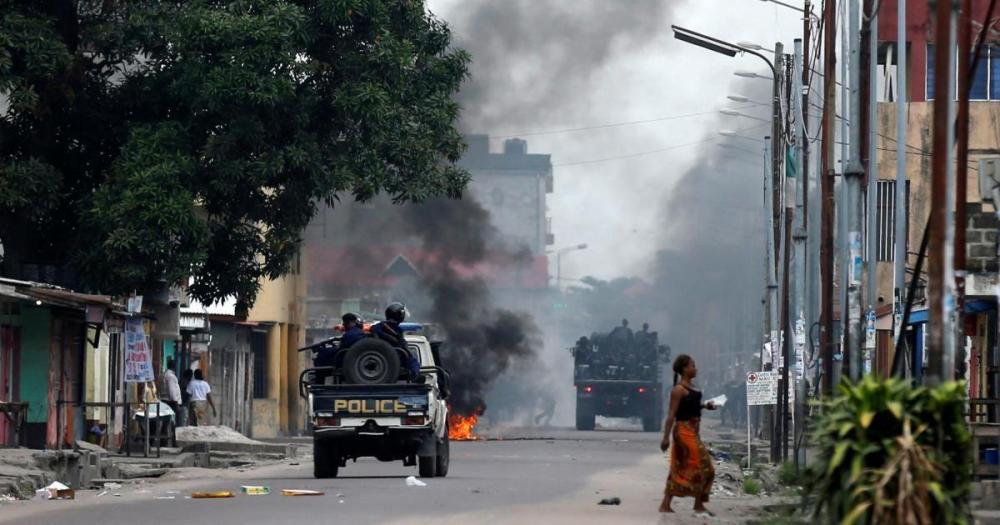
In the Democratic Republic of Congo, tensions rose when President Kabila, son of Laurent-Désiré Kabila the former president, overstayed his mandated term of presidency due to what he argued being that the country was not prepared to hold an election. Publicly known as “le glissement” meaning “the slide,” his refusal to follow the constitution had created tension in the country which ultimately led to protests and what would be the opposition party. Many saw the prospect of elections “slipping away.” Kabila has been president of the DRC since his father was assassinated in 2001. He won elections in 2006 and 2011 in polls that some claimed to be rigged. In the Democratic Republic of Congo’s constitution, he is barred by the constitution from seeking a third term of presidency. The Democratic Republic of Congo has never had a peaceful transfer of power since independence from Belgium in 1960. Many individuals feared that the political situation of President Kabila overstaying his presidency could trigger a repeat of civil wars that killed millions of people between 1996 and 2003. As his country went through these conflicts, life paused for Guillain and pushed him to join the rebellion against the government.
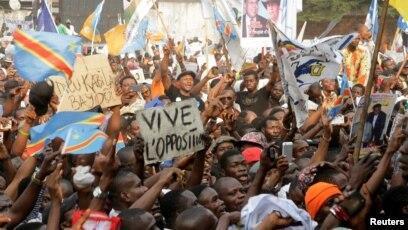
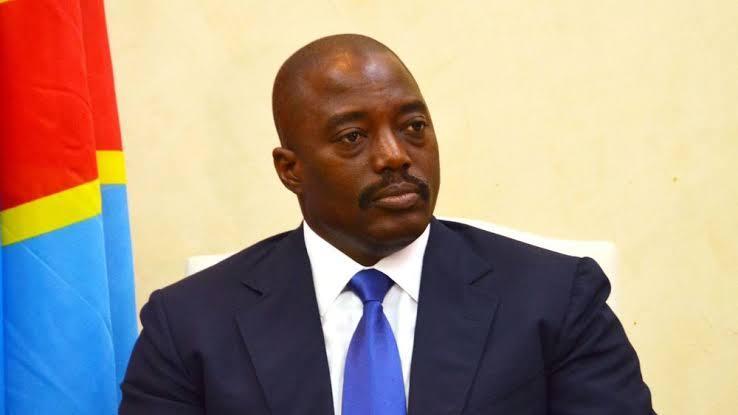
Middle: Picture of President Kabila (Tehran Times)
Right: A young boy holding a rifle (ThoughtCo)
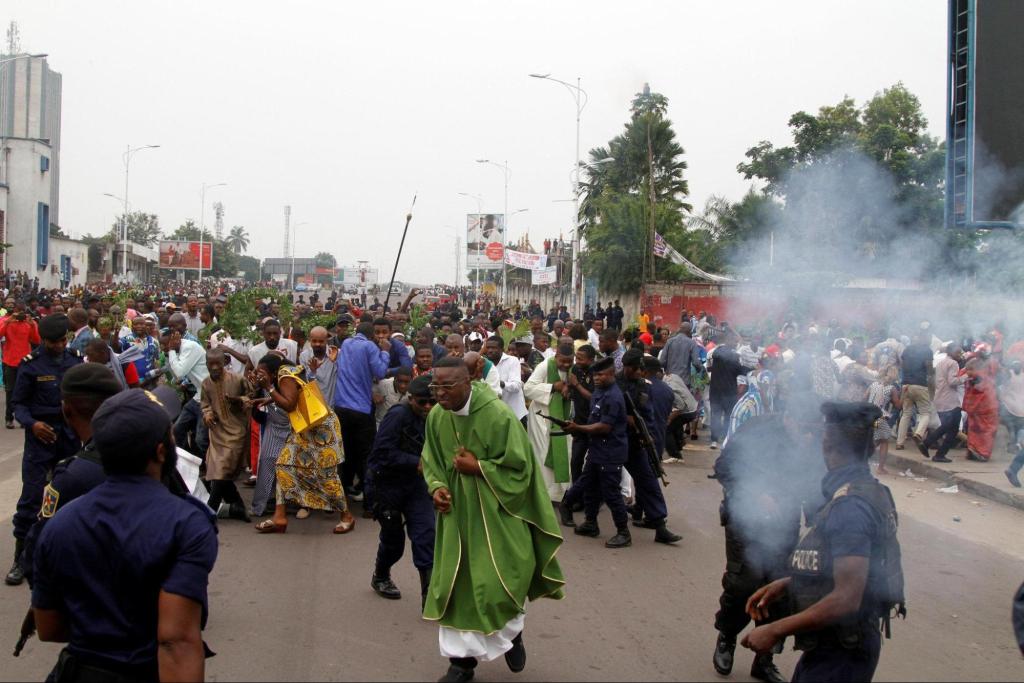
With the decision to extend Kabila’s presidency came a lot of differing opinions and tensions between the people and the government of the Democratic Republic of Congo. During this time, many protesters were killed going against the government by disagreeing with Kabila’s actions. This is ultimately why Guillain joined the opposition party, to go against the government that did not respect the constitution and the people of DRC.
2. Faith and Resistance
During his time in the opposition party as one of the head officials, one of Guillain’s duties was to educate the young adults of DRC about their constitutional rights and the outrage that must be felt against the government for violating them. Predominantly they were taught in church, as the church was heavily involved in the protests and opposition of President Kabila and the government. Guillain says that a lot of what was taught during this education for the young adults included a lot of religious foundation, as they were in a church. Though it is a difficult job to educate individuals about the injustices present, his love for his country and his church gave him strength. He explains, “So that we could take it as um, what can I say? Maybe as a motivation every day. So the priest was telling us such a story and sure as to what was their outcome for the people who refused. For example, for the Israeli people who were in a bad situation for more than 14 years, but they arrived at their destination.” Because of this, however, priests from the church were often targeted and killed for their involvement in the teaching of the younger generation and the opposition party. Similar to the treatment of Christian disciples in the Bible, Guillain and many of his opposition party mates see their movement as something necessary for the people. They must implement what they had learned in the Bible in how they protest against the government.
“Even in the Bible, there was some people was doing the same thing as what we were doing.”
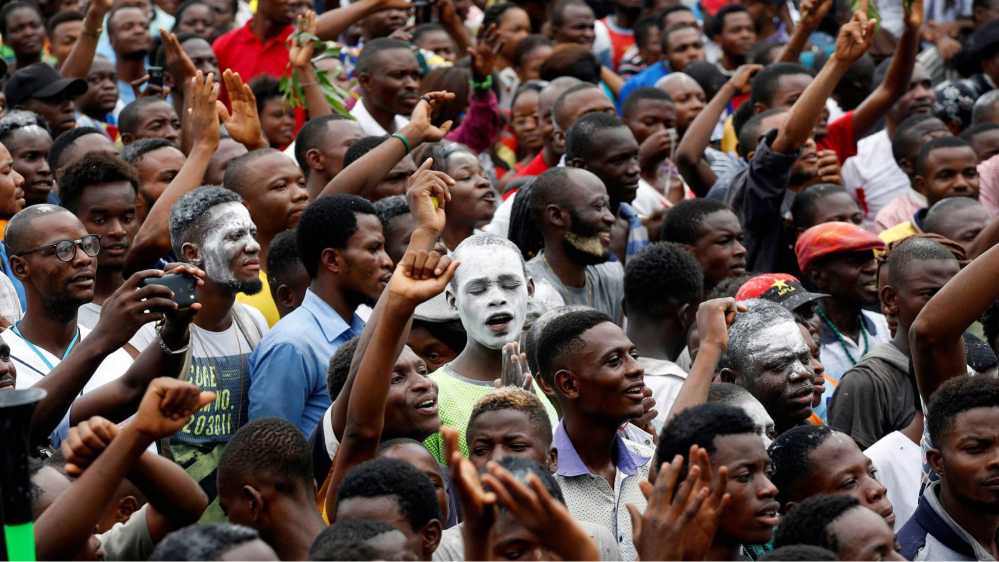
Growing up with the unjust treatment of the citizens in the Democratic Republic of Congo, the younger generation should be the most vocal in going against President Kabila and his overstayed mandate, as it creates a negative precedent toward citizen rights and the government being able to go against it at any time. If left alone, problems current in society would only continue to fester and thus must be addressed by the current population for future residence.
This is what Guillain and the opposition party taught to young adults in the church, as they have the right to know their rights and act upon them if needed. Teaching the younger generation was essential, as they are the future of the country and will be inheriting the problems and successes of society that the older generation had created. “So I think…I believe that we can change because if we increase the number of people who are aware of the situation that is going out. So we can change together. Can change everything,” Guillain says.
For Guillain and many in the Democratic Republic of Congo, the choice of whether to join the opposition movement is that of but one choice, to fight for your freedom and go against what is unjust towards the people of your country. With the fate of the country hanging behind the presidential precedent that was made by Kabilla overstaying his mandate, many felt that it was essential to stand up for what is beneficial for the rights of citizens of the Democratic Republic of Congo and go against the tyranny of Kabila’s mandated presidency.
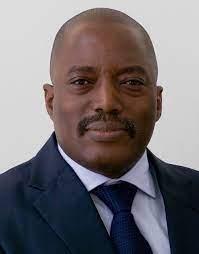
Middle: Portrait of President Kabila taken in 2016 (Wikipedia)
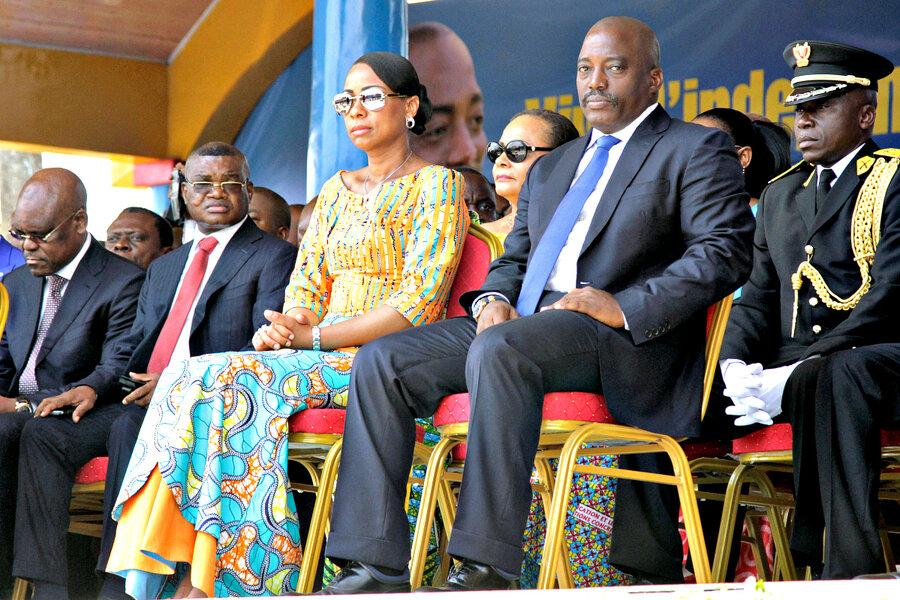
Right: President Kabila and the First Lady at an independence celebration (Voices of America)
Hit them where it hurts, in Guillain’s case with the government of Congo, he states that the best way to bring awareness of the human rights violations and corruption is to bring light of the situation in Congo to countries that supply and support them. One example that he brings up is Toyota. He states that by drawing attention to the unjust treatment of the citizens with the government using these cars, it is an incredibly bad image to be represented by. This tactic is oftentimes successful, as support is taken away from a market standpoint of companies that do not want to have a negative perception or reputation for their product and company. In Guillain’s case with Toyota, he and the opposition party in 2018 were able to hurt the government financially with this tactic.
3. Cost of Standing Up for Change
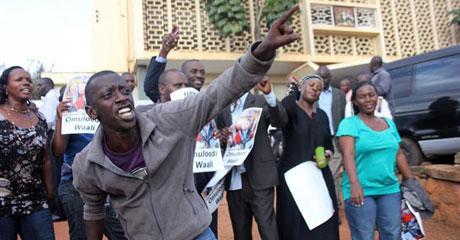
When participating in the opposing party conducting protests against the government, being targeted by said government for your involvement is to be expected. For Guillain and the party, it would be a risk that they were willing to take. Many of his fellow members would be arrested, some would be beaten, or even worse killed. An instance that Guillain recalls is when the government would call their phones and threaten them, saying that they needed to stop protesting or they would be punished. Threats that Guillain would shrug off and continue to fight for the movement as that is what he truly believes to be the only route to take to ensure the safety and freedom of his country and its people.
Growing too dangerous for him to remain in the Democratic Republic of Congo due to his involvement with the rebellion, Guillain discussed with his family the choice of staying in Congo or seeking refuge in another country for his safety and the safety of his family. His wife convinced him that he was not useful to the country if he was a dead man, thus cementing the decision to run away from the Democratic Republic of Congo. Due to spies being in European and North American countries, Guillain decided to seek refuge in Japan. This decision was not a light one to make, as he would have to leave behind his friends, coworkers, and family to live alone in a different and challenging new environment. Reflecting on this, Guillain pointed out how there were many others like him, who decided to leave and flee to different countries for their safety, many of whom he had lost contact with and or are refugees in their respective countries.
Even though he had escaped what could have been a certain death back in the Democratic Republic of Congo, Guillain is not finished with his fight for the freedom of the people of his country and the movement. For those who wish to make a difference, Guillain states that the drive of others to seek aid by means that educate and aid, rather than doing trivial means such as listening to music or just being performative in activism. As he had taught the young adults in his church about their rights, he hoped that young adults outside of the Democratic Republic of Congo could come together and aid as much as they could. Guillain hopes to return to Congo someday. He hopes to one day become more involved in the government as an official who will help the country grow from its very hard and harmonious past. Though it may take some time for all of this to happen, Guillain hopes to do as much as he can and implement the activism and knowledge he has gained in his past to make a brighter future for the people of Congo.
