IDENTITY AND RELIGION
~Looking into James Toba~
When faced with difficulties in life, most humans look inwards into the depths of their founding moralities. They curl into the one constant truth that keeps them grounded and serves as a pillar of their identity.
For most refugees, this is religion: the buoy that keeps them afloat amidst an ocean of uncertainty and instability.
A man who embodies this very idea is James Toba.
Needless to say, James is a truly devoted follower of the Catholic Church. His identity is profoundly shaped by this faith, which has been carefully nurtured by his religious and cultural upbringing. This same faith steered him to the Church community that he dearly speaks of as his family. As it is, Christianity acts as a primary igniter for most major events in James’ life, and unraveling this connection will allow us to truly understand James’ story and who he is.
In this section, we will explore the dynamics of James’ personality, what constructs his morality, what core values he lives by, and the relationships that he has built.
Religious background
Religion in Cameroon and James’ life
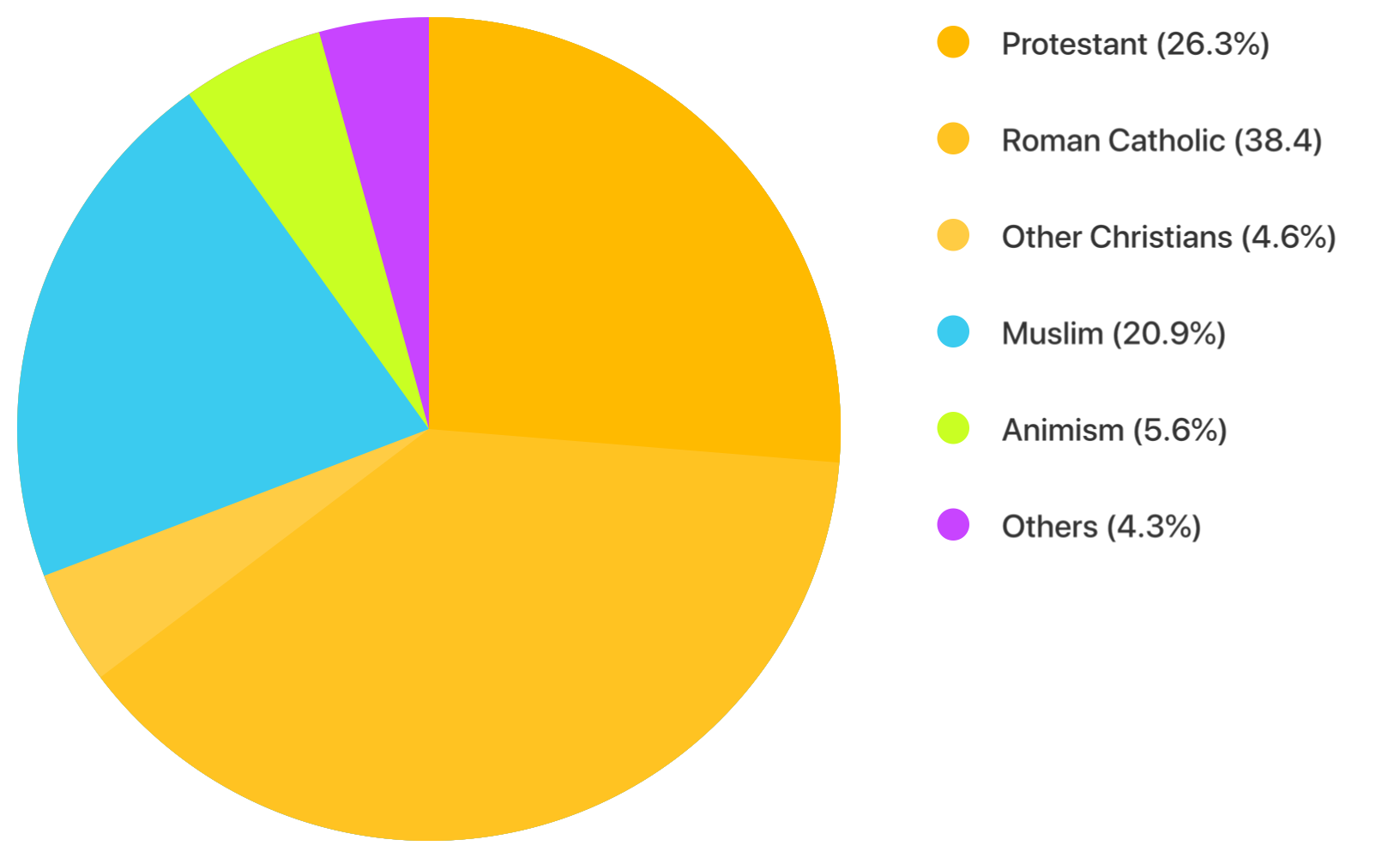
To fully understand James’ religious background, it is essential to have a basic foundation in James’ home country, Cameroon. As is common with most other nations with a history of Western colonization, Cameroon is predominantly Christian, in particular Catholic Christian. In fact, nearly 60% of the population is Christian, followed by Islam and Animism or witchcraft. However, it is important to note that Animism is a religion that allows for dualist beliefs (such as being Christian but also believing in witchcraft), therefore the actual percentage of those that are Animist may differ from the statistics being demonstrated on the chart below.
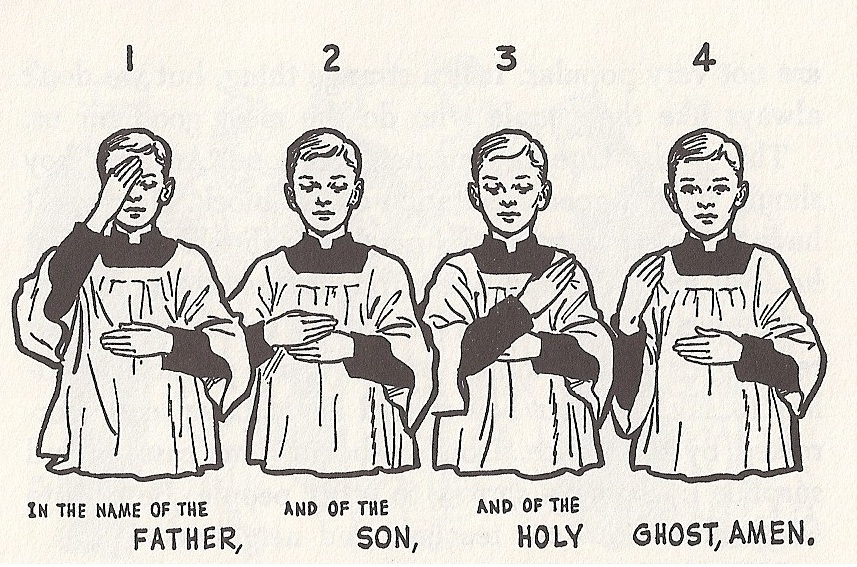
As you may already know, Catholicism is a branch of Christianity that is founded on the teachings of the Old Testament. It is one of the oldest branches of Christianity that emphasize the importance of the Church community. Common practices you may be familiar with include baptism and the prayer of the Holy Trinity.
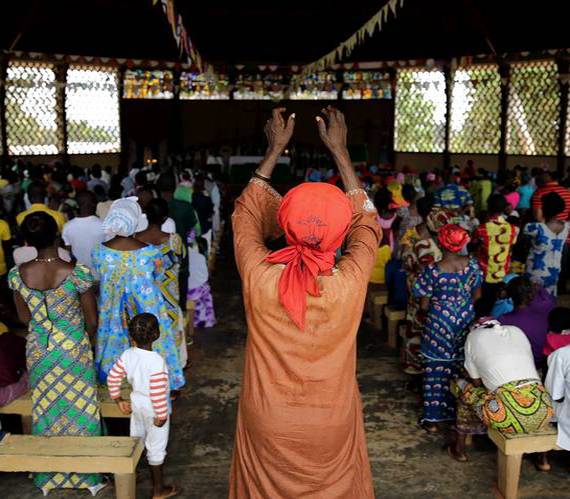
In Cameroon, every Sunday there are masses that the whole community participates in. All that attend wear their best suits: usually traditional attire, bright and beautifully patterned. They sing hymns and worship songs together and listen to sermons given by the priest. The teachings extracted from the Bible are respected within the society due to the fact that most Cameroonians are faithful believers. This deeply rooted respect reaches out to activist groups such as the AMBA Boys.
Indeed James’ was born and raised a Christian, however, take note that he was also surrounded by an environment where Animism co-existed with Christianity (much like how Shintoism and Buddhism co-exist in Japan). Animism is a belief that is usually associated with herbal medicine and charms. In fact, one way the military arrests and distinguishes AMBA boys is by conducting body checks where they look for enchanted charms that act as protection on their belts or boots.
Although there is regional differentiation in traditional animist beliefs, one consistent belief is the idea of evil spirits are at the root of adversity and misfortune. Within each community, usually, there is a witch doctor who can provide the tools that are needed to deal with evil spirits and minimize their impact on the individual and his or her family. As animism tended to be more receptive and accepting of the incorporation of new ideas and gods, the dualism of this belief along with Christianity is commonly seen, as James explains:
In this way, Cameroon is a country of strong Christians with Animist or witchcraft practices expressed in daily livelihood.
Being raised in this environment, James has most definitely come across other beliefs in his life other than Christianity, and although the choice of practicing dualism with Animism was posed upon him, he chose to remain faithful to his one true God and is a devoted follower of Christianity.
Therefore, in order to understand James’ moral compass, and observe the dynamics and the foundation of what constructs James as the person he is and wants to be, we must put Catholicism at the forefront of our minds. As it is, Catholic Christianity morals are so well ingrained into his thoughts, actions, and values.
In the following two subsections, we will introduce ideas to allow organized understanding: Religion as core values and James’ Church community.
Religion as Core Values
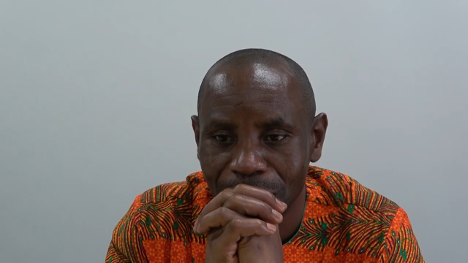
“Everybody has anger, everybody has a bad side of them but I always feel like no I shouldn’t do something wrong to you, I shouldn’t- … religion holds very strong in me, has a hold of me. It …directs me in everything I do, think, and act”
As mentioned earlier, James was born and raised a Catholic Christian man. All the traits that he has inherited and the values he holds dear to his heart can be traced back to this upbringing. To this day, he is a strong Christian by choice and upholds such traits.
“You see, they are also humans.”
One notable value he carefully explains in the clip is empathy. James believes that he must love everyone without prejudice. He realizes that every human has a bad side to them and that every person has anger to some degree. Taking this into account, he treats all people equally. This expression of empathy is something he believes to be closely embedded in the beliefs of Catholicism.
It is striking to see that he shares this value of empathy in his view on Francophones.
“There are Francophones who are also suffering.”
He understands that the way the Francophones are acting is due to manipulation by the government, he recognizes their suffering and realizes how pressure on weakness can manifest into violence.
In this clip, James uses a metaphor of two people receiving free food. In his metaphor, he explains that one man receives the free food, is immensely satisfied, and wants more (asks for beer), while the other man eats the free food and questions why and how this food was delivered to him. The first man is the Francophones that are manipulated by the government and the second, are the Anglophones. Through this metaphor, he intends to expose how it is not the first man’s (Francophone’s) fault that he wants more food but rather the government’s fault for using these emotions against them.
“She [My mother] has always emphasized on honesty, truthfulness, being a good child… Coming from a Catholic background, there is a lot we learn when we are children growing up”
Through this video, we can observe the depth of his mother’s words, and how they dug deep into his memory that he speaks so eloquently about it without hesitation. He mentions how being honest, truthful, and a good child, in general, is important for him to be trusted. His mom believed that these traits were especially vital because he lived with another man who took him under his care.
Despite having to relive the trauma and distressful moments of his life, James kept to his word and was always willing to share his side of the story. In the following clip, James discusses the ways in which he applies his mother’s words. At every promise and at every encounter, he always sticks to promises without fail
Empathy, honesty, and trustworthiness are some of the core values that James has built throughout his religious journey.
All of these are well-founded on deeply personal experiences and are most definitely what James wears on his ever-expanding worldview.
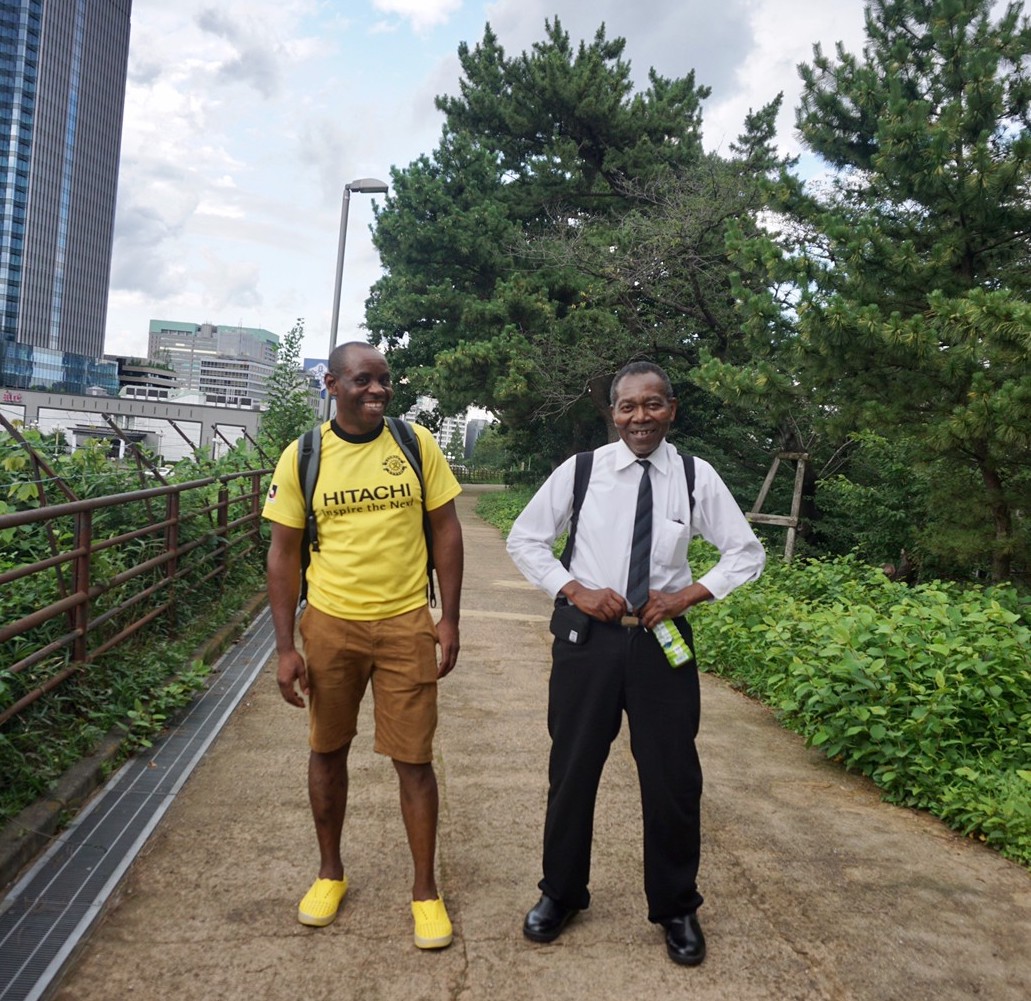
Church Community
James’s support system has always been strongly involved with the Church, and this remains the same in Japan. This is why when talking about his refugee story in Japan, the involvement of the Church in his life cannot be overlooked. Having a deepened understanding of this support system will be critical in understanding his coping methods and how he interacts with others.
James has repeatedly received immense emotional support from the Church community. In Cameroon, he was part of a Church group named “Caritas”, an international Catholic relief and development agency. Here, he felt a sense of belonging and was able to contribute to the cause in his own way: he used to supply them with resources including food and clothes in order to distribute them to those affected by the political situation. He also mentions how they were always “looking out for each other”, always there for each other as though they were a big family.
In this clip, James explains how the head of Caritas was arrested by the military due to their activity in providing food and clothes to those in need regardless of their political stance.
Being an active member of a Church community as he was in Cameroon when James came to Japan, he was intent on finding a community similar to the one he had been in Japan that would allow him to be as committed as he was before. In Japan, James frantically searched for a Catholic Church before any other Organization. In fact, he did not worry about receiving support as an asylum seeker but rather chose to find an organization that shares the same values as he does. It was through this effort that James found his closest friend Gabriel, a faithful believer in God.
James also clarifies that the Church is where he “feels loved and accepted”. He further states that he gains immense power from the word of God that he is able to hear every Sunday mass.
James’ support from organizations is critical to his survival. Thankfully, these organizations, Sophia Refugee Support Group and MINA were suggested and guided to him through his dear friend Gabriel. Although James is aware of other major organizations, he does not like to rely on their support.
“I am really ashamed to go like a refugee to ask for help. Either food or dresses or money.”
James would much rather persevere without daily necessities until he can find his path to self-sustenance than have to ask for help. As introduced earlier, James was the “father” of his household from a young age. During this time, he was helping run a business in the capital (eventually building his own business) and would financially support his large family of five solely through his earnings here.
This background as a businessman makes James feel trapped in Japan: despite being a capable businessman, he is barred behind his visa status.
This is the reality of refugees and asylum seekers. Unlike immigrants, they are not granted the freedom to earn the bread they eat.
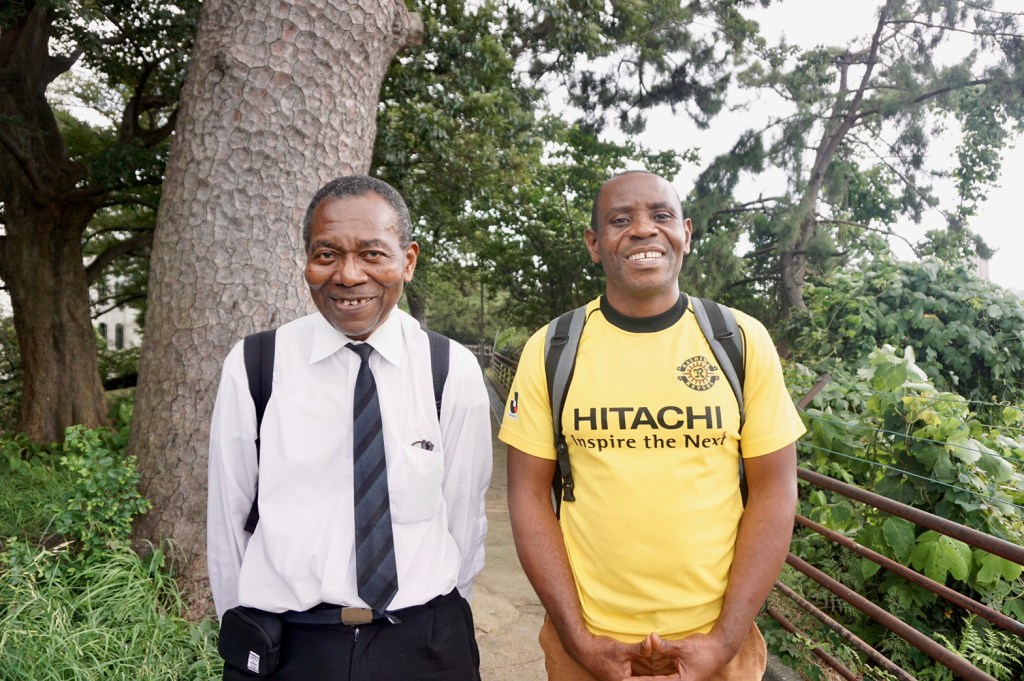
Every major opportunity and support in James’ life so far has come to him through his friendships and the church community that he trusts with his heart. The idea to come to Japan in order to escape his life-or-death circumstance was, as it happens, proposed to him by a member of the Church back in Cameroon. The whole process from receiving a visa to his journey here was thereby facilitated by the Church and James expresses his profound gratitude numerous times. Even in Japan, despite James feeling reluctant on relying on refugee support groups, his Church friends worry for him and have introduced him to support opportunities.
It is in his faithful demeanor that opportunities have come his way and has supported the persevering man that he is now.
Being raised in a Catholic household, James with-holds this belief tightly knit into his identity. Even at the most challenging of times, he kept his faith in God and God alone. He trusted in the Lord and even now while he endures trauma from his attacks and being away from his home and family, he attends mass in Japan to re-establish his mind. Every opportunity and every relationship he cherishes links back to James’ religious faith.
