” I was crying like a baby”
As the political tension in Cameroon and the reason why James had to flee Cameroon were explained, this section explains James’ life in Japan, the difficulties as a refugee and at the same time also as a black person in Japan, his struggles being away from his family, the difficulties with having his Designated Activity visa. However, not only about the difficulties he faces in Japan, but this section also explains his survival skills- how he survives in Japan without having enough support, his value of going to the church, what it means to him to go to the church, and how he feels being isolated, and powerless being as a refugee in Japan.
Table of Contents

1. James’ Arrival in Japan
“The fear that was already in my, the fear that accumulated in my heart, accumulated in my heart was kind of, I just needed to go somewhere, I just needed to go somewhere”
Due to the political tension between Anglophones and Francophones in Cameroon, James faced a great deal of oppression and mistreatment from the government and the military when he was in Cameroon. The oppression and mistreatment were getting worse and worse and he had faced 4 life-or-death moments in which he possibly could be killed. He constantly felt an imminent threat to his life and he was not feeling any peace, therefore he decided to leave Cameroon for the safety of his life. In the interview, he explained that he did not know anything about Japan, but it did not matter to him even if he had to live on the street and did not have enough to eat in Japan, because as long as he is in Japan, he knows that he would not be attacked and he is safe. Like James, a lot of asylum seekers and refugees have the common idea that Japan is safe. Also, visas and transportation were available, so he finally was able to escape to Japan. In the interview, he talks about how he cried like a baby when he finally got to Japan because he thought that his life is finally safe in Japan.
“It doesn’t matter how, where you live- in a house, in the street in Japan, you are sure that you will not be attacked”
When James was in Cameroon, he had his own business, and his house with his family and he was happy to be able to live with his family because he is such a family man. Knowing the fact that he had a good life with his family in Cameroon, in the interview, James says that when he was still in Cameroon, “it did not matter for him that even if he had to live on the street in Japan and even he had only a little to eat, he is sure that he would not be attacked and he is safe”. From this interview, we can see that he had to give up everything he had in Cameroon to come to a safer place for his safety. This clip also shows how dangerous it was in Cameroon that he had to give up his life in his home country. This clip shows how James needed to flee the country, but at the same time, it shows the reality of refugees that they have to give up their life to seek asylum for their safety.
“Then, I was told on the 11th, I should leave Bamenda.”
James explains how fast he had to leave Cameroon after he got his visa in this clip. He only had 3 days to leave where he was after he got his visa. As this clip shows, many refugees do not have enough time to make their life decision. They have to seek asylum because their lives are in danger and they do not have enough time to think where they should go, or what they should bring with them. Most times, refugees just bring one backpack. “Refugees arrive in destination with anything but necessities of their lives (corryology)”. James had to rush packing and he only brought one backpack with three pairs of jeans, 2 pairs of shoes, and tapioca, his passport, and his visa.
In this clip, he explains that he did not know anything about Japan before he arrived in Japan, but for the safety of himself, he followed the advice he received from one of the people at his church to escape to Japan. From this clip, we can see the reality of refugees they have to escape to countries or regions that they are not familiar with or do not know anything about and do not have anyone they know to escape from the war, oppression, mistreatment, prosecution, and other reasons. Not having enough information about the countries that they escaped, refugees can be exploited and can be put in dangerous situations again too.
“The fear that accumulated in my heart, accumulated in my heart was kind of, I just needed to go somewhere, I just needed to go somewhere. Which, when I got here, the very first…I arrived her on a Friday, the next day was a Saturday like today. Where I spend the night I got in the morning and I crying like a baby”
This clip shows his emotions when he got to Japan. Even though he did not know anything about Japan before he arrived in Japan, when he got to Japan, he says he cried like a baby because he thought that finally, he was in a safer place where he knew that he would not be attacked, and he was relieved that he was able to travel to a safer place. From this clip, we can see how dangerous it was in Cameroon for him and how happy he was to be able to arrive in a safer place.

2. James’ Legal Status in Japan

James arrived in Japan on a Temporary Visitor Visa, and he applied for refugee status soon after resulting in him receiving the Designated Activities Visa. However, this visa does not allow him to work or have a work permit for the first 9 months, so he cannot financially sustain himself. The visa also does not provide health insurance so if James were to ever need to go to the hospital, the fees would be extremely expensive. Considering the COVID-19 situation, he also shows worry about the consequences if he were to be positive for the virus. He says “The fear of contacting disease push me to remain indoors. Even not happy remaining indoors but I have to do that because my fear that if I’m dead here, if I’m sick here, first, if I’m sick here, nobody would take care of me”.
The image displays his most recent designated visa status. Asylum seekers in Japan must carry their passports at all times or face the possibility of going to the detention center. They always face the possibility of being sent to the detention center, and police often try to check their passport even when they are just walking on the street. They also face the possibility of being sent to the detention center if they did not carry their passports.
If you want to know more about the detention centers, please visit this page

“ If I’m sick here, first, if I’m sick here, no body would take care of me.” “ I adopted by staying indoors. Better to save myself from contacting the disease.”

3. James’ Life in Japan
“I’m really ashamed to go like refugee look as for in the food, dresses, money”
James has not gone to other refugee-supporting organizations like JAR(Japan Association for Refugees). Most refugees go to some organizations to receive support when they arrive in Japan because, without that support, it is very difficult to make a living and also apply for refugee status and get accepted. However, James has not gone to any of them. James used to have his own business back in Cameroon and because he has been working to support his own family since he was 16, he is a very independent man. That is one of the reasons why he does not want to go to the supporting organizations. He says that he feels ashamed to ask for help, receive goods, and receive money. He strongly wants to work as soon as he gets permission and wants to be able to be independent and financially sustain himself without receiving any support. This is the reason why he is unable to access the little bits of support to which he is entitled as a refugee. From this clip, we can see how refugees sometimes ask for help even if they did not want to survive in the new environment.
3.1. Support System
There are some refugee-supporting organizations in Japan, however, James only goes to some of them. Despite all the difficulties he has faced, James is a very humble man, so he does not want to go to a lot of supporting organizations to receive support, because he feels ashamed to receive support. He says “I’m really ashamed to go”. He used to have his own business back in Cameroon and he was an independent man who supported himself and his family, so he says he feels ashamed that he has to ask for help in Japan, and if he could, he wants to get a job and support himself so that he does not have to ask for help. He states how he wants to be independent and to be able to support himself. Another asylum seeker, Gabriel, helps him to connect to the Catholic church that they go to, and some of the refugee supporting organizations which are MINA and SRSG where he receives support. As he was introduced to some people from refugee-friendly organizations soon after he arrived in Japan, and he had not been exposed to people who are not empathetic toward refugees, his impression of Japanese people was very good, in fact, he says “Japanese people are welcoming”. Supporting organization is a safe place for James and refugees but when they are outside of the supporting group, they can be faced discrimination. As James met some other people not from the supporting organizations, he faced some discrimination based on his race. When they are outside of supporting organizations, they can be isolated, and marginalized by some people, because they do not know much about society yet. In fact, James does not know much about Japan even now after six months, and says he feels he is powerless in Japan. Gabriel, one of the narrators of this project helps James all the time. Gabriel introduced James to the Catholic church that they go to, and also Gabriel introduced James to the NGO, called MINA where they can receive meals. It is very important for refugees and asylum seekers to help and support each other. And that is one of their survival skills.
1. Church
Church plays a key role in his life in Japan and going to the church is one of his survival skills because he does not go to any other refugee supporting organizations, instead only the church. However he does not necessarily receive any material support from his Catholic church, and many of the church members do not know that he is a refugee, but he receives emotional support from his church. Going to the church always makes James feel better because the church is not only the place where he connects to God, but also to connect with fellow Christians. They have a mass in English and since people who attend English mass can speak English, he is able to talk to other people who come to the church, and he explained how everyone at the church is welcoming. Especially since his church has a history of supporting refugees, he feels more welcomed.
If you want to know James’ religious background, please visit here.
2. MINA
MINA is one of the refugee supporting organizations which Gabriel introduced to James. MINA helps asylum seekers and refugees when they arrive in Japan. They have a community space where they can relax and talk about their difficulties and what they have experienced. MINA also has social workers who can help asylum seekers and refugees by appointment. MINA pays the transportation fees to asylum seekers and provides meals.
3. SRSG
Sophia Refugee Support Group is a student-led volunteer circle at Sophia University that aims to raise awareness of refugee issues in Japan and provide support to refugees in Japan, in response to the rapidly increasing number of asylum seekers in the country. SRSG holds a Japanese class and a refugee cafe every month where refugees can come and learn Japanese from students, and can also connect to other refugees in Japan too. James came to SRSG with Gabriel.
If you want to know more about SRSG, please visit here
4. Japanese school
James and Gabriel go to the Japanese school called Human Academy. They can attend the Japanese lessons for free and also Human Academy pays their transportation fees. The skill of being able to speak Japanese is necessary for James to survive in Japan. Not only it helps daily life, but also when asylum seekers apply for refugee status in Japan, they have to write documents in Japanese. Japanese is an essential skill for asylum seekers and refugees and James has put so much effort into learning Japanese and we can really see how his Japanese has progressed.

“When you are here, when you are in Japan you are like a child, you don’t have any powers.”
In this clip, James says that he feels like a baby when he is in Japan because he has no power in Japan. From this clip, we can see how asylum seekers and refugees feel when they come to Japan, which is a completely new country. It does not mean that Asylum seekers and refugees could escape to a new country so they can live happily, but in fact, even after they arrived in a new country, they face so many difficulties. For example, they face discrimination based on xenophobia. (Amnesty) Not only discrimination but also it can be difficult for them to live in a completely new culture and if they had no one they know, it would be much more difficult too.
3.2. James’ Experience of Being Discriminated in Japan
“I felt so bad until the tearshed came from my eyes, because when I’m attacked by emotions, that’s what happens to me.”
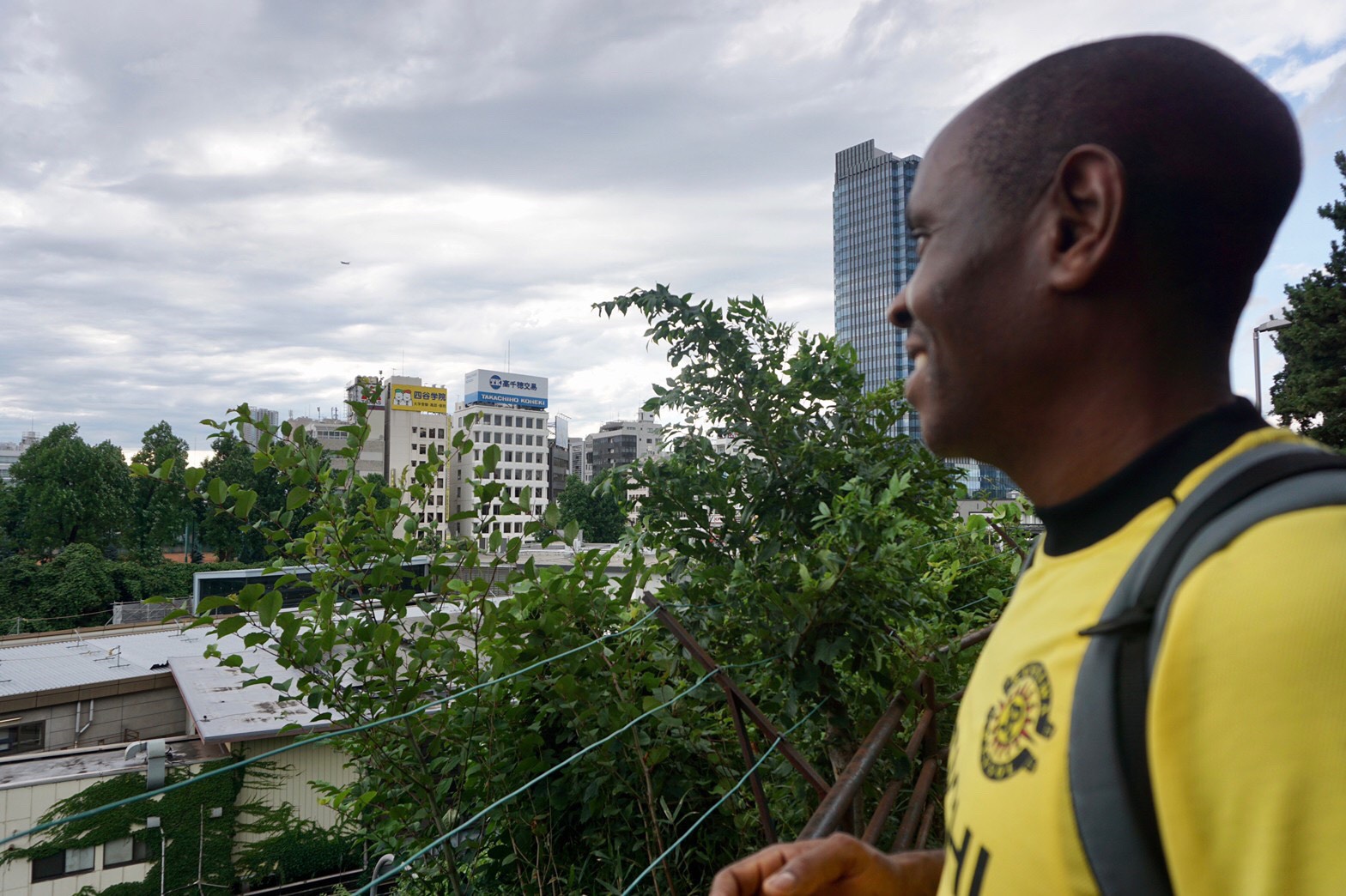
Even though James feels comfortable living in Japan most of the time because he knows that he is way safer compared to when he was living in Cameroon, he faces some difficulties for not only being a refugee but also being black in Japan. He has faced some racial discrimination which he shed tears about in the past. One time when he was on the train, he sat down on the chair, and the guy who was sitting next to him stood up and walked away to another section of the train as soon as James sat down. A lot of non-Japanese people who ride a train have experienced this situation when Japanese people could choose where they sit down on the train, they do not choose to sit down next to non-Japanese people (Japan time).
Another time, when he simply greeted a woman on the street, she looked away and avoided eye contact with him. He also talks that some Japanese people are openly racist, especially against black people.
4. Difficulties with COVID-19
“Even not happy remaining indoors but I have to do that because my fear that if Im dead here, if Im sick here, first, if im sick here, no body would take care of me.”
The COVID-19 pandemic has affected many people, however for asylum seekers not receiving health insurance, COVID-19 has affected James more than most people. The risk of him getting the virus is too high because he would not be able to afford to go to the hospital for treatment with the lack of health insurance, resulting in him being limited in the places where he could go. He cannot risk his own life seeking help from organizations that support refugees, because of COVID-19, especially with no health insurance along with no financial stability with no work permit for the first 9 months on designated activities. The pandemic hit during these first 9 months as well. The COVID-19 pandemic also affected James in terms of meeting people who are also from Cameroon. There is a big Cameroonian community in Japan and in that community, people help and support each other, however, because of COVID-19, he cannot connect with the Cameroonian Community who care for their fellow brothers and sisters of Cameroon. The community where people from the same countries gather and help each other can be used as survival skills, especially for people like James who has not stayed in Japan for a long time. However, because of COVID-19 and because he does not have health insurance, he cannot risk traveling all the way to Saitama to join the Cameroonian community. He used to get invited to eat dinner or share food with other Cameroonians and they used to help each other too, but he has to stay home to prevent himself from getting the COVID-19 virus. Moreover, he has no access to a lawyer who can support him to receive refugee status and gives him legal advice. Therefore, the church is the only source of support he can receive when it reopened.

5. James’ Family in Cameroon
“I’m seriously isolated”
5.1. His Kids
“I want my kids to be educated 200 %. If parents are not giving children education, they are not giving them anything”
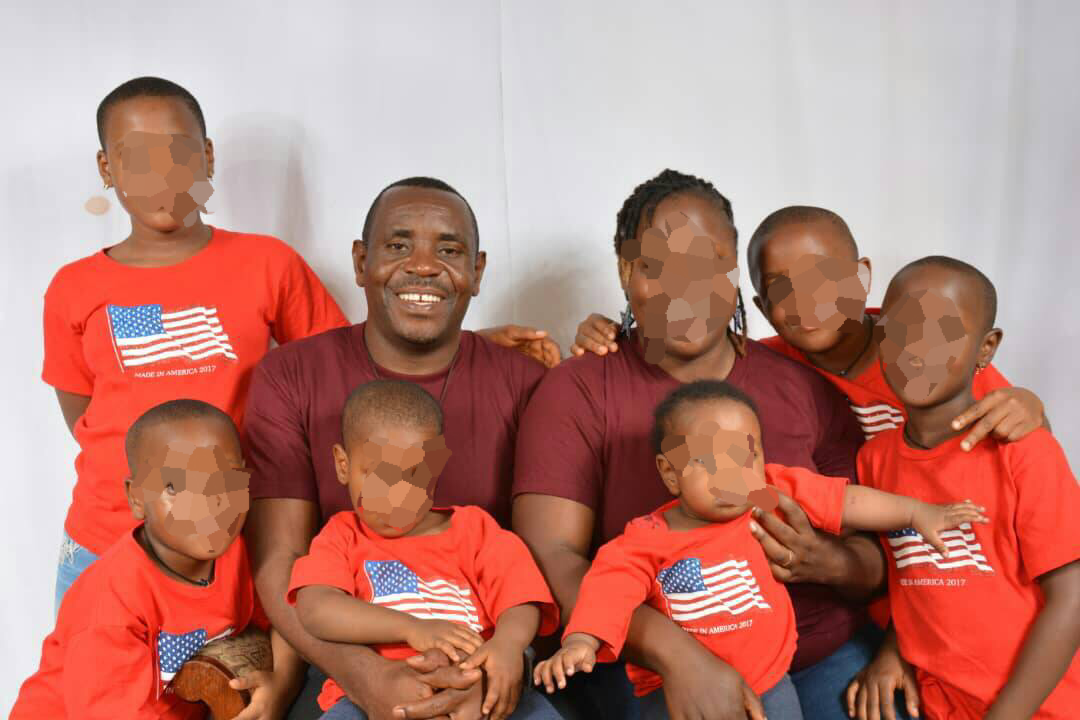
James has a beautiful family in Cameroon with 6 kids (3 girls and 3 boys). The oldest is 11 years old and the youngest is only 1 year old. All of his kids stay with his wife right now in Cameroon and his wife is taking care of all 6 kids. James is extremely passionate about his kids’ education and he and his wife send all of their kids to school when they become of age. He knows the importance of getting an education and for 200% he wants his kids to get an education. He thinks that education is the biggest gift that parents could ever give to their kids. He also mentions that if parents could not give their kids the chance of education, they are giving nothing to their kids. James knows how much the world values the certificate of education, and he knows how much education can help their kids’ future. That is why James and his wife want to give their kids the chance of education and that is why they send their kids to school even if the school area is a little dangerous. He strongly believes in education especially since he did not receive a proper education so he wants to give his children this opportunity he never had.
5.2 His wife
“She prefers to miss me when I am alive somewhere than to miss me when I am dead.”
In these clips, James explains how his wife takes him away from her and their kids. James says that his wife prefers to miss him than to face his death. From the video clips above, we can see how much his wife misses James and it is not an easy thing for both of them to be away from each other and they prefer to stay together, however because of the situation, James’ life was in danger in Cameroon and his wife is happy that now James is safe in Japan. James’ wife was very happy with the idea of James escaping to Japan, however, after some days passed since James left Cameroon, she started missing him a lot, and it is not easy for both of them to be away from each other. His wife works as a school teacher in Cameroon but her salary is minimum. She was very supportive of the idea of James escaping to Japan because she was very worried about his safety and life. James and his wife belong to the Christian community for the married couples and his wife agreed when other members were talking about helping James to escape to Japan. Even though it was a tough decision for them, his wife preferred her husband to leave the country than face his death. Also as mentioned, James’ age and gender group were targeted, and James staying with them put his whole family at risk.
5.3. Struggles being away from his family
James is a family man, and he misses his family so much. He is often worried about his family in Cameroon. He talks to his family almost every day using the mobile phone application WhatsApp and voice messages, but not only talking to them over texts and voice messages, he really wants to see them psychically in person. He also feels guilty for leaving his family in a dangerous situation, but his age and gender group are the ones being targeted so James staying with his family put his whole family at the risk of being attacked, so his family is glad that James is safe in Japan. He hopes to bring his whole family to Japan when he is recognized as a refugee.
In this clip, James explains how difficult it is for women to seek asylum and flee to other countries because they have to take care of their kids. In this clip, he talks about the difficulties of women seeking asylum in particular because they have to take care of their kids, however, gender affects a lot when asylum seekers seek asylum. Women face more difficulties than men when they become refugees or asylum seekers because of cultural, and economic aspects. “decision-makers may ignore cultural and social prohibitions on women traveling or living alone, the ability of women being able to survive economically without family support in societies where women’s rights to work are curtailed, or they may face a greater risk of harassment, exploitation, and violence.”〔If you want to know more about how gender affects refugees when they seek asylum, please go visit here〕He also explains how much he wants to bring his whole family to Japan. He says that if they could get a visa, he would borrow money from anywhere to manage to get their flights because as mentioned, he feels guilty for leaving his family in a dangerous situation.
James makes sure to talk to his family every day using the mobile phone application WhatsApp and voice messages. He is worried about his family a lot and by talking to his family every day, he tries to make sure everyone is safe and doing okay. He is such a family man, so even when he faces difficulties in Japan, he tries to make sure to talk to his family every day because he misses his family a lot. The reason why he tries to talk to them that often is because he misses his family a lot and not only to talk, he wants to meet them psychically and hug them. From the video clips above which he talks about how much he misses his wife, we could tell that he misses his wife a lot, however from this clip, we can also see how much he misses his whole family and how difficult it is to be away from his whole family and leaving them in a dangerous situation.
Even though he could successfully travel to Japan and get to a safer place, he misses his family every single day and he prefers his life with his family in Cameroon where he spent his whole life before he came to Japan. However, he explains that he would not go back to Cameroon because he was not feeling any peace when he was there. He also explains he feels so much fear thinking about the situation he was in. With this clip, we can see the reality of refugees that they face a dilemma that they feel safe to be in the new country but at the same time, they miss their family and home country, but for the safety of their lives, they had no choice but flee the country.

6. Conclusion
As you can see from all the clips from James’ interviews, it is very clear that he is very happy that he was able to escape to Japan which is so much safer for him than his home country- Cameroon. However, his life in Japan is not easy at all and he faces a lot of difficulties every single day. He faces discrimination against his race, he does not receive enough support, he cannot work under his visa right now, and most importantly, he is lonely. He misses his family in Cameroon and is worried about his family. He also feels guilty about leaving his whole family in such a dangerous situation in Cameroon and there has never been a single day that he did not wish to bring his whole family to Japan. Although he lives in Japan right now, we can tell that he has been caught in two places which are Japan- where he lives now and Cameroon where he spent his whole life and where his whole family is. This situation also does not let him be part of Japanese society fully. It is very obvious that it does not mean that if asylum seekers and refugees could escape to new countries, they can live happily. Even in the new countries where they escape for their safety, they still face a lot of difficulties and because they are vulnerable to new society, they can be exploited and marginalized very easily. Their lives and stories are complex and complicated and what makes them even worse is that not many people in Japanese society do not even know that there are refugees like James who came to Japan giving up everything they had in their home country and escaping to Japan for the safety of their lives. It is very important to first know their stories and their voices to take action for them and become their ally.
“The visa got given to all of them at the same time, fine, we should borrow money anywhere to pay the flights, you get it, we should borrow anywhere to pay the flights to leave.”
