“Because I have that hope that maybe somebody somewhere must know what is happening.”
When he was first transferred from the airport to the detention center, Patrick thought he would be placed in something like a refugee camp. Instead, the detention center was like a prison where he had to spend two whole years of his life. Although it could not been worse than what he experienced in Cameroon, it was not easy either. In this section, Patrick talks about the difficulties – but also the hopes – he had while staying in this prison-like place, the backwardness of detaining refugees, and his own attempt to challenge this, even at the cost of his own well-being. His story exemplifies why he shares his story; he wants the world to know his bad experience with the Japanese immigration system and he hopes that by sharing his story, he can help future refugees in Japan.
1. Arrival: No Refugee Camp but A Prison
“So when they say they were going to transfer me, to where they were keeping refugees, I thought wow, I was happy a little bit because I thought that, maybe it was like a refugee camp.”
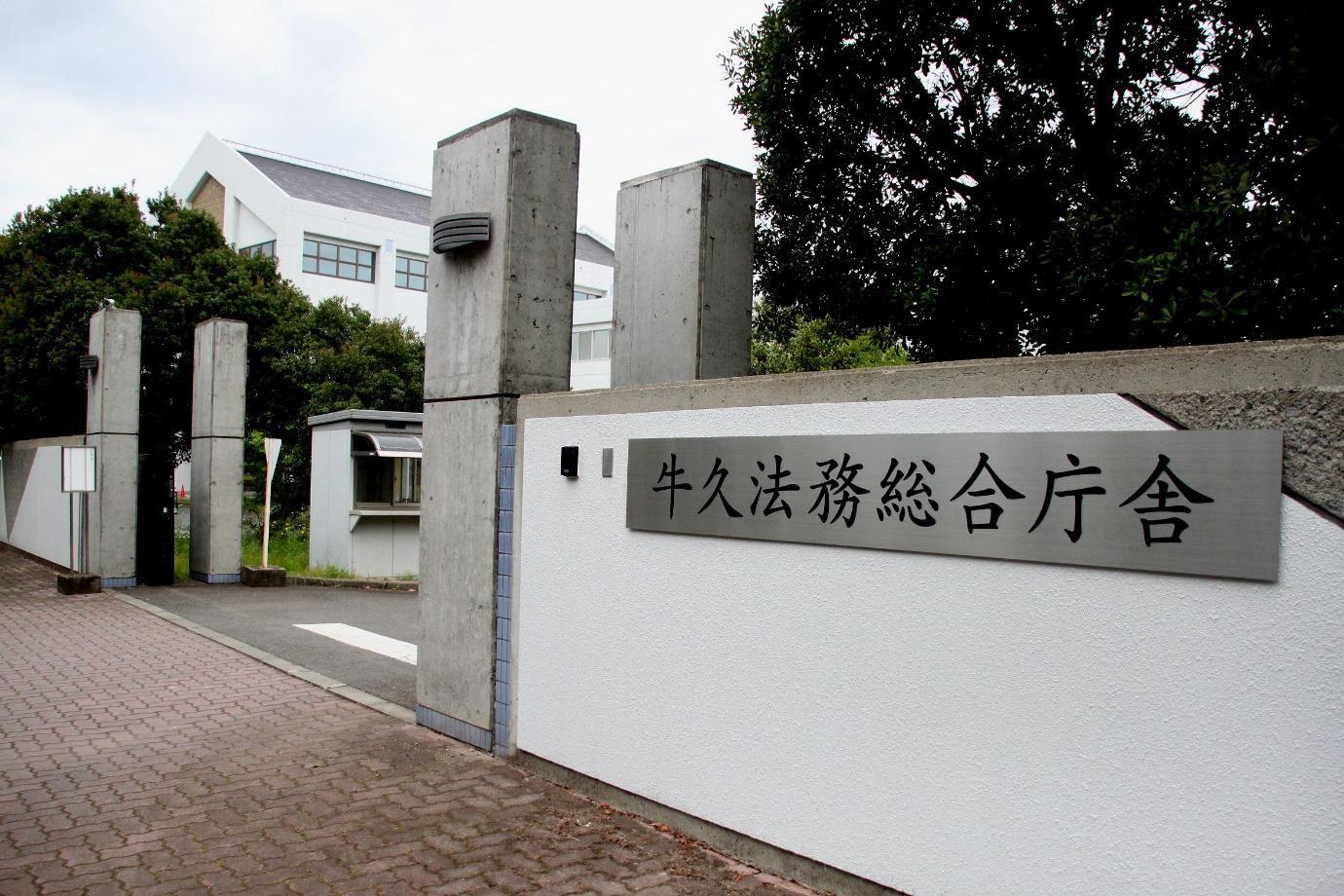
On January 8th, 2019, Patrick was finally moved from Narita Airport after having stayed there for 36 days, Patrick was moved to the Ushiku Detention Center. At first, he was relieved; at Narita Airport, he was not allowed to see anyone except for the immigration officers, who interviewed him almost twice a day. He could only go outside during rare, short breaks and even then there would only be him and a guard. After 36 days, he still did not know the person in the room next to him or anyone else there. His English was not good at the time and the immigration officers’ English was also imperfect. So, when the immigration officers told him about the detention center, all he understood was that it was a place where they were keeping refugees. This caused him to have very different expectations from the reality he was about to experience. The conditions in the detention centers in Japan are unique; the majority of countries, even though still not perfect, have far better living conditions than the Japanese detention centers, where multiple people have committed suicide in the past few years. However, even the average Japanese person has no idea of the situation in the Japanese detention center, so, how will a refugee entering Japan ever know?
Patrick arrived at the detention center in the afternoon and was first searched. He had to hand in his phone and was told he wouldn’t see it for a very long time. After searching for him, he got special shoes and was taken through the building to a small room. Although he did not know it yet, he would be spending the next 25 months of his life here. In Japan, there are currently 17 detention facilities meant to detain foreigners for a number of reasons, of which only one is seeking refugee status. Although the facilities were originally meant to keep people for a short time, the time people have to stay there is growing longer and longer. There has been a case of eight-year detention before deportation. The graph on the right shows that the vast majority of detainees are staying more than two years in the Ushiku Detention Center. So, staying there for a long time is not unusual, as Patrick would soon find out.

Apart from the lengthy stay, there are other things that make the detention center like a prison. The inability to go outside, the strict schedule the detainees have to follow, no free access to the internet (they have to pay for credit cards to use a certain phone in the detention center), shoes you need to wear, guards watching over you, and more. Patrick had never been to prison, but all the things he knew from prison, he found there at the detention center. If someone from outside comes to visit a detainee, they need to come at certain times, register their identity, and leave their phone and bag(s). After this, they can talk with a detainee in a room divided by a see-through acrylic wall that separates them from the detainee. The detainee in turn is brought in and out by guards, through many gates. For Patrick, all these gates, guards, and rules showed how the detainees are not only imprisoned but also unwanted; even though you have not committed any crime, except for not having the right papers, the system wants you behind bars.
As a result of the treatment in detention centers, detainees in Japan become mentally unwell and suffer additional trauma after being forced to flee their home country. The conditions result in losing faith in being ever accepted as a refugee, self-harm, and suicide. Some detainees go on hunger strike, not eating for as long as 10 days, which could result in them dying. Detention Centers do not want detainees to die of hunger strikes, so when their health is really in danger, they usually temporarily release hunger-striking detainees. Patrick explains that for these detainees, the conditions in the detention center were so bad that they would do anything for this chance to go outside. They would rather die trying to go outside than continue to stay in the detention center. For a refugee, going back home is no option, but a life in prison is no life either. As Japan was accepting less than 1 percent of asylum seekers at that time, the choice detainees had was either to stay there or be deported home. So detainees suffer mentally when they realize, the only humane future, getting a right to live, is virtually non-existent.
2. Always Interviewing: The Answer They Already Have
During his detention at Narita Airport and his stay in the Ushiku Detention Center, Patrick had to attend interviews with the immigration officers for his refugee application. The interviewing officers are from the Immigration Services Agency of Japan, which is part of the Japanese Ministry of Justice. The interviews are mandatory and supposedly meant to find out if a refugee is truly who they claim to be: a refugee. However, Japan’s acceptance rate of refugee applicants at that time was less than 1%, meaning the vast majority of these interviews would not result in recognition. Patrick explains how the interviews are not there to find out if you are a real refugee or not. He says the decision to reject you is already made and the interviews are a formalized way of finding the reasons to reject you. They are like interrogations that discourage even people like Patrick, who are 100% sure they are a refugee. As Patrick describes it: “You go in happy but you come out angry.”
Instead of asking Patrick about his persecution story, the interviewers would ask him questions like the color of the shirt he wore on the day he arrived in Japan, or the color of the pants he was wearing when he was fleeing in Cameroon. Answering these questions right would not help prove Patrick a refugee, but answering them wrong would mean “things in your story do not add up.” For anyone seeking recognition, these questions will be very frustrating. Patrick realized that not answering these sorts of questions at all was the best decision, and stayed in control by not reacting to these questions. Apart from asking for strangely specific details, the interviewees also tried to convince Patrick to go back to Cameroon. Instead of asking about his problems in Cameroon, which would prove his persecution story, they would talk about programs they have for foreigners with which Patrick could receive money and maybe return someday. This misses the whole point of a refugee being unable to go back to their country and implies that rather than fleeing, a person is searching for money.
“They gave me the name of an organization that if I accept to go back, maybe they, they can give me something [money] to go back.”
To withstand the frustration these interviews gave, Patrick had to learn ways to control the flow of the interview and not become angry. In one interview, he was not given water and asked many questions. Instead of answering, he demanded first to get water. Talking about his stories means talking about how his father and brother were killed and how he lost everything. This is very emotional and having some water helps a lot to keep your calm. Patrick found that by refusing to answer some questions and making sure he was treated right (given water) he could convey his story better. Additionally, he started to write down details, so he would remember everything correctly. He never thought about keeping a diary or a notebook before, but in the detention center he started writing things down, like the gate, the time, the place; everything. This way, he would not say inconsistent things, which the immigration center uses to reject refugees’ applications. His first application was rejected because he spelled his hometown city in the French way, not the English way. The immigration officers said someone would never spell their hometown name wrong and thus used this one detail to deny his whole persecution story. Patrick thus wrote things down as much as possible, to avoid being accused of being a liar because of details he does not remember correctly.

One more big hurdle for the interviews, that should be mentioned, is the language. Patrick spent most of his time in Cameroon speaking French. So when he came to Japan, his English was not very good. Additionally, the migration officers only spoke Japanese. For the interviews, they would call in a French translator on the phone. However, as you can imagine, it is hard for someone to understand and answer properly, if their translator is on the phone. What was worse was that the translators would make mistakes, or translate things differently, as there would be different translators for different interviews and their language ability would also differ. Patrick does not blame the translators for their mistakes, as it is a consequence of interpreting things from one language to the other, and he also acknowledges that making mistakes is a human thing to do. He does regret though, that the refugees are the ones paying the prize because these mistakes would be noted as inconsistencies in his story and thus “prove him a liar.”
Apart from proving your refugee story wrong, there are also other ways in which refugees pay the price for faulty translations. One day, Patrick got an injury while playing soccer and had to go to the hospital for that. He had a scan and wanted to know the results. His interpreter translated what he had from Japanese to French, but instead of properly translating, she told Patrick he had a disease he did not have at all. This was a disease for older people and the Japanese doctor had to reconfirm that no, he did not have that disease at all and could not even have it, as he was way too young for it. In this case, Patrick realized that the disease translated for him, was likely not what he really had, and he was able to pressure them for a proper translation. However, undoubtedly there are also times when he did not realize and never knew what got lost in translation, like the time he thought he was going to a refugee camp, instead of the Japanese detention center. In this way, language forms a huge barrier for refugees both when trying to feel safe with their own situation in Japan as well as for their ability to convey their persecution story.
3. When Your Life Has Stopped
“I’ll not say what was happening inside, I was so concerned about it. No, I was already inside. So that was not a big deal for me again. So it was when I was thinking about all my life, all what I’ve, I’ve lost. So that was, it was like a terror to me that time.”
You might imagine that the most difficult thing about staying in the detention center is something like only being able to go outside for a short time a day, having to share a room with someone you do not know, having to follow a strict schedule or only being able to eat what is given to you. Or you might think that being unable to access the internet or freely talk to people outside is the hardest thing. However, for Patrick, the worst part was having lost his family and former life. The first months he was in the detention center, he was only thinking of them. He was always sad and crying in his room, to the point that he did not even really register the harsh circumstances of his life in the detention center. There is no emotional support for people in the detention center at all and Patrick did not have any money either, to afford the pay for phone cards that are needed to make calls with the specific phone(s) detainees can use in the detention center. This meant he also could not contact any friends from Cameroon either. He had no one at all and this made staying at the detention center very stressful and hard.
Patrick thought his life would continue after arriving in Japan and the detention center, but instead, he had no idea how long he had to stay there. As visible in the graphs above, many of the other detainees had stayed there for a long, long time. This made Patrick scared, thinking he would also have to stay for a very long time without being able to start a new life and forget a bit more, about all he’d been through in Cameroon. He was and still is, unable to sleep properly at night. The continuous refusal to recognize him as a refugee and let him participate in Japanese society gives him so much stress, that even his physical features have changed. Before his posture was more straight and his skin fairer. One of the only medical things you can get in the detention center is sleeping pills. However, Patrick did not want to use those, as the detainees that do use them, experience side effects such as being unable to control their emotions or losing a proper live rhythm. Other medical help is not adequately given according to Patrick, which is proven by the Death of Wishma in March 2021. Wishma was a 33-year-old woman who had health problems for months, lost more than 15 kilos, and was coughing up blood, but instead of being taken to the hospital, she was told she had to wait longer for her appointment and given an antipsychotic instead. Not many days later she was dead.
“Yeah. Because you can cry for a problem. Maybe they take even two months when you are mostly like going to outside hospital like that. Maybe two months, three months. During that time you are suffering for the pain.”
Other detainees used to rebel for the fact that they were not given medical care, which is a human right by the World Health Organization Constitution, signed by Japan. Under this convention, the state has a legal obligation to facilitate timely, acceptable, and affordable health care to everyone, yet the people waiting for refugee recognition do not seem to have this right at all. Patrick also explains how feeling pain all that time would drive detainees crazy and sometimes even cause them to break things. Sometimes detainees would wake up at night, crying and shouting in their room, as a side effect of stress and pain. Immigration officials seldom react to this.
In 2014, a 43-year-old Cameroonian man with diabetes passed away in the detention center after his health had deteriorated to the point that he could not stand anymore. In the video, you can see him screaming for help and water, without receiving any. A few hours later he passed away.
Sometimes immigration officials do react to stressed people, by trying to calm them down and in case this fails, putting them in a separate room where they do not bother other detainees. Patrick was only put in a different room one time. This was during the coronavirus pandemic when he was coughing. He was put in an isolation cell at that time, even though the doctor tested him and confirmed he did not have the virus. In this cell, you cannot see or talk with anybody, not even the other detainees. First, he was just reading there and did not make a scene, however, after around three weeks he was still in there, without knowing why. Staying somewhere without reason, with no access to outside air or human contact is not reasonable, so Patrick demanded the officers to explain why he was still in there. The officers could not even explain this. Instead, they replied that they were not responsible and that he needed permission from the head of the detention center, but that the head of the detention center was on vacation. So, Patrick was staying in complete isolation, for a reason simply that the director was on vacation.
“What make me mad is that they say the boss went away. I say, ‘why, how does it concern me?’ So the boss, the boss keep me here. He go to enjoy, while I am here [in an isolation cell]. I said, ‘that is not normal.’”
Patrick also had to share his room with a man who did not like him and used to pick fights with him. However, although this section is about the detention center in Japan, there is something he does want to note even more. Even with all the stress and sorrow Patrick experienced in the detention center, he did not rebel with others for medical care, he did not argue with his isolation for three weeks and he never physically fought with his roommate who did not like him, nor did he lie to get back at the man. Patrick wishes for the inhuman circumstances and unfairness in the detention center to change, but he also wants the reader to know that the worst part of his story happened in Cameroon. The reason he endured all this in the detention center, without returning home, is that he could not go back. It is because he has experienced even worse things there.
“The truth is that every time was hard. It just that for me, I was used to harder than that.”
4. “I Hope to See You Out”
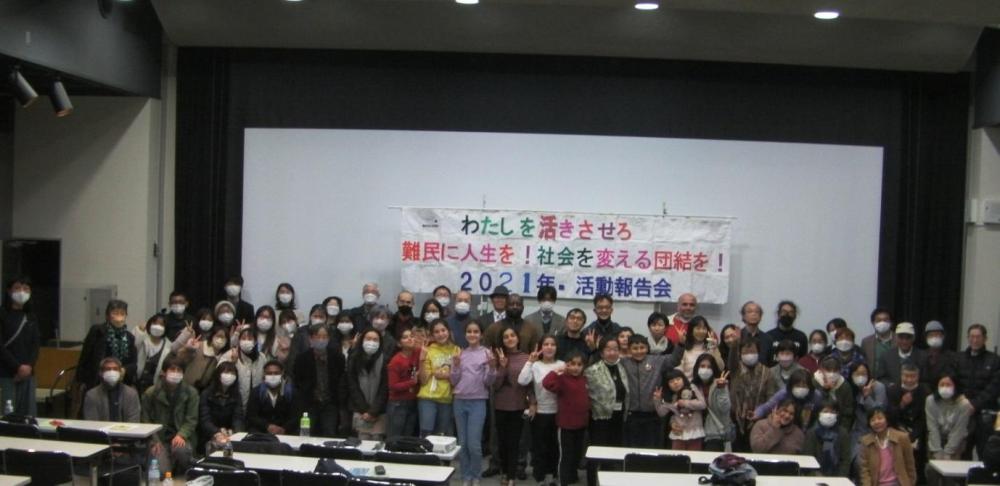
What helped Patrick regain hope in the detention center were other people. Unlike his 36-day detention at the airport, in the Ushiku Detention Center, he could talk with other detainees. Although he did not want them to know that he was crying, they noticed and they also gave his name to volunteers who came to visit. Menkai is the Japanese word for these visits, and there are volunteer groups who come to visit the people in the detention center to give them emotional support, listen to their stories, and try to help them by giving information about free lawyers, things like soap and shampoo, or money for pay cards to use the phone. For a volunteer to visit a detainee though, they need to know the name and nationality of the detainee. Other detainees gave Patrick’s name to volunteers, so they could come and visit him. It was through these visits that he met people and gained some hope and will to live again. One of them, Alex, told Patrick that Japanese people are nice and that he hoped to see Patrick outside one day. This really moved Patrick, as he would constantly have people trying to convince him to go back and had thus become quite negative about any future in Japan.
It was also with help from the money for pay cards, that Patrick could call some of his friends from his life in Cameroon. When calling one of these friends, he found out something that made his life so much better. He found out that most of his family was still alive! Since fleeing Cameroon his reality had been that they had all died, but his friend told him that his mother and sisters were still alive. Yes, his father and one of his brothers were executed. But the others had not been home and thus managed to escape, just like Patrick. Although he could not contact them, as he did not have their numbers now that they had fled, and could not make many calls in the detention center because you need a lot of money for those, just knowing that they were alive made him able to be much more relaxed and also think about his future.
One more thing that helped Patrick during his stay was the bible. Although he had not been a strict Christian in Cameroon, he found hope and consolation in the stories of the bible. One of these stories is the story of Job. The story goes as follows: Job is a prosperous man who has everything and believes in God. To test if this belief will stay if he has nothing, Satan takes everything from Job; his possessions, his children, his wife, and his health. Yet, Job stays faithful to God.

Patrick recommends reading this and commends “Things were so bad for him and he lose almost everything, but later on, he recover everything.” The story surely reminds Patrick much of his own life, losing everything, and helps Patrick keep hope for his future. The Bible is so important to Patrick that he also talked with other detainees about the bible and even helped one man so much with this, that this man even tells others about how Patrick helped him with stories of the bible.
“I remember I was a great encouragement to him. All the inspiration was from the Bible. From the Bible, I start sharing some experience with him. Sharing the word of God with him. And the man was so, so encouraged. Even today, because now he’s out.”
5. “Something Is Wrong With This System”
“I’m not a Japanese; that was my only crime. And they kept me for 25 months, just for that…So, I have all the reason to think that, really, the system is not yasashii (kind).”
When Patrick was finally allowed to leave the detention center on provisional release, he was told that he had to pay money. Anyone handing in an application for provisional release has to pay a sum of money upon approval and show an address where they can stay. However, Patrick did not plan to flee or lose everything he had in Cameroon. He did not have this money and the immigration officers who searched him and registered all his belongings and interactions knew this very well. Most people fleeing for their lives do not choose or plan to flee and cannot take their belongings and capital with them. Yet, the Japanese Immigration Services only allows more freedom to people who have money. This means that many detainees need to rely on volunteers to get out of the detention center. Patrick was lucky enough to have met some people who wanted to pay the release fee. However, the unfairness of asking detainees to pay even though they have no money and no way to earn money for themselves shocked him so much he refused to pay. “It’s not right,” Patrick says.
The system is wrong to ask money from people who do not have anything, to leave the detention center. The system is wrong to not allow these people to make money and have them rely on compassionate generous individuals in Japan. Patrick believes it is wrong to the point that he did not pay the money, even if it meant having to stay in a place like prison for the rest of his life. In the end, Patrick’s lawyer gave money directly to the immigration officers, instead of through Patrick. Only in this way, Patrick gets out. Now, Patrick is on provisional release and faces many new challenges. He is still not allowed to work, cannot register for health insurance, and does not qualify for any social assistance. And many of the Japanese people he is dependent on in this precarious situation are not aware of what people on provisional release face.
“Many Japanese really are not aware. Trust me, because I’ve, I met many of them. They’re really, they don’t even know what is immigration. I saw Japanese, who don’t even know what is immigration is. When they hear, some of them heard about my story, they say, ‘Are you serious?’”
Patrick likes Japanese people and believes they are very nice. Even the immigration officers, he does not blame. However, he wants more people to know about the immigration system in Japan. In the previous sections, we read how they imprisoned him even though the only thing he did not have was a visa. “‘What was your crime?’ I say, ‘I don’t know,’” Patrick shares how he answers a question he is often asked. We also read how Japan accepts only 1% of all applicants, how they did not listen to Patrick his story of persecution at all, but rather, when he went to interviews, already had his rejection paper ready. Patrick stayed in the detention center for over 2 years, without being able to work and without being able to build a new life at all. We read of the hardships he faced, the absence of proper medical care, the stress, and how other detainees went on hunger strikes or even committed suicide.
In the video on the right side, we see the reaction of Masako Mori, former Minister of Justice of Japan, now special advisor to the Prime Minister of Japan, when asked about the problem of increasingly long detention of people and the inhuman conditions in which they are kept. The Minister of Justice is responsible for this system, yet, the solution proposed here is faster and more efficient deportation, to avoid the dire circumstances of detainees.
In 2021, a bill was proposed to amend the Japanese immigration system, in line with this reasoning, which would allow for faster deportation. It was withdrawn after authorities refused to show security footage of her treatment of Wishma, who died in detention, and other controversies were pointed out. However, in 2023, the bill was proposed again and passed in more or less the same fashion. It misses the point of the problem with the detention centers completely because it assumes that the problems come from people who do not want to go home, instead of from people who cannot go home and are thus forced to stay in detention. Patrick hopes that by sharing his story, he can create more awareness among the Japanese, and create a better system. One that is not focused on either detention or deportation, but one that allows refugees a chance to live.
6. Getting Out: “Is It Real?”
On December 23rd, Patrick was finally able to leave the detention center on provisional release. After staying there for so long, he almost could not believe a different life was really possible. He would wake up at night and wonder if it was really true that he could leave the detention center. Leaving was not a dream. Patrick really left and was full of hope. He explains:
“I have a convict a conviction inside of me…I know I’m a champion and the training of any champion is never easy. You understand? So when I left the detention, I know I’m going to make it.”
However, regardless of how motivated Patrick is, and how much he has withstood, not being a recognized refugee in Japan means that even outside the detention center, there are challenges waiting for him, which we can see in the next section.
