
*The content may contain graphic or violent imagery
1. From an Influential Businessman to an Influential Politician
“I always blame myself about this Ambazonian issue.”
Patrick grew up seeing his parents working as politicians in the Cameroonian government. Although his father was an influential and well-known politician in his area, Patrick was never interested in learning or asking his father about politics. Due to this, Patrick has little knowledge about his father’s politics. Never did Patrick imagine that his father’s involvement with politics and passion for helping the Anglophone separatists would lead to his family’s death.
1.1. Influential Politicians in Cameroon
Patrick’s parents were politicians in the Cameroon People’s Democratic Movement (CPDM). The CPDM is the political party ruling Cameroon. Paul Biya has held the position of leader of the CPDM and president of Cameroon since 1982. The democratic party’s primary language is French and its ideologies include nationalism and populism. The development of the economy in Cameroon has always been a business of the government. Patrick’s father owned one of the largest farms in Cameroon and had many employees working for him, making him an influential businessman in his area. Patrick says, “When you’re a good businessman, you must belong to a political party.” According to him, this is because influential businessmen have the power to control people, and in turn, also give the government the power to control the businessmen.

Patrick’s father became fully involved in politics in 2010. His mother also became a politician in CPDM to follow her husband. Patrick recalls, “I just noticed one time she start following him at certain meetings. They start going together and I was surprised myself also to see her, wearing their uniform sometime when they have some parties. So I just understood she must follow a husband.” While his mother was not fully involved in politics, his father was attending meetings regularly and secured a seat in the Parliament. Despite having a father who was a politician in the Cameroonian government, Patrick never showed interest in learning about politics from his father. Even now, Patrick does not have views on politics and he says, “I have no view because if I’m a politician, I think I’ll die quickly.” Most of Patrick’s memories of his parent’s involvement in politics are based on his observations, rather than his interest in learning about his parents’ politics.
Although Patrick’s father was a politician in the CPDM, he did not support the party’s ideologies. Patrick says that “corruption is the thing that rules Africa.” The CPDM was known for its lack of transparency, such as irregularities and fraud in voting during Paul Biya’s reelection in 1997, 2004, 2011, and 2018. Corruption was prevalent at all levels of the government, including security force abuses and human rights abuses, some of which consisted of arbitrary arrests; life-threatening violence upon prisoners; restrictions on freedom of speech and the press; societal discrimination against women and girls; human trafficking; and forced labor. Such a lack of transparency rooted in the government has led to further poverty and inequality in Cameroon.
“My father’s wish was for the party to collapse for the good of the whole country.”
Patrick’s father wished for a federal government. The Cameroonian government is centralized, meaning that all the power is in the hands of the leaders of the country. The centralized government was also disrupting his father’s business, “it was painful for him because he had to travel a far distance,” recalls Patrick. His father’s opposing views against the CPDM were just the beginning of what consequently to his death.
1.2. The Anglophone Crisis
The Anglophone crisis in Cameroon began in 2016 between the francophone (French-speaking) and anglophone (English-speaking) sides. The root of the conflict began in Cameroon’s history of colonization and decolonization, splitting the Cameroonian population into two cultures and languages, and eventually fusing the Francophones and Anglophones into one nation. Today, about 20% of the Cameroonian population speaks English as their main language, making French the predominantly spoken language in the country.
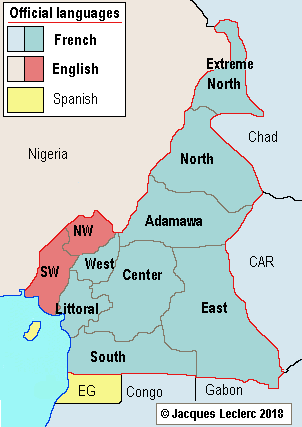

The relationship between the Anglophones and Francophones was relatively peaceful over the decades until tensions began growing in 2016. Peaceful protests were carried out by the Anglophone teachers and lawyers against the marginalization of the English-speaking regions and the appointments of Francophone teachers and judges in the Anglophone regions. They denounced this action as a steady process of the nation’s “francophonisation,” and feared that the government would impose further use of French in other localities in the Anglophone area. The Cameroonian government responded to the peaceful protests with brutal violence, killing at least 6,000 civilians in the North West and South West Anglophone regions since 2016 and displacing over 700,000 civilians. Patrick says that when he was in Cameroon until 2018, the Anglophone protesters were peaceful. He asserts, “I knew that they are fighting for a good reason.”
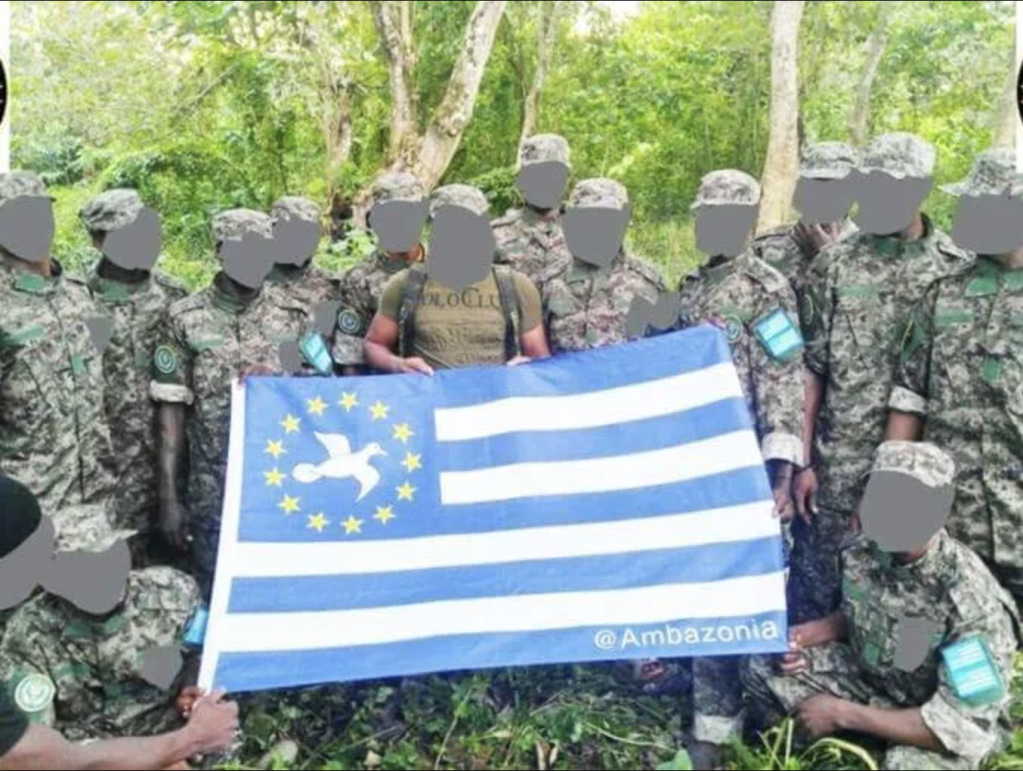
The government’s militant actions have led to the escalation of violence and conflict between the Francophone and Anglophone sides. In 2017, a local group in the Northwest Anglophone region of Cameroon declared the independence of the Federal Republic of the Ambazonia, commonly known as Ambazonia. They are associated with the independence-seeking faction and the Anglophone separatists, who are fighting for the division of Cameroon. The tension between the Ambazonia and the Cameroonian intensified in 2017 in the North West region. When Ambazonia declared its independence on October 1, 2017, the government sent security forces and attacked unarmed civilians, killing 17 people and wounding hundreds. The Ambazonia created the Ambazonia Defense Forces as a way to defend themselves from the security forces.
Patrick lived in the southwest region of Cameroon, where the Ambazonia was not violent during the time, up until he left Cameroon in 2018. In the beginning, a large portion of the violence against civilians was committed by the government forces, but nowadays, Ambazonia’s motive has become controversial, as they were also seen targeting civilians. The Ambazonia began recruiting young boys, dropping out of secondary school and training them to carry guns, kidnap, and break into homes. “I saw the picture of two girls who were killed terribly. Why? Because their boyfriends are Francophone, terribly killed, murdered just because of that,” says Patrick as he recalled the time he received the tragic news about the violence committed by the Ambazonia army when he had arrived in Japan.

“I said, ‘hello, sister!’ She said, ‘Francophone or Anglophone?’ Oh my God. I was terrorized.”
Whilst the tensions between the Ambazonia and the Cameroonian government escalated, the tensions between Anglophone and Francophone people also intensified. Patrick noticed that asking someone which side (Anglophone or Francophone) they are from became a substitute for greeting someone. If anything, it has become a question to ask for one to consider whether they even want to greet that person depending on their identity. Patrick, who was raised by a Francophone father and an Anglophone mother, has a strong sense of his Cameroonian identity. He hates the division of identities caused by politics and strongly emphasizes, “I start hating you just because you are a Francophone, that is nonsense.”
“They [BIR] just came in our town…they burned many houses.”
Rapid Intervention Battalion (Bataillon d’intervention rapide, BIR) is the military force and an army combat unit of the Cameroonian Armed Forces. They were the main unit armed force behind the killings and tortures of the peaceful Anglophone protesters. During the Anglophone crisis, BIR invaded villages in the Southwest Anglophone regions, where they burned houses, killed civilians, and decapitated a body. Patrick’s village was one of them. As Patrick mentioned, BIR was their greatest fear, and to this day, he is asking himself: “Why did they do that?”
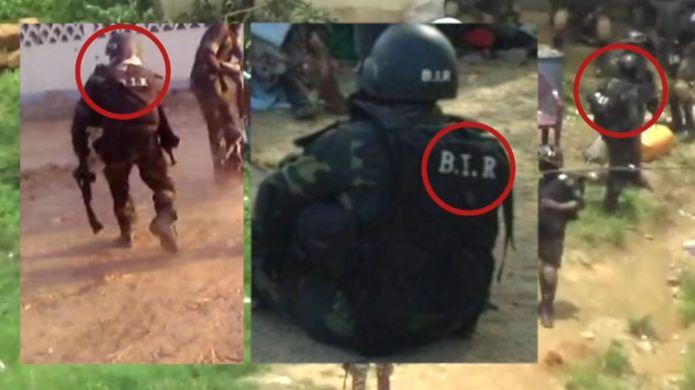

Right: Anglophone village burned to the ground by BIR (BBC)
2. The End Has Come
2.1. A Francophone Supporting Anglophone Separatists
“My father doesn’t care about that– being afraid of his life, I think that is the mistake he made.”
When the Anglophone Crisis began to escalate in 2016, Patrick was forced to close down his business since it was located in the Anglophone area, where people were getting killed by the Francophone army and many were running away. After closing down his business, Patrick helped supervise his father’s farm. Patrick’s father, a politician who was working in the Cameroonian government, began supporting the Anglophone separatists. He was delivering eggs and bananas from his farm, receiving half of the payment from them.
Patrick’s father supported the separatists for business and political reasons. He believed that if the Anglophones came to power, they would help him with this business since he faced challenges transporting his goods from the Anglophone region to the Francophone region. “He knew that the Anglophones were fighting for a good reason,” says Patrick. Patrick also says that his father knew that by supporting the separatists, he would serve as great encouragement and strength to them since he was an influential politician and could consequently help them gain their rights. Although his father knew that his actions as a Francophone politician helping Anglophone separatists were a great risk, he still chose to support them. Patrick was preoccupied at first and asked him, “Are you sure of what you are doing?” and his father responded: “Calm down, I know how to master it.” Since then, Patrick trusted his father’s words and continued supporting him.
Shortly after Patrick’s father started supplying food to the separatists, the government authorities began suspecting Patrick’s father of supporting the Anglophone separatists. He received death threats from the authorities, but he did not believe that they would carry them out. Patrick was worried but continued to trust his father’s purpose of helping the separatists.
2.2. Life or Death
In 2018, Patrick’s father asked him and his brother to help deliver the food from the farm to the separatists that were located in Lebialem, a Southwest Province in Cameroon. In the beginning, Patrick did not know that the delivery would put his life at risk. “My father trusted me because when I am involved in these kinds of things, I would give him the report and he would understand better,” says Patrick, so he was on board to help his father. However, when his father began warning him about the delivery, he realized that helping the separatists was a major risk. Patrick did not want to continue helping with the food delivery and even made up excuses not to deliver the food himself, but he trusted his father’s words and continued helping him because he understood that helping the separatists was fair.
One day when Patrick was delivering food to the separatists with his brother, they were being followed by the police. When they got out of the van, Patrick and his brother were held at gunpoint. The Anglophone separatists thought that Patrick came to their area with the Francophone police, while Patrick did not know that he was being followed. Both the Anglophone separatists and the police began firing shots, and thankfully Patrick and his brother were saved by the police and managed to escape to the forest, and they made it back home safely.
“It was like a little war there, thank God we came out alive.”
“When I started hearing shootings…it was like the end has come.”
After the incident where Patrick and his brother were nearly killed, they stopped helping with the food delivery. Patrick says, “I resigned from that job. That day was the end.” Patrick’s father also stopped supplying food to the separatists, but he did not give up on them; he continued to look for other methods to help the separatists. However, it was not long after that his father’s life would be ended by the Cameroonian army.
3. “I was a Dead Man Walking”
3.1. Family’s Persecution
“Thank God, I did not waste my time because they were coming for me.”
On the evening of September 12, 2018, Patrick was at his house when he received a call from a good friend of his, Franklin saying, “All your family has been killed.” Patrick said, “Are you joking or what? Bro, your house is on fire right now. If you know what is good for you, just run quickly,” said Franklin. Patrick quickly fled and ran into the forest. As he was running, some of the men in the army saw him and started chasing him. “They couldn’t get me because it was dark, unlike Tokyo, where there are lights everywhere,” says Patrick. He successfully ran from them and hid in the forest.
3.2. Surviving in the Forest
The next morning, Patrick called Franklin to ask about what happened. He simply could not believe that his family had just gone in one day. A part of him believed that his family could still be alive. He says, “I was not really sure that my family was dead because if I was sure, I would’ve stopped there,” as he recalls the moment that he was running from the army. Even after killing his entire family, Patrick did not blame politics or his father’s involvement with Ambazonia or the army. “The only person I was blaming was God,” says Patrick. Patrick grew up in such a corrupt political system, so he was used to it: “Even today, I am not blaming them.”
Patrick hid in the forest for almost two weeks. In the first three days, he survived in the forest without water or food. He also had no battery on his phone, so he was completely cut off from the outside world. “That was the first time in my life I thought about committing suicide,” he recalls. Knowing that the army was looking for him, Patrick thought about leaving the forest countless times to just lead them to end his life. “I was also thinking maybe they’ll pass me through some torture, so I was afraid,” says Patrick. If he was certain that the army would just shoot him, he would have gone directly: “Just shoot me and just close that chapter.”
“I was a dead man, despite the fact that I was moving.”
After walking around the forest for days, Patrick finally reached a village named Kumba, located in the Southwest region of Cameroon. Thankfully, a kind lady in the village offered him some food and helped Patrick charge his phone so he could get in touch with his friend Franklin. “In Africa, it’s not like in Japan. Because surely in Japan, if I just knock your door, I say, please, I need the help. Please help me charge. You would just call the police immediately,” says Patrick. At the time, Patrick just felt numb: “I’m just moving like the wind just blowing me.”
