1. Beginning of His Journey
1.1. Pressure on the Spot
“To be here and not to be attacked by anyone is much better than just going back and being attacked.”
The process of asylum seekers being detained in Japan is fast. After completing a series of health checkups, people will be led to the interview room and wait for officers to come and ask questions. This is the process that separates asylum seekers into two groups. One is people who agree to leave Japan and go back to their home country, while the other group is those who cannot return due to a variety of reasons. Individuals who disagree with returning to their home country will be brought to the interview room and will be asked about their experiences and reasons why they cannot return. Such a “questions and answers” section is not played in the traditional one-to-one interview style. Instead, asylum seekers will be put in a room with many officers. It seems that the more officers there are, the easier it becomes for them to scare, pressure, or threaten asylum seekers by creating stressful tension. Sana also went through the same experience of being put in the interview room, and this time there were ten officers with him. The officers tried very hard to convince Sana to leave Japan, telling him his life in the detention center would be tough. Sana explained how his life would be in danger if he went back to Ghana and said, “To be here and not to be attacked by anyone is much better than just going back and being attacked.” Sana was still full of hope for what would come next as he decided to stay in the detention center – he was much more scared to be sent back and face death. What he loses for staying in Japan is just the freedom to move around, but going back to Ghana means he may put his family in danger and could lose his life anytime. Although Sana made his point very clear, officers were still trying to convince him and the progress of convincing became more aggressive.
Being brought to the room, Sana was given pressure by the officers. Sana was not the only asylum seeker who was treated in this way; instead, asylum seekers who wish to stay in Japan have all gone through this process. In order to scare asylum seekers away and leave Japan, officers in the detention center use every means they can to threaten them. For example, some asylum seekers were threatened in front of each other as a means of putting pressure on them. Under such pressure, some were convinced to go back to their home country while others like Sana stayed. Sana was calm at that time so he was not threatened in this way. However, he knows how some asylum seekers were treated violently because they resisted.
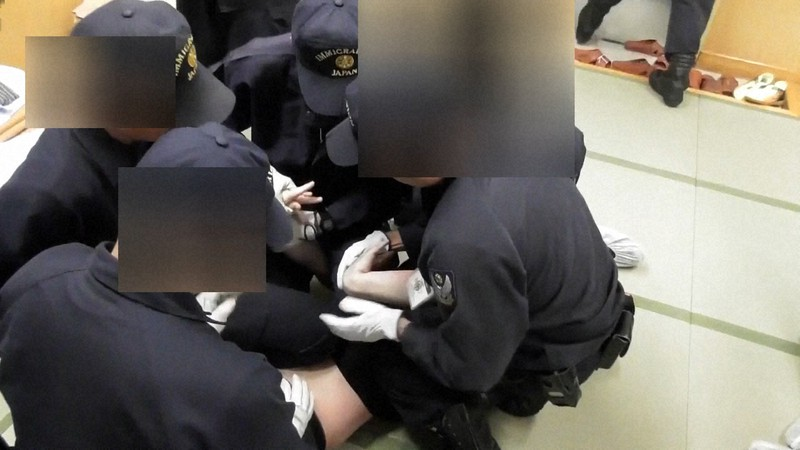
As for Sana, he was brave and had the confidence that he could overcome potential difficulties in the future. Sana did not mind that he would not be able to move around freely; his main concern was to get rid of the shadow of death or being murdered in Ghana. Therefore, Sana was not scared by the harsh attitude he had to face and decided to stay in Japan, the country where he believed that he would be safe. However, what Sana did not know was how his decision to stay was the beginning of all the torture he experienced in the detention centers.
2. Physical Hardships: Fighting for My Heart
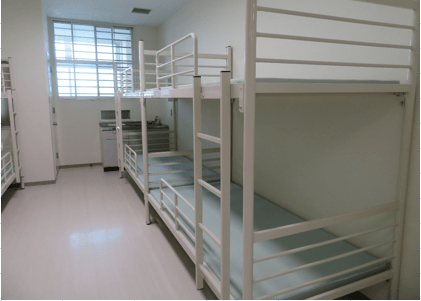
Sana claimed that “I wasn’t having that kind of disease in my body” as he explained he developed many different diseases after he was detained in Japan. Too many detainees were put into one room. For example, although there were many of them in one room, there was only one shaver for everyone. Detainees had no choice but to share the shaver, even with detainees with Hepatitis B, a disease that is transmittable through blood. Thus, the low level of hygiene condition caused them many troubles and spread diseases among the detainees.

2.1. Being Rejected for Health Treatment
Detainees in detention centers often fail to receive proper health examinations. When detainees feel sick, they are asked to fill in an application form with an explanation before they ask for help. However, the role of making decisions about whether the detainee needs help or not is played by guards without any essential medical knowledge. Consequently, detainees’ symptoms become worse after they get rejected by the “doctor” of the detention center. Sana was only given painkillers and sleeping pills no matter how strong he requested proper medicine. Taking painkillers and sleeping pills did not cure the illness; instead, Sana’s as well as other detainees’ symptoms often got worse without proper medical support.
Sana was not the only case who experienced such a hopeless process of waiting for responses of medical treatment. There are many other cases of detainees suffering from health issues. Some were able to receive medical care to a certain level, some could not receive proper medical care and had to bear the symptoms, and some detainees even lost their lives. During Sana’s stay in the detention center, he knew of another detainee from Sri Lanka who also suffered from sickness and passed away in 2021 in the Nagoya Detention Center due to a lack of medical care. Her struggle of being neglected by the guards and the unmeasurable amount of pain that she had to endure was heartbreaking. Sana sees the cruelty of the detention center and comes to realize the difficulties he will also go through. Meanwhile, Sana’s health condition became worse, and adopted different symptoms of sickness.

2.2. Stepping Forward for Himself
To prevent himself from repeating the Sri Lankan woman’s case, Sana stood up for himself and asked for proper medical treatment and made it clear that he would not participate unless they sent him to a hospital with qualified doctors who could give him a proper checkup so he would know what is wrong with his body. Sana was brave enough to step forward for himself and showed his attitude as well as the strong will to be cured. However, his request would not be easily passed, especially in the detention center where detainees are meant to be given trouble.
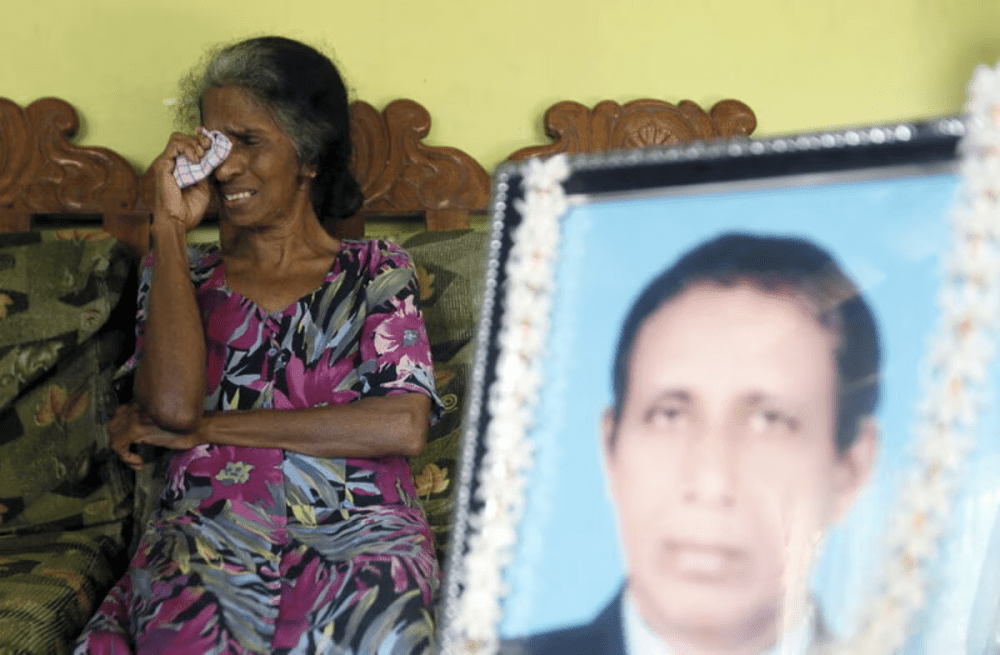
From 2007 to 2022, there were a total of 17 deaths in all the detention centers in Japan. Detainees were unable to get the proper medical care they needed. Many had hope and could have been cured, but died because the medical treatment was too late. For example, a male detainee who was from Cameroon, Africa, lost his life in 2014 after being left alone without receiving health care. Although he had health complaints since February stating his serious chest pain and difficulty in breathing, the detention center did not treat his signal of asking for help seriously. In March 2014, the detention center called an ambulance on him only after finding out that he had gone into cardiac arrest. Under such an atmosphere of the detention center, Sana’s wish to receive proper medical treatment was doomed to be rejected.
2.3. Being Suppressed Violently
“They forced me, more than 20 of them, on the floor. They pressed my neck. I could not do anything.”
Instead of being sent to the hospital as he needed, Sana was suppressed physically and violently when he tried to fight for his rights. “I was sitting on the chair so I held the chair. So they dragged me more, and pushed me down,” Sana described. Even though Sana was a patient suffering from sickness, the guards violently treated him and tried to force him to go back to his room. Sana did not give up for 13 minutes but gradually became weak. Consequently, Sana’s action did not please the guards and he was later put into the punishment room for four days.
3. Psychological Hardships
3.1. Difficulties Created by Guards
“You give up when life is so hard for you, you cannot stay. You just give up and go. So that is the system they were doing.”
Physical torture is not the only difficulty that the detainees face. Psychological torture is another way used often to pressure detainees. Although such mental torture does not cause any direct physical violence or injury to a person’s body, it does cause many issues to one’s well-being. One of the main psychological tortures Sana experienced was isolation from other detainees as part of “disciplinary” measures. In the detention center, detainees are not allowed to have fun. It is not allowed for detainees to make friends and enjoy each other’s accompany. When people get close, they will be moved to different cells or detention centers so they will be separated. Once detainees are found happy living together, they will be momentarily moved away from each other.
Nonetheless, another common difficulty created by the guards is how packages sent by the detainees’ friends or families cannot be delivered to the detainees successfully. Any daily necessities such as toothpaste and body creams, or even food supplies are not allowed if the packages are not in Japanese. Even though Sana explained to the guards that what was delivered to him was toothpaste sent from the UK, the guards refuse to believe it no matter how obvious the truth is, just because the package is written in English. Sana could not believe himself when he was refused to the extent that “I was so mad. I was like to fight with them, and my friends they have to hold me.” Consequently, detainees tend to find their lives difficult without enough contact with others. This means that detainees hope to understand the difficulties they must go through if they still want to stay. Once a detainee cannot bear it anymore, he or she will be sent back to their country.
Detainees are not allowed to stay outside for too long. Sana described, “They greet us and open the doors for you to go and take shower and come back to your room again,” so “you’re always inside the room.” Guards come in the morning to open the doors for detainees to have certain activities such as taking a shower but they make sure everyone is back in their room once the activities are done. No detainee was allowed to stay in the corridor and everyone was made sure they would be back in their room right away. Sana believed it was the psychological method they used to make detainees’ lives as hard as they could be, so people would give up and leave Japan.

As mentioned before, detainees cannot have their own shavers and they have to share the same one. With such poor condition of the shared items as well as being forced to stay inside their rooms for long hours every day, many detainees end up falling sick. However, this is just the beginning of another psychological torture: endless waiting for medical care. Detainees are requested to fill in an application form in order to be taken to the “doctors” in the detention center, but their requests are often neglected for weeks or months. “So you apply, take you like one month. So it is just like they’re intentionally doing it for you to have more pain,” Sana explains. Even after the wait, detainees rarely receive proper medicine. Sana further states that “when you take the pills they give you for a long time, you have many problems in your system,” and “it’s not even like psychological torture, they are actually intentionally to inflame pain on you.”
Sana was scared by how the system worked in the detention center. Every detainee was having a hard time and many attempted to commit suicide. According to Sana, the suicide rate was so high that guards walked past their rooms every 15 minutes to check if anyone committed suicide in their rooms. Although guards repeatedly walked from their offices to the detainees’ rooms to check on them, they neglected those who suffered from sicknesses such as stomachaches or vomiting.
In addition, the guards often intentionally increased the brightness of the lights in detainees’ rooms to the point that the brightness hurt their eyes. Sana describes, “Even if you are in the room for 30 minutes, you can not see things clearly.” Sana tried to ask the guards to reduce the brightness just by a little but was constantly refused. Having his eyes exposed to extreme brightness for a long time, Sana developed an eye problem and still cannot see things clearly to the extent that doctors recommend lenses. Sana also tried to fight for his rights. He tried to tape newspapers to the light so it could become less bright, but his action was found by the guards and irritated them that he was put into the punishment room.
3.2. Punishment Room
In the detention center, there are rooms to put detainees who “make mistakes.” The rooms are called hogo bō in Japanese, which means segregation room, and often relates to ensuring the protection and safety of individuals. However, the ones in detention centers are widely known for chōbatsu shitsu, which means punishment room. Such punishment rooms are often very small, no bigger than five square meters, and do not come with any windows. Detainees who have quarrels with the guards will be considered to have “committed a mistake,” and they will soon be put in this room for five days while being monitored 24 hours nonstop, even when they have to use the toilet. The reason he was locked in the punishment room was that “I had a quarrel with them because I was not feeling well. All I wanted is for them to take me to the hospital outside of the detention center.” Although Sana argued for his rights, his action was seen as a provocation, and he was put into the punishment room.
3.3. Losing Hope
Sana has seen three detainees give up and be sent back to their home countries. For example, the first one he knew who gave up was a Senegalese guy who was detained due to violence against his wife. He quit because he was frequently put into the punishment room he could not take it anymore. The second detainee was an Indian guy who had been detained for almost two years and eight months. He was sent back to his country because of the severe mental problems he developed during his stay. Detainees suffer from torture caused by the guards. Under such an atmosphere, some detainees get angry at the guards and choose to hit the door, and some even fight with the guards physically. However, such behaviors will result in detainees being put into the punishment room, making their lives harder.
“I thought we were in prison.”
The life in detention center was so different from what Sana expected. Before being detained in Japan, Sana expected Japan to be similar to other countries where there are human rights. He claimed that the only difference between the detention center and prison is there is no hard labor or work, but one does not have any freedom and the only thing one could do was “lying down and that’s all.”

In addition, Sana was unable to afford to contact his family. Firstly, calling from Japan to Africa can be expensive it costs 4,000 yen per 30 minutes. For an asylum seeker like Sana, the price is unaffordable. More importantly, Sana was afraid that his family would find out that he was being detained somewhere like a prison and worry about him. Despite how much Sana misses his family, he cares so much about his family and he could not risk it making his family worrisome. Thus, Sana was alone and had no one to talk to. “Before I was just alone, so I wouldn’t talk to anyone for three months.”
4. Receiving Medical Care and Finding Comfort
4.1. Overdue Medical Care
“They were afraid that I might like die inside. And they’ll be held accountable for it.”
After being put into the punishment room, Sana had strong symptoms due to his sickness, explaining “Even if I try to eat, I vomit after eating.” At that time, it was already difficult for Sana just to simply take in food. Nevertheless, Sana could not get the food supplies that a patient needed. The only food he can get is cold rice and some vegetables with sauce. In detention centers, it is possible for detainees to ask the guards to buy them food from the convenience store such as ramen, snacks, bread, etc. When one is put into the punishment room, “You cannot buy anything apart from water. You can buy water. Like you cannot buy food.” The only choice left for the detainees is to eat what the guards prepare. “Sometimes they ask us to eat the food by force.” Guards would force Sana to eat the cold food even if he would get stomachaches from it and vomit later. Consequently, Sana’s condition became extremely bad to the extent that he could not eat anything due to his stomachache. “I lost weight like more than 15 kilograms,” Sana said that he lost massive weight in two weeks because of his sickness. The guards thought Sana was on a hunger strike and were afraid to take responsibility if he died in the detention center. Sana was finally brought to a hospital and had proper health examinations. Although the doctors gave suggestions of medicine that Sana might need, he was not told what the medicines were and how they functioned. Detainees are not informed about the medicine they take or the treatment they receive. They are simply expected to just listen to the guards without raising any questions.
Sana later asked for another checkup at the hospital because the medicine did little help to help his condition. However, his request was once again rejected. The only treatment he had was the same medicine but with an increased amount. Therefore, the healing process was very long and it took Sana more than six months to recover from his sickness. The doctors also suggested Sana have another more detailed health examination if he can get out of the detention center. This brings to another problem that Sana would later face after being released temporarily; he would not have health insurance in Japan so such examinations were unaffordable for him.
4.2. Finding a Muslim Group
Under Japanese immigration law, all foreign nationals who are found to have grounds for deportation can be detained. In other words, asylum seekers and non-Japanese criminals are put together in the same facilities. In addition, with such a mixed population of detainees, there are individuals who believe in different religions as well as atheists. Therefore, Sana, as a Muslim, experienced times when some criticized him for praying. Some claimed that Sana’s praying disturbed them so he should stop. Sana is a calm person who has his own ways of thinking. He did not mind other detainees’ criticism and said, “I just keep calm and I always try to make peace with them.” Another great quality of Sana is that he was taught not to cause others trouble; therefore, he always made sure he prayed silently so no one would be interrupted from their sleep. Sana is very tolerant and does not argue back even when some detainees would say things such as “If you have God, why didn’t your God save you?” Instead, he tried his best to make others comprehend how his religion is important and they gradually came to understand and respect him. Also, thanks to Sana’s calm personality, he was not involved in the conflicts between different religious groups in the detention center. Thus, he was able to avoid several violent incidents which led the religious group members into trouble.
At first, Sana was lonely in a sense as there was only him and another male Muslim detainee. Like Sana said, “Before when I was detained, we didn’t have enough Muslims. We were only two in the block.” However, the only other Muslim detainee was later moved to another block due to violence between him and other room members. Consequently, Sana did not have anyone and he was all alone in the detention center. However, things became better when new members were brought in, especially when there were Muslim detainees. “When they brought new members, and they are Muslims, so they decide to like talk and know each other,” he explains. As the number of Muslim detainees increased, conversations naturally happened between them.
4.3. Receiving Help and Comfort
Sana began to open up to the new Muslim detainees and talk to them. They began to blend in with each other gradually and also started to have small activities such as eating together (although chatting is still forbidden and will result in detainees being moved to other blocks). Things were getting better for Sana. However, Sana says it was Professor David Slater, the leader of this project, who saved him from his darkest.
“I was even thinking about committing suicide.”
Sana had completely lost hope before he met David. As he said himself, “I was also just thinking about what should I do. I don’t know what to do because I decided not to eat. I don’t know what to, I don’t want to talk to anybody. Just being lying on my bed thinking.” Sana did not know what to do next because he was so hopeless. His situation was horrible to the extent that he began to think about suicide. All he wanted to do was lie down and do nothing.
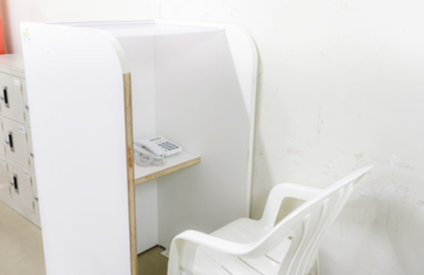
David was the one who noticed Sana’s struggle and offered help. He noticed the small things about Sana such as how he has never used the telephone booth, unlike other detainees. He helped Sana gently by telling his own stories first, then asking Sana about his own stories. Although Sana was not talkative at all at the beginning, he did not give up and constantly came to Sana and talked to him. His soft method helped Sana open up gradually and encouraged him to communicate with other detainees. In addition, it was also he who introduced Sana to the volunteers such as the Catholic Group, from whom Sana still receives help to this day.
David’s help lit up the tinder in Sana’s heart and pushed Sana to return to who he was again, the Sana who was always full of hope and loved to help others. “So I start to talk to people too. Especially those come in new,” he says. Sana began to help those who had just been detained to start their lives in the detention center, just like how David helped him. Sana helped them blend in and make friends with others.
5. Self-Development
5.1. Change of Hope in Sana
Sana described that his experiences in the detention center were horrible. Due to the poor treatment as well as physical and psychological hardships, Sana did not just consider suicide but also going back home. Return to Ghana means that Sana must face danger where he could be murdered anytime. Sana believed they were better than staying in detention centers in Japan. That is how hard life in detention centers is. Although Sana came to Japan with hope, the hope dwindled to the point that he would risk his life to go back.
Besides Sana’s good heart of not wanting his family to worry about him, David helped him a lot in becoming the strong Sana he was. Sana says he is grateful for what he has done for him, “He made me like feel better and he also made me mingle myself with people. And we could talk every day. Play some games together. So that even gave me the courage to stay. And I did.” Although Sana was in great despair and developed trust issues because of the betrayal he experienced with his first guarantor, he came to believe again that there are still trustworthy persons out there.
