Guillain’s Education and Work in the Democratic Republic of Congo
“When you’re young, you’re the only one that you think that you can do to contribute and change…So if you want to help and to change the situation, you can do that while continuing your studies.”
Nobody is born to be a refugee, and Guillain is certainly no exception to this fact. For Guillain, a 36-year-old from the Democratic Republic of Congo (DRC) who came to Japan in 2018 to escape political persecution while working in the government, it is clear that he had led a rather successful life. With a personal goal to help the war-torn eastern part of the Democratic Republic of Congo, Guillain studied to become a doctor at one of the most prominent public universities in Eastern DRC, the University of Goma. In this section, he will tell his story of his path to becoming a gynecologist in Congo and becoming a member of the health ministry, as well as provide the context to illustrate how a successful person who worked for the government could flee the country, to protect themselves from life endangerment due to political persecution.
1. Electrical Engineering, Hip Hop, and Chemical Biology:
Guillain’s Academic Development
1.1. Contributing to the Better Society
“We choose to invest in studies to work in the community and to live in the city. Living in the city is connected to studies, to get a good job and contribute to society.”
Guillain was born into a family of seven in Bukavu, South Kivu province in Eastern DRC. Born to a carpenter family, his parents were the first generation of his family to have gotten an education at school. Enrollment for primary schools in the region has historically been low due to instability, with studies estimating that only 53 percent of children attended public school in the Eastern region of DRC. When comparing metrics to the rest of the country, it is also apparent that poverty rates are much higher in South Kivu at 84.7 percent. In contrast, the national average is at 71.3 percent.
As 80 percent of primary schools in the Democratic Republic of Congo (DRC) are privatized or run by faith-based non-state actors, Guillain described that his parents had to “work hard in the society to pay since we don’t have another choice,” citing that there were no scholarships at the time. He claimed that he was fortunate to have had parents that invested in his education. After graduating from high school in Bukavu, South Kivu with a specialization in chemical biology, Guillain moved to Goma in North Kivu province, roughly 100 kilometers north of his hometown.
Moving from the comfort of his family to Goma, Guillain began his medical studies which lasted for seven years. Although this transition seems straightforward, Guillain’s academic path was influenced by a variety of underlying factors that permanently shaped his values and political ideology. In addition to his participation in political activism through the catholic church, he developed a profound interest in African hip-hop in his early teens.


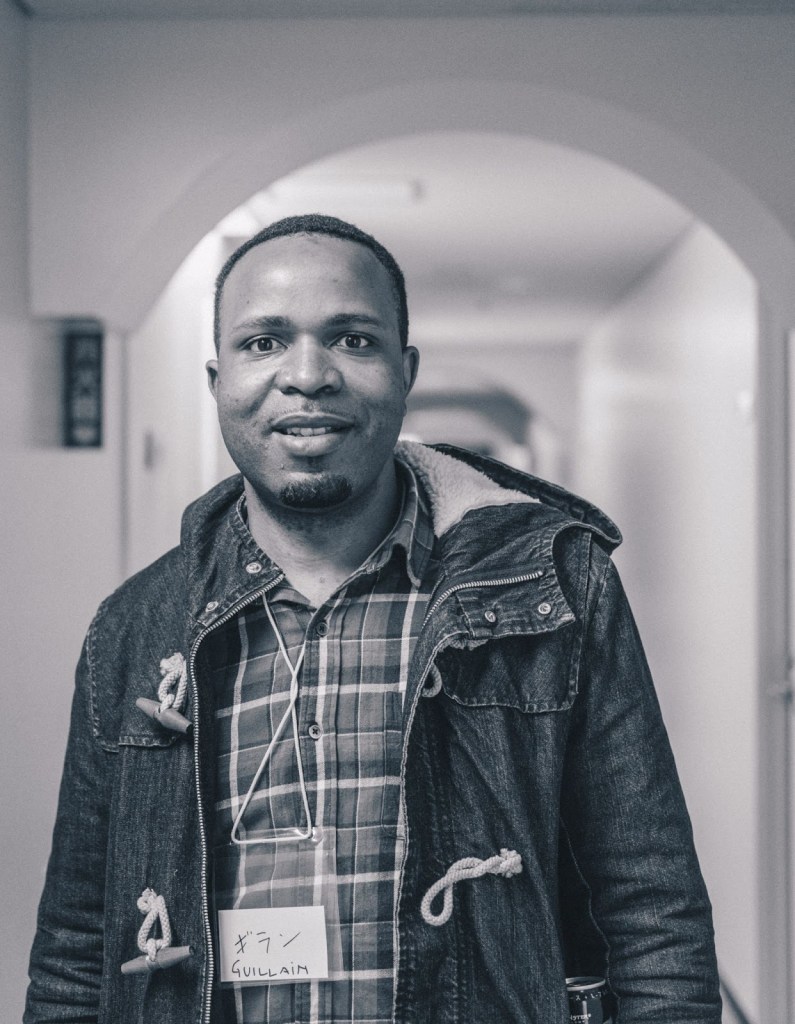
Right: Guillain in 2022
1.2. Music as the Medium of Movement
Practicing his singing and dancing skills after school in the early 2000s, Guillain in his early teens found himself spending more time on his hobby of hip-hop. In the early 2000s, hip-hop gained popularity among the Congolese youth, with new genres emerging in the region such as Afropop or Afrobeat, a genre originating in West Africa and within the African diaspora in the United Kingdom. For Guillain, the music genre was first introduced by a rapper who sang a rap urging for peace amongst political groups and to avoid discrimination.
“The rapper was supported by international organizations, like UN…to give them opportunity to share the message in the community.”

For youths in the Democratic Republic of Congo, music is a common medium of political discourse and a tool to disseminate political thought in an increasingly oppressive regime. When former president Joseph Kabila refused to step down and delayed elections to elect his successor in 2016, young Congolese activist groups creating music were targeted for “inciting violence” in Goma. Guillain noted that non-government organizations such as the UN in Goma held rap and dance battles to spread the word of peace in the communities as well. For Guillain, hip hop originating from African diasporas in the West resonated with his cause, as they often rapped about oppression from larger forces, which was similar to his feelings of being “oppressed by the government.” Therefore, the larger social issues sung in the songs made Guillain more involved in the musical space, despite the risks involved with belonging to the movement. The hip-hop songs that he listened to included artists from the African diaspora in the United States such as 2Pac, Black Eyed Peas, as well as MC Solaar in France.
Heavy involvement in the hip-hop movement with peers after school, meant that he spent less time on his academics. This decision however impacted his academics greatly, to the point that he ultimately had to forgo his first choice high school specialization of electrical engineering. Therefore, he chose his second option: a specialization in chemical biology.
1.3. Studying Through Active Conflicts

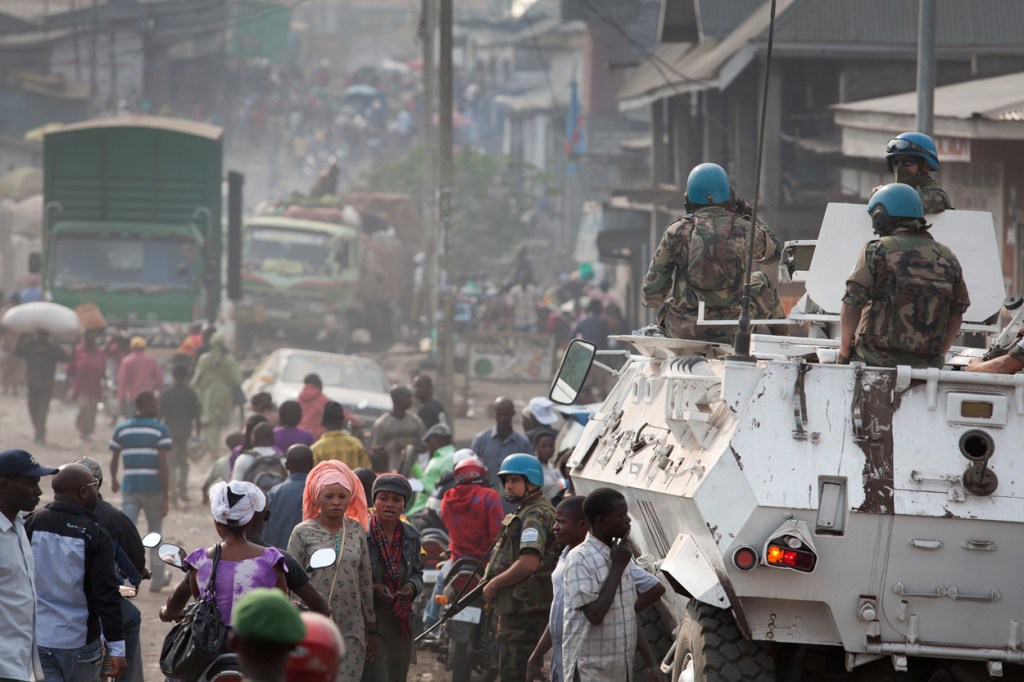
Right: 2012 M23 Crisis and UN peacekeepers (Wikipedia)
“No activity and no control from the central government.”
After finishing high school, Guillain began his studies in Goma, a city of 700,000 inhabitants and the largest in the North Kivu region. Living far from his family, Guillain began his studies in gynecology in 2007. His studies coincided with regional geopolitical developments, namely the M23 uprising and the clashes between Congolese and Rwandan soldiers for Goma in 2011 and 2012, as well as the national election for President Kabila’s second term in late 2011. During the militia takeover of Goma in 2012 by Rwandan-backed rebel groups, the city on multiple occasions was occupied by Rwandan government-supported M23 rebel soldiers with clashes ensuing for months. For Guillain, these conflicts were not only significant inconveniences, as his studies had to be postponed when rebels gained control of the area around his university, but also a testament to the need for political change.
“They [the government] don’t support us, how the situation in the Eastern part of Congo continued to get worse.”
Growing up under the rule of a government that did not seem to care for those in the Eastern part of DRC, Guillain explained that the takeover of Goma, a city with the largest UN peacekeeping presence in the world, was unsurprising. The largest city in the Eastern part of the country fell in the hands of Rwandan-backed rebels in November 2012 in a matter of hours, with minimal presence of the national military and without intervention from MONUSCO UN peacekeepers. While the take-over of the city by rebel forces was swift and had limited effect on his life in the city, the consequences were much more vividly felt in the countryside according to Guillain. He described “health professionals were killed or kidnapped,” and cited the conflict to have created long-term consequences in rural society, where health professionals are now less inclined to choose to work in the countryside.

“Say that you want to help inside the country, but if you have kids there or there is a risk of getting kidnapped. That’s not good. It creates a feeling in other people to avoid joining, even if you are qualified and you want to help the community of people.”
Despite living in a large city, Guillain recalls feeling disconnected, disappointed, and abandoned by the central government as a result of the invasion. He described how just 4 years prior, he experienced a similar instance in the Battle of Goma where the Congolese military abandoned and fled Goma for the rebel group FDLR to take over without competition. In both instances, a massive exodus of civilians ensued. According to a 2012 report published by Human Rights Watch, nearly 1.7 million people were internally displaced from the conflict in 2011 alone, due to attacks on civilians in the east and north of the country by FDLR and ADF forces (rebel groups supported by Rwanda and Uganda respectively).

Coincidently, national elections slated for late 2011 brought tighter control on public gatherings and political opposition groups, with state law enforcement perpetuating violence to civilians who participated in political activities. One example of this was when in October 2011, police were responsible for the violent crushing of a demonstration by the Union pour la Democratie et le Progres Social (UDPS) a major opposition party, with live rounds and teargas. One person was killed, and 11 were injured. For Guillain who saw education as an investment in the city and the development of society at large, the take-over of the town by rebel groups, and the persecution of those opposed to the Kabala government was a setback that underscored the urgent need for change in governance that Guillain had advocated for.
1.4. Raising the Voices of Youth in Politics
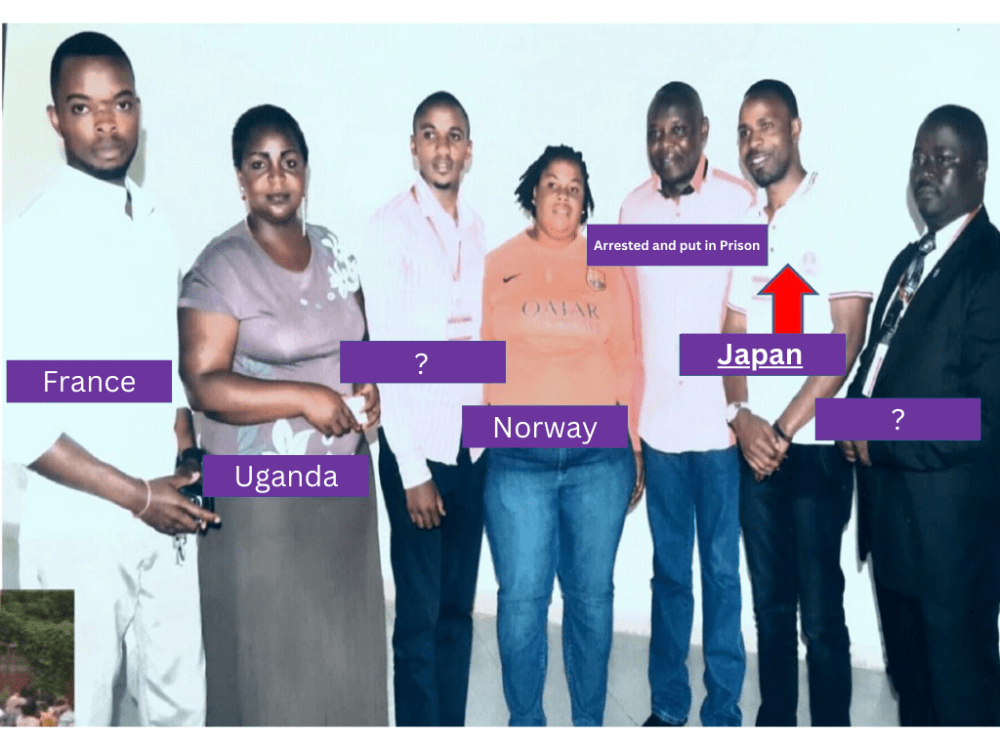
Due to the previously mentioned political instability in the region by Rwandan state-sponsored M23 rebel groups, as well as the political persecution of political opponents by President Kabila’s regime, Guillain made it his goal to fight for political change while continuing to pursue a college education at the University of Goma (UNIGOM). With feelings of abandonment by the government in Kinshasa, and the collective urge to foster a peaceful environment that is conducive to academic studies, Guillain established in 2013 a political activism group named Dynamique Des Jeunes Kamerhistes (DJK) at UNIGOM, in addition to the activities he already took part at the catholic church. As a vice president and co-founder of the DJK student organization on campus, Guillain sought to educate the youth on their rights as citizens to exercise democracy. However, Guillain’s involvement in opposition politics was not without risks. Every leader of DJK pictured faced persecution for opposing the Kabila regime, with four having to flee their country.
When asked about the possible repercussions of participating in opposition politics at the university, Guillain expressed how taking part in political protests is always a balancing act of risks and rewards. When considering his affiliation with the University of Goma, a public institution, he felt that opposing the majority government would risk and ultimately impact his academics negatively. On the other hand, Guillain explained that taking part in activism in his youth years would be an opportunity that he is not willing to miss. Guillain stated that “when you are grown up you have more responsibility, like your family, or have something like that, so it can reduce maybe your engagement.” Therefore, he saw his youth years in university as an opportunity to have a conviction and protest the Kabila regime without the need to care for his own family’s safety. Weighing his risks, he ultimately chose to continue his involvement in activism from earlier activities with the catholic church.
For Guillain, participating in political activism at school and helping to educate youth on the contents of the Constitution means not leaving anyone behind and creating an inclusive politically conscious society. With this unselfish and charitable ambition, Guillain sought to teach the youth “to be a patriot and protect their country” while opposing the Kabila regime.
2. Brief but Tumultuous Tenure at the Government
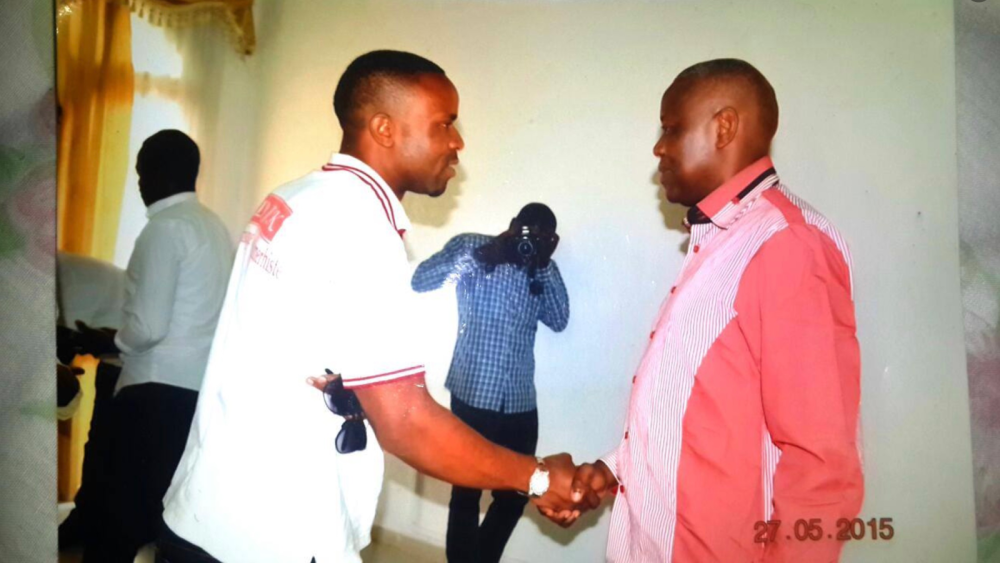
On October 18th, 2016, the incumbent government initiated the creation of a transitionary government scheme, together with the opposition coalition, in preparation for the 2018 presidential general elections. Led by the African Union, the National Political Dialogue was formed to diversify the political makeup of government offices. For Guillain, the national dialogue and its “quota” needed to create a politically balanced government meant that he would be able to work for his country as an opposition party member. Guillain thus seized the opportunity and joined the Ministry of Health as a doctor.
Guillain remembers work in the ministry to be enjoyable when knowing that he could work with his friends and “contribute something in the society.” However, politics remained a divisive topic amongst colleagues, since it often revealed differences in political positions within the ministry. Guillain recalls that this is because “some people who never experienced (the suffering), cannot understand what you are talking about.” This difference in experience may be attributed to the dynamics of instability in the eastern region of DRC. The establishment of a criminal economy run by militia warlords, such as FARDC, FDLR, and Maimai, after the discovery of valuable natural resources in the region has plagued the Eastern Kivu region with disastrous social consequences of perpetual conflict and underdevelopment. Due to the socio-economic differences between the Western capital region of Kinshasa and the war-torn Eastern region of DRC, Guillain realized that he now worked in a highly political, divisive workplace that was incomparable to his previous place of occupation: the hospital in Goma that he volunteered in after graduating from medical school. Ultimately, differences in political beliefs within the ministry and Guillain’s prior involvement in political activism put him in grave danger.
